







More to guarding against sun damage than meets the eye
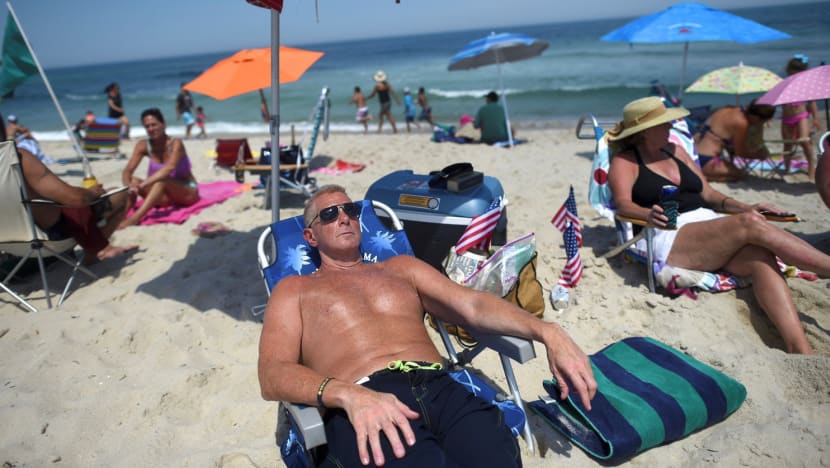
Reuters file photo
SINGAPORE — Like our skin, the eyes are also vulnerable to sun damage. However, they are often neglected by Singaporeans when it comes to protecting them, according to eye experts.
Accumulated ultraviolet (UV) damage can cause eye diseases such as pterygium — a reddish eye growth that is mostly harmless, but can affect vision — eyelid tumours and cataracts. “People here do wear sunglasses, but the problem is that many are not wearing the proper ones that come with adequate UV protection,” said Associate Professor Jodhbir Singh Mehta, head and senior consultant of the Corneal and External Eye Disease Department at the Singapore National Eye Centre (SNEC).
The number of cataract surgeries performed at the SNEC has risen by almost 50 per cent in the past decade, from 13,329 cases in 2007 to 19,937 last year. The increase is due to an ageing population, but years of exposure to sunlight put one at a higher risk of developing the condition. The theory is that the accumulated levels of UV exposure denature the proteins inside the lens, producing the cataract.
Cataract is a cloudy eye growth more commonly seen in the elderly, but may also develop earlier in life or progress more rapidly in people who spend a lot of time outdoors without adequate UV protection, such as athletes and blue-collar workers, said Ms Chui Wen Juan, spokesperson of the Singapore Optometric Association (SOA).





If untreated, cataracts may lead to blindness. Pterygium, which presents as a benign wing-shaped lesion, usually occurs on the inner corner of the eye. But doctors are also seeing a number of double-headed pterygium cases, where the lesions appear on both the inner and outer corners of the eye, due to accumulated damage from high UV exposure.
SNEC carries out about 450 pterygium-removal surgeries each year, of which about 5 to 10 per cent are for double-headed pterygiums, said Assoc Prof Mehta.
A common early sign of UV damage to the eye is chronic or worsening eye dryness. Other symptoms include eye pain and tearing after a day out in the sun, he said.
Optometrist Ken Tong, an executive council member of the SOA said, early symptoms are not always obvious to an individual.
“The insidious danger is that early signs of UV-related eye damage are often unnoticeable and can only be detected during a comprehensive eye examination by an eye healthcare professional,” said Mr Tong.
To raise awareness of the importance of UV protection for the eyes and encourage regular eye check ups, the SOA recently launched a campaign called “Open Your Eyes”, in partnership with eyewear manufacturer and distributor Luxottica and prescription lens maker Essilor.
According to guidelines from the Optometrists and Opticians Board in Singapore, children and teens under the age of 16 and adults over the age of 60 are advised to have their eyes checked every year, or more frequently if indicated.
Those between 16 and 59 years are advised to have an eye check up every two years while contact lens wearers should have an eye examination at least once every six months.
A proper eye examination involves more than a basic check of one’s spectacle prescription, said Ms Chui. Other important components include checking the front and back of the eyes, an eye pressure test and other tests deemed necessary. By examining the eyeball and visual system properly, insidious problems like cataract and glaucoma may be detected, added Ms Chui.
As part of the campaign, the public may receive a complimentary screening for aged-related macular degeneration, cataract and glaucoma with a minimum spend of S$100 at participating optical stores from now to July 31. Visit openyoureyes.com.sg for details.
NOT ALL SUNGLASSES
ARE made EQUAL
The easiest way to protect the eyes from UV damage is to choose the right eyewear and sunglasses. Assoc Prof Mehta said that while children should be encouraged to spend time outdoors, as a preventive measure against myopia, it is just as important for them to protect their eyes from the cumulative effects of UV exposure with the right sunglasses.
When choosing eyewear and sunglasses, consider the following:
• Ensure adequate UV protection
to block harmful rays
Look for a label that says “UV400” when buying sunglasses or spectacles. This means they block light rays with wavelengths up to 400 nanometres, which covers both UVA and UVB rays. UV protection for spectacle lenses come in two forms, a UV coating or a UV absorber built into the lens, according to Ms Chui of the SOA. Both can be effective in blocking UV rays. For added protection, consider lenses that go beyond UV400 and partially block blue-spectrum light, which is linked to cataract and macular degeneration, she said.
• Don’t look at the colour and
darkness of the lens tint
They are the least important elements of UV protection although they reduce glare, said Ms Chui. Lenses can appear colourless and yet provide 100 per cent UV protection. Choosing dark tinted sunglasses without any UV blocker may be dangerous as looking through a dark tint causes the eyes’ pupils to enlarge, letting in more UV light, warned Ms Chui.
• The shape and size matter
Your sunglasses should be well-fitted, cover your eyes and sit close to the face, said Assoc Prof Mehta. For example, wraparound frames would provide better protection against harmful UV rays than round framed sunglasses that sit further away from the face. Due to differences in facial structures, the frame should also be adjusted for a comfortable fit to provide adequate coverage, said Ms Chui.
Some contact lenses have United States Food and Drug Administration certification for blocking UV rays. According to Ms Chui, these contact lenses protect the cornea and inside of eyes from UV but do not block glare or provide protection for the skin of the eyelids.
• Replace scratched sunglasses
Scratches on UV-coated lens can affect how well harmful UV rays are filtered, said Assoc Prof Mehta.




