







More support status quo, yet want more political competition: Post-GE2015 survey
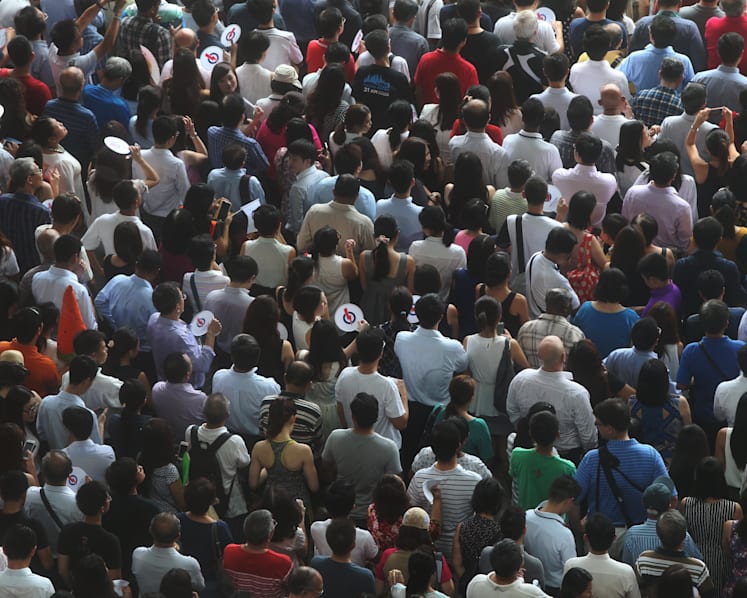
The crowd that has gathered as the People's Action Party holds its lunchtime rally on Sept 8, 2015. TODAY file photo


SINGAPORE — While the proportion of voters who desire political pluralism has gone down, their need for diverse voices cannot be dismissed in future polls, said Institute of Policy Studies Senior Research Fellow Dr Gillian Koh today (Nov 4).
Her post-General Election survey of 2,015 voters found that the percentage of “pluralists” — those who support greater political pluralism and changes in the electoral system, relative to other respondents — was halved this year, from about 36 per cent in 2011.
In contrast, the “conservatives” — who support the political status quo — doubled to 44 per cent, compared with 2011. However, this very same group of “conservatives” still want to see more political competition in Parliament.
The survey quizzed voters on their desire for Opposition Members of Parliament, as well as checks and different views in Parliament on whether they felt the election system was fair, and if they wanted it to be changed.





Dr Koh described those who have fallen out of the “pluralist” group as “conditional pluralists” — those who feel a stronger need for political competition whenever they are not satisfied with the Government’s policies. However, the desire for pluralism is not a deciding factor on how people vote, she said. “People are going to view the need for political competition as something that is good to have ... but when they actually go to the polls, they will weigh out the candidates’ track records, and precise issues and policies each party is concerned about,” Dr Koh added.
Nanyang Technological University’s Assistant Professor Walter Theseira pointed out that while Dr Koh’s survey suggests that support for pluralism is drawn primarily from voters with higher socio-economic status, a separate study led by National University of Singapore sociologist Dr Tan Ern Ser showed that votes for the ruling People’s Action Party are highest among well-educated and higher-income voters.
Dr Koh attributed this apparent contradiction to the fact that the opposition parties have not presented proposals that “say much or appeal much” to voters in the higher socio-economic category.
“In fact, there are various policies in their manifestos that harm that group as well,” she said.




