







Motorcycle association calls for 3-year grace period before zero growth cut
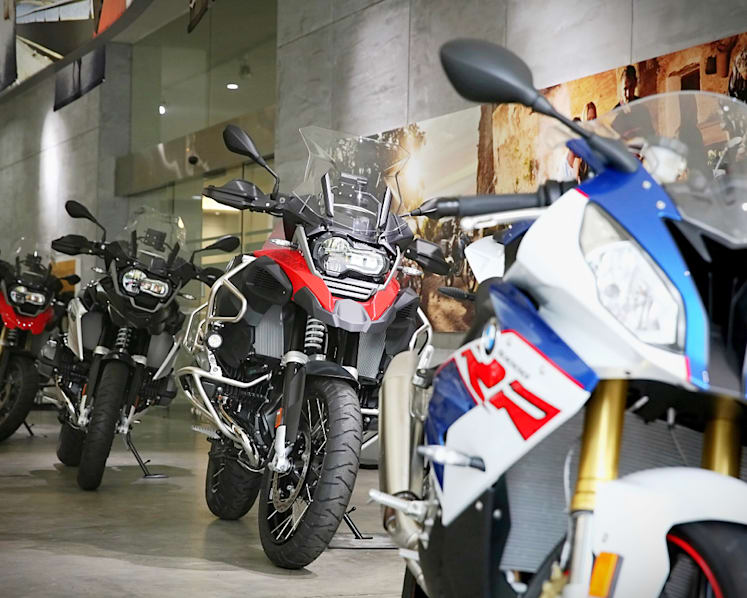
According to data from LTA, the number of motorbikes here has been shrinking in recent years — decreasing 4.22 per cent since 2010 to 141,893 as of last month. TODAY File Photo


SINGAPORE — Dismayed by plans to cut the growth rate for motorcycles here to zero from February next year, members of the Singapore Motor Cycle Trade Association are calling for a three-year grace period so that “future alternatives” can be explored before the curbs kick in.
The association’s honorary general secretary Norman Lee said on Friday (Oct 27) that they would like to have an “urgent meeting” with the Land Transport Authority (LTA) to discuss their proposal. The LTA has yet to respond to the association’s request.
The vehicle growth rate for cars and motorcycles would be cut from the current 0.25 per cent to zero from February next year, the LTA announced on Monday (Oct 24).
The growth rate of goods vehicles and buses will remain unchanged at 0.25 per cent until 2021, to give businesses more time to “improve the efficiency of logistics operations and reduce the number of commercial vehicles (needed)”, it added.





Mr Lee said it is unfair for motorcycles to be managed in the same manner as cars, as the motorcycle population here is declining.
According to data from LTA, the number of motorbikes here has been shrinking in recent years — decreasing 4.22 per cent since 2010 to 141,893 as of last month. During the same period, the population of cars and taxis increased by 1.62 per cent to 633,929.
Before May this year, a portion of the Certificates of Entitlement from de-registered motorbikes would go to the Open Category, which can be used for all types of vehicles.
Speaking to TODAY, Mr Lee pointed out how the sector is already reeling from recent tax hikes on costlier two-wheelers. More stringent emission standards setting in from next year will also make motorcycles more expensive and scarcer.
The zero growth curb will have “serious effects on the (Republic’s) motorcycle ecosystem”, he said.
“Motorbikes are supposed to be a cheaper, alternative mode of transport that is affordable even for people in lower-income groups,” said Mr Lee, noting how a significant proportion of riders depended on the two-wheelers for their livelihood.
The association hopes to promote motorbikes as a viable, alternative mode of transport that supports the Government’s vision of a car-lite society, noting that the two-wheelers are more space-efficient than cars, and thus contribute less to traffic congestion.
Mr Lee cited a 2012 study by Belgian transport specialist Transport & Mobility Leuven, which found that if 10 per cent of car commuters decided to ride a motorcycle, congestion and carbon emissions would fall by 40 per cent and 6 per cent respectively.
As part of its outreach efforts, the association has partnered with the Institute of Technical Education to launch a motorcycle elective this year, where ITE students majoring in automotive technology will learn to inspect and ride a bike using a simulator.




