







Mount Agung eruption: MFA continues to advise S’poreans to defer travels to Bali
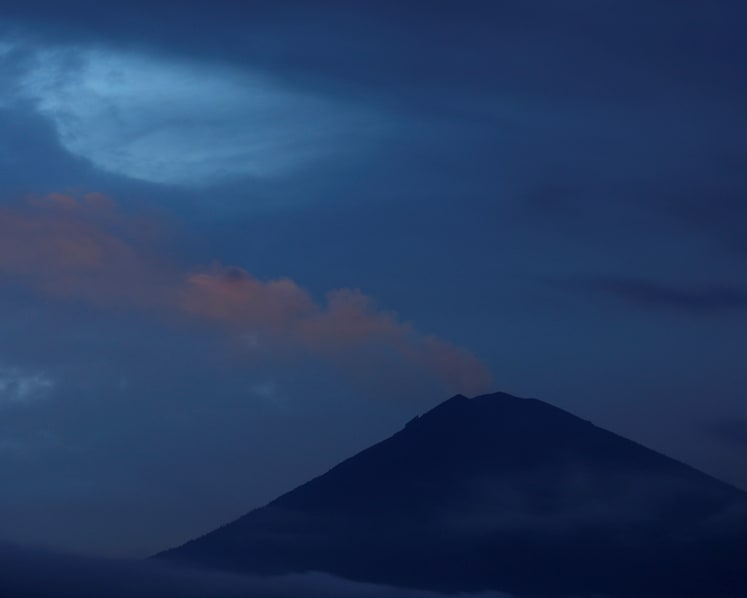
Smoke from Mount Agung volcano drifts away from the crater as seen from Amed in Karangasem Regency, Bali, Indonesia on Dec 2. Photo: Reuters


SINGAPORE — A week after Bali’s Mount Agung erupted, the Ministry of Foreign Affairs (MFA) has continued to advise Singaporeans to defer travels to the holiday island until the situation improves, as Indonesia’s alert level for the volcano remains at the highest.
The situation on Mount Agung “remains unpredictable”, said a MFA spokesperson in response to media queries on Monday (Dec 4).
The spokesperson noted that volcanic ash from eruptions could result in further airport closures and disruption of air travel at short notice.
“We continue to advise Singaporeans to defer travels to Bali until the situation improves,” said the spokesperson.





Mount Agung erupted for the first time in more than half a century last Monday (Nov 27), sparking chaos on the resort island. Tens of thousands of people have fled the “danger zone”.
For nearly three days last week, Bali’s international airport, Ngurah Rai, was closed, stranding tens of thousands of tourists.
The alert level has stayed at the highest level of four, which means that there is imminent risk of a larger eruption.
A crisis response team from MFA was deployed to the airport last Monday.
The spokesperson said that the response team has worked with local authorities and airlines to render consular assistance to Singaporeans affected by the closure of the airport.
“Airlines have been mounting relief flights since the airport re-opened on November 29, 2017 to help stranded Singaporeans return home”.
Since the eruption, gushing ash from the volcano has dissipated into a wispy plume of steam, but the exclusion zone around the volcano still extends 10km from the crater in some directions. More than 55,000 people are still living in shelters.
On Monday, Australian airlines Jetstar and Virgin Australia, which cancelled some flights to the Bali over the weekend despite the ash cloud shrinking dramatically, resumed their services.
Meanwhile, the region’s volcanic ash monitoring centre in Darwin, Australia, has stopped issuing advisories for Agung, reflecting that it currently poses no threat to aircraft.
Indonesian government volcanologists say Agung’s crater is about one-third filled by lava and there is still a high risk of more eruptions.
Mr David Boutelier, a geologist at the University of Newcastle in Australia, said the chance of a violent explosion is still “very high”, but possibly not as high as several weeks ago, because pressure is being released.
The volcano’s last major eruptions in 1963 killed more than 1,100 people and it was active for more than a year. WITH AGENCIES




