







National Gallery Singapore becomes world’s first museum named Healing Arts Centre of Excellence
The accreditation places the gallery alongside global cultural institutions such as Carnegie Hall in New York and the Scottish Ballet.
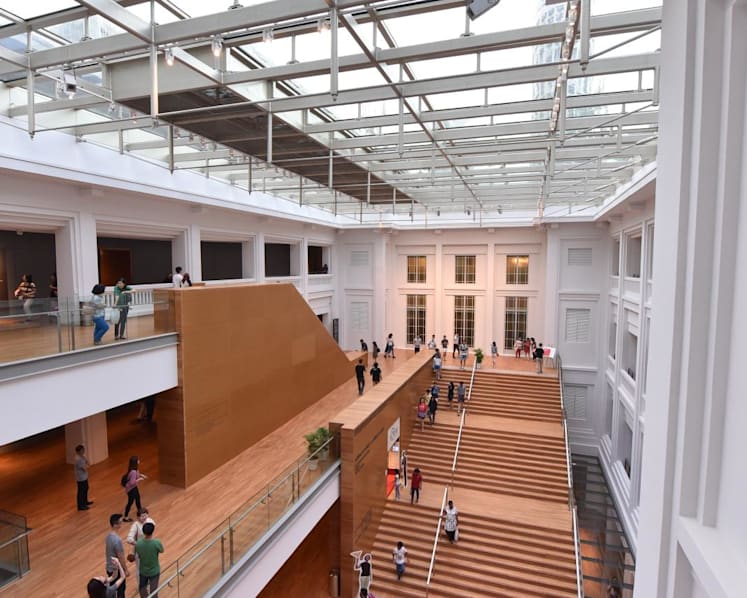
A view of the National Gallery's Singapore Courtyard. (Photo: National Gallery Singapore)

This audio is generated by an AI tool.




SINGAPORE: The National Gallery Singapore has been recognised for integrating arts into public health and wellbeing, becoming the first museum worldwide to be designated a Healing Arts Centre of Excellence.
The accreditation, conferred by the Jameel Arts & Health Lab in collaboration with the World Health Organization (WHO), places the gallery alongside global cultural institutions such as Carnegie Hall in New York and the Scottish Ballet.
The National Gallery was assessed on criteria that includes its dedicated team and sustained support for underserved communities.
One of its standout programmes is Slow Art, which encourages visitors to observe and engage mindfully with artworks.
The museum also showcases tactile collections and runs tours tailored for blind and low-vision visitors, as well as programmes designed for persons living with dementia and their caregivers.





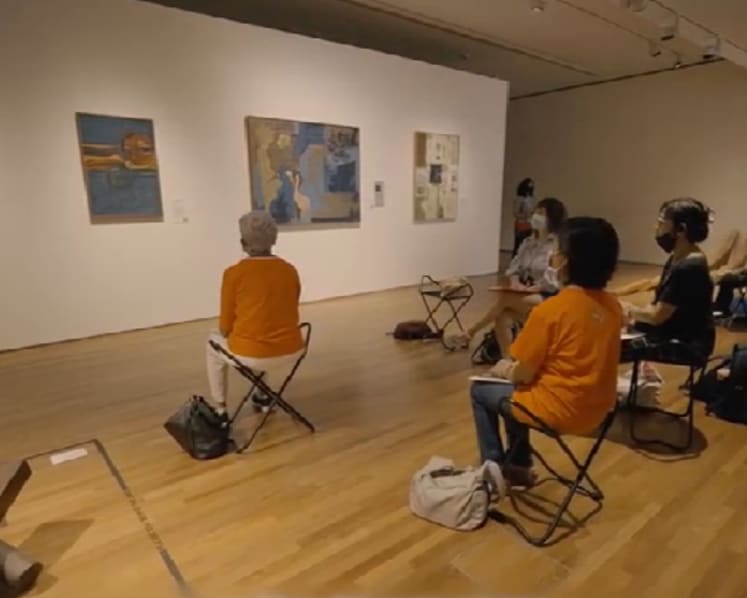
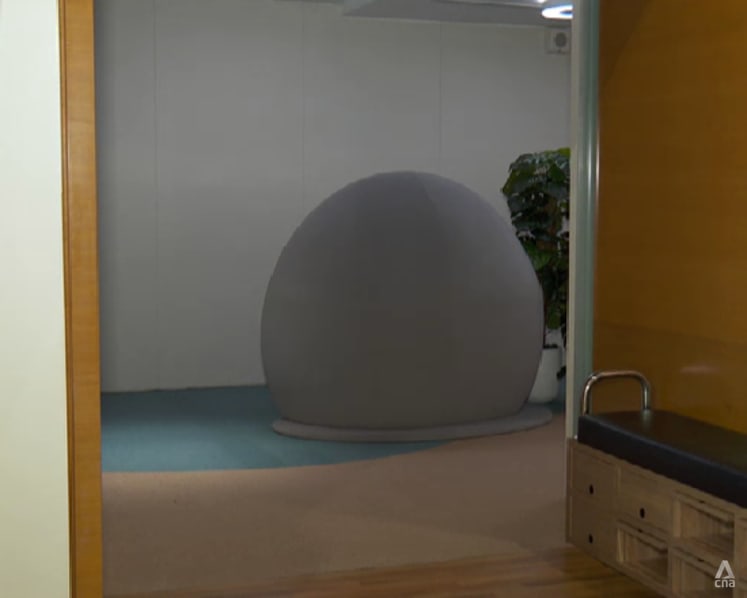
There is even a “calm room” designed with neurodivergent visitors in mind.
Equipped with sensory-friendly features such as weighted blankets and adjustable lighting with soothing hues, the room offers a place for visitors to regulate their emotions and decompress during their museum visit.
Such initiatives contributed to its selection as a centre of excellence.
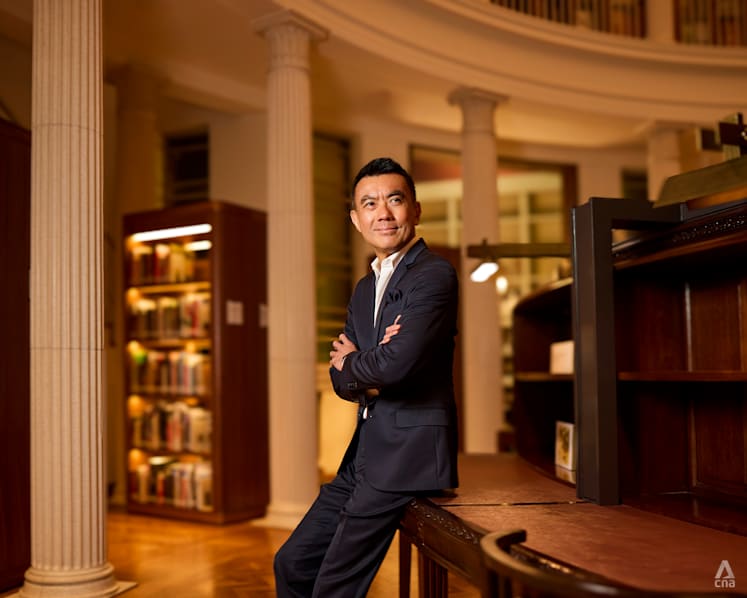
Dr Stephen Stapleton, founding co-director of the Jameel Arts & Health Lab, said the National Gallery’s designation comes with support from the lab and WHO.
Launched in 2023, the Jameel Arts & Health Lab is a global initiative that researches and promotes the integration of the arts into public health and clinical care.
It was co-founded by the WHO Regional Office for Europe, New York University’s Steinhardt School of Culture, Education, and Human Development, Saudi philanthropic organisation Community Jameel and British social enterprise Culturunners.
“(The National Gallery) will be supported … to come up with a long-term roadmap, a long-term plan, which has a lot to do with leadership” both locally and in the region, said Dr Stapleton, who is also the founder of Culturunners.
He added that the museum can inspire other cultural institutions like concert halls, galleries and performing arts centres to put in place arts and health programmes.
EXTENDING WELLBEING INTO COMMUNITY SPACES
The National Gallery said it will champion the role of museums as partners in public health and expand programmes that support community wellbeing.
One way it is doing so is by bringing activities into community care environments.
It recently piloted a collaboration with eldercare provider All Saints Home, which ran from August to October this year.
The 10-week initiative, which caters to those living with dementia, was adapted from the gallery’s Art with You programme. Staff and volunteers from the home were trained to engage with residents using curated artworks from the gallery.
Ms Alicia Teng, deputy director of the National Gallery’s community and access team, said the response has been positive.
She noted that there is room for such efforts to grow, with hopes that more social service partners will join in to create programmes that serve diverse community needs in comfortable and familiar settings.
GLOBAL RECOGNITION
The Healing Arts Centres of Excellence initiative recognises institutions that push boundaries in the arts and health global landscape, while paying attention to underserved communities.
The 134-year-old Carnegie Hall was the first institution to receive the designation in September 2024.
For more than a decade, the concert hall has offered programmes and performances across diverse settings, bringing the power of music to the widest possible audience.
These include “wellbeing concerts” - hour-long concert experiences that combine elements of mindfulness and meditation with performance.
The Scottish Ballet, designated in January this year, has developed dance initiatives with health institutions supporting those with Parkinson’s, dementia and multiple sclerosis.
It also runs programmes for health and social care professionals to help alleviate physical and emotional stress.
WELLBEING BUILT INTO PROGRAMMING
Speaking to CNA’s Singapore Tonight programme, Dr Nisha Sajnani, founding co-director of the Jameel Arts & Health Lab, said she was struck by how seriously the National Gallery takes wellbeing as part of its mission.
“This isn't something that's happening off to the side, but rather really built into their programming,” she said, highlighting the gallery's partnerships, staff training and culturally grounded community work.
She also noted the gallery’s commitment to evaluating the impact of its initiatives, describing its approach as a combination of “creativity and care and rigour”.
Dr Sajnani said museums are intentionally designed to capture attention and bring people together.
However, their potential for health and wellbeing has often been overlooked, she said, in terms of the content that they curate and how that can “respond to the values, concerns and interests of the communities they serve”.
Beyond their educational role, museums function as anchor institutions much like schools or medical centres, supporting the wellbeing of surrounding communities, said Dr Sajnani.
She also pointed to decades of evidence demonstrating how the arts support neurological, physical, mental and social health.
She cited a 2019 WHO review of over 3,000 studies showing that regular engagement with artistic activities – from music and reading to dance, theatre, visual art and even gardening – is linked to lower stress, healthier behaviours, stronger social connections and reduced risks of anxiety and depression.
Creative arts therapies, including art, drama and music therapy, have shown measurable benefits in areas such as pain management, rehabilitation, maternal wellbeing and chronic illness, she added.
MORE PARTNERSHIPS IN THE WORKS
Other local institutes, including the Yong Siew Toh Conservatory’s Centre for Music and Health and the Nanyang Academy of Fine Arts, are also working with the Jameel Arts & Health Lab to ensure its work is “meaningful and sustainable in the region”, Dr Sajnani said.
Priorities include high-quality research that can shape policy, capacity-building to train and support a community of practice across the arts and health sectors, and co-designed pilot programmes in hospitals, community settings and cultural spaces, she added.
Some pilots may eventually be scaled or adapted regionally, depending on community needs and the relevance of the programmes.
“Sometimes the best approach is taking something that's working in one integrated care centre … and bringing it to the rest,” she said.




