Burning smell across Singapore may be due to 'mixture of gases' from region's peatland, vegetation fires: NEA
NEA says these gases may give rise to a "noticeable burning smell", even when present at low concentrations.
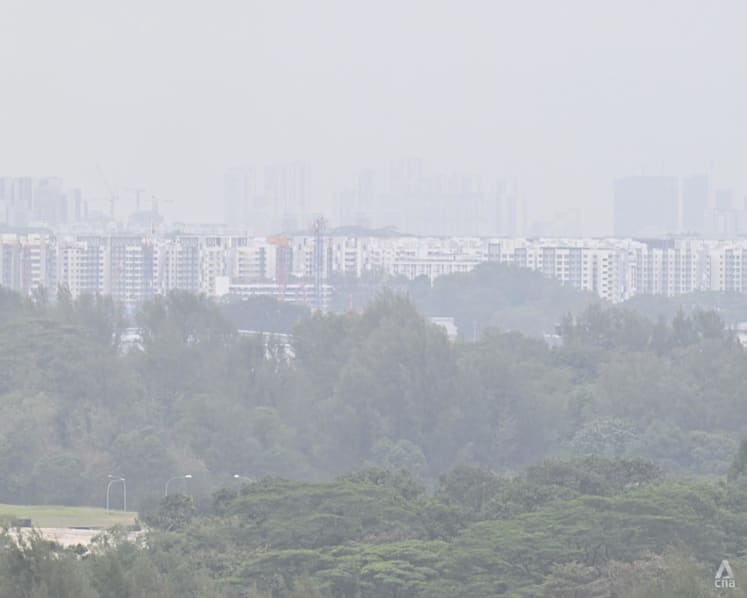
The haze as seen from Punggol on Feb 13, 2026. (Photo: CNA/Jeremy Long)

This audio is generated by an AI tool.


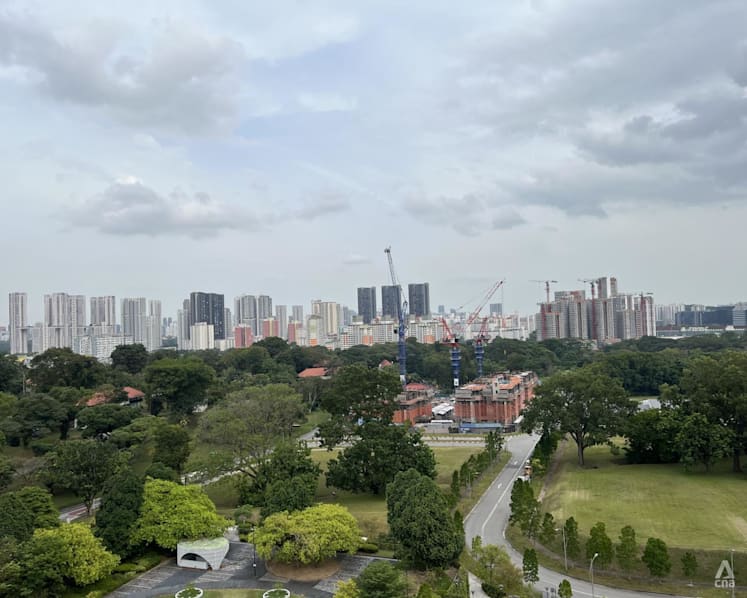
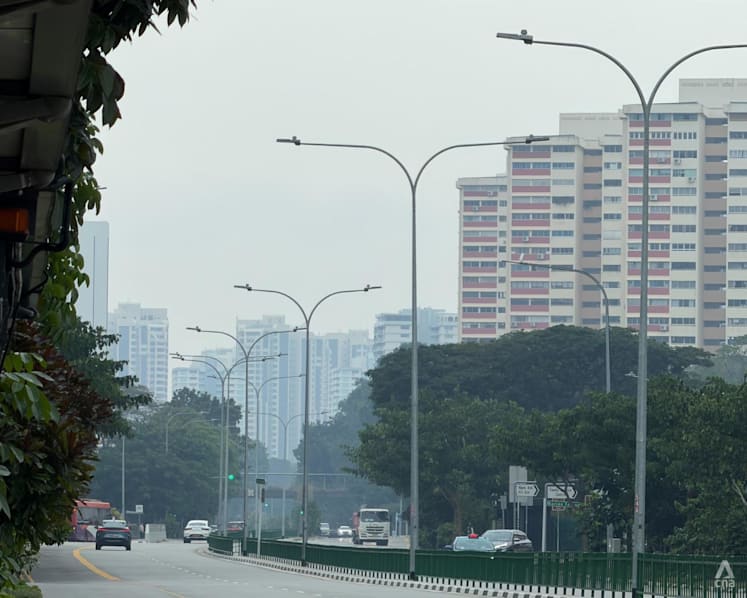
SINGAPORE: The National Environment Agency (NEA) said that the burning smell detected across many parts of Singapore on Friday (Feb 13) could be attributed to the release of a "complex mixture of gases" due to smoke from peatland and vegetation fires in recent weeks.
In its Facebook post, the agency said these gases may give rise to a "noticeable burning smell", even when present at low concentrations.
NEA's monitoring stations show that the 24-hour PSI remains within the good to moderate range, with 1-hour PM2.5 in the normal range.
The agency said that cloud cover on Friday also limited satellite observation of potential hotspots in the surrounding region.





"In the coming week, showers are expected over Singapore and the surrounding region.
"However, as the region is in the dry phase of the northeast monsoon, there continues to be a risk of extended dry periods which may lead to increased hotspot activity in the surrounding region and a risk of smoke haze," NEA said.
NEA said it will continue to monitor the overall air quality situation and provide updates if necessary.
The agency on Monday said that there was smoke from a hotspot in eastern Johor that had been observed drifting towards Singapore.
Minister for Sustainability and the Environment Grace Fu in parliament on Thursday said that hotspot activity could increase in the coming weeks, which could result in hazy conditions affecting Singapore.
Ms Fu said the Haze Task Force, led by NEA and comprising 28 government agencies, will implement measures to safeguard public health if conditions worsen - particularly for vulnerable groups such as the elderly, pregnant women, children and those with chronic lung and heart diseases.
These include issuing advisories to minimise outdoor activities and ensuring a sufficient supply of N95 masks. Indoor air purifiers will also be deployed in premises such as schools, public hospitals, nursing homes and polyclinics where vulnerable groups are likely to congregate, she added.
Doctors across Singapore reported seeing an increase in patients seeking treatment for respiratory symptoms as hazy conditions continue to affect the country.
Clinics in the central, northern and eastern regions have seen a noticeable rise in walk-ins, with patients complaining of persistent coughs, breathing discomfort and throat irritation.