







Next 5 years ‘will be critical for new generation of leaders’
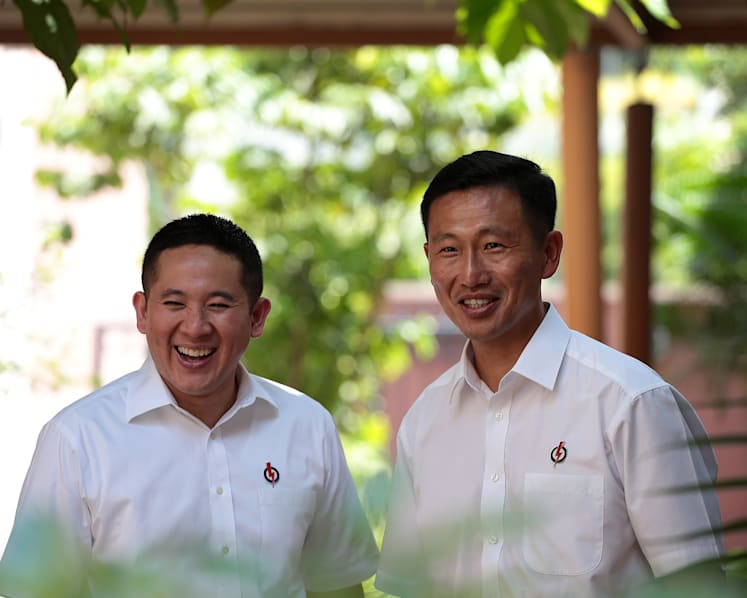
Two of the new office holders Mr Amrin Amin (L) and Mr Ong Ye Kung. Photo: Jason Quah/TODAY


SINGAPORE — While all the major pieces are in place with the ruling People’s Action Party (PAP) able to bring in the new blood it wanted, there is still some way to go before the composition of the country’s fourth-generation leadership is settled, political analysts said today (Sept 28).
The next five years will be critical for the new group of leaders to gel, and win the trust and confidence of Singaporeans — and for the leader among the leaders to emerge, the analysts added.
Following today’s announcement of the new Cabinet line-up post-General Election (GE), Institute of Policy Studies Senior Research Fellow Dr Gillian Koh said: “Not only the contours but the substance of the fourth-generation leaders are now in place, but I think the heart and head of this group will still require time, exposure and experience to be shaped and refined.”
National University of Singapore political scientist Bilveer Singh said the new Cabinet is characterised by leadership transition and change, citing how the two Deputy Prime Ministers have relinquished their portfolios while new faces inducted.





“Knowing the People’s Action Party’s DNA and Singapore’s political culture, while nothing is cast in stone, the transition should be smooth as the political anchors will make sure that the deserving enter the key ministries, while others gracefully make way for the third- and fourth-generation leaders.”
The analysts also said the appointments of Mr Ong Ye Kung and Mr Ng Chee Meng as Acting Education Ministers did not come as a surprise, as Mr Lee had publicly earmarked them for bigger things in the lead-up to the GE earlier this month.
NUS associate professor Lan Luh Luh noted that senior office-holders may only remain in the Cabinet for “at most two more terms”.
“We don’t have that much time to wait for (the new leaders) to grow into the portfolio ... If you put all these people in the sea, very fast you can see whether they can swim or not … If they don’t (do well), I think now there is still time for the older ministers to come in to help.”
Dr Lam Peng Er from the East Asian Institute agreed that the new faces have their work cut out for them, and the next few years will be critical for them to prove themselves.
“Quite a few of them have ‘Prime Minister calibre’ but are still inexperienced. They will have to face the electorate again, and expectations are high for all the ministers … Just because their paper qualifications are good does not guarantee them a roaring success as Ministers,” he said.
After the 2011 GE, Mr Heng Swee Keat, Mr Chan Chun Sing, Mr Tan Chuan-Jin and Mr Lawrence Wong were touted as possible candidates to succeed Mr Lee.
The appointment of Mr Ong and Mr Ng to the Cabinet means the pool of potential Prime Ministers has grown, and most analysts agreed that there is no clear frontrunner among these candidates.
“Maybe there is competition among a few ... But, it is not yet obvious to me,” said Dr Lam.
NUS Associate Professor Reuben Wong said the identity of Mr Lee’s successor will be clearer by the end of 2018 or 2019, after “everyone has had a few years to cut their teeth in different portfolios”.
The identity of the PM-in-waiting will also become clearer when the PAP elects its next Central Executive Council, said both Assoc Prof Wong and Assoc Prof Singh.
Assoc Prof Wong added: “It will not just be Mr Lee’s decision, but whether the Cabinet colleagues agree… The next PM must have the confidence of the Cabinet, the party, and the general electorate.” ADDITIONAL REPORTING BY SIAU MING EN




