







Singapore commissions studies to deepen capabilities in nuclear safety, regulation and environmental protection
Singapore and the Philippines have agreed to explore collaborations in nuclear energy, says Minister for Energy, Trade and Industry (Energy and Industry) Tan See Leng.
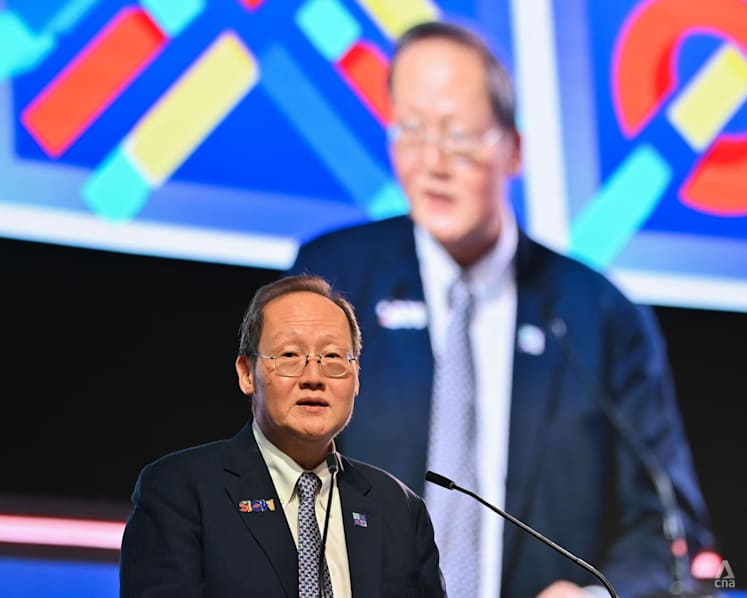
Minister for Energy, Trade and Industry (Energy and Industry) Dr Tan See Leng speaking during Singapore International Energy Week, Oct 27, 2026. (Photo: CNA/Alyssa Tan)

This audio is generated by an AI tool.


SINGAPORE: The National Environment Agency (NEA) has commissioned three studies to deepen Singapore’s capabilities in nuclear safety, regulation and environmental protection, it announced on Tuesday (Oct 27).
The studies are part of Singapore’s preparations for the first phase of the International Atomic Energy Agency’s (IAEA) Integrated Nuclear Infrastructure Review in 2027.
These capability-building efforts will support Singapore in studying the potential deployment of nuclear energy, said the agency.
Speaking at the inaugural forum co-organised by IAEA and Singapore International Energy Week, Minister for Energy, Trade and Industry (Energy and Industry) Tan See Leng said Singapore and the Philippines have agreed to explore collaborations in nuclear energy.
As Singapore takes over the Association of Southeast Asian Nations (ASEAN) chairmanship in 2027, it will work to deepen regional collaboration and discourse, including through the ASEAN Network of Regulatory Bodies on Atomic Energy and Nuclear Energy Cooperation Sub-Sector Network, he added.
Earlier this month, Philippine President Ferdinand Marcos Jr reportedly signalled his willingness to explore nuclear energy cooperation with Singapore.
According to Philippine media reports, he discussed the possibility during his visit to the Singapore Nuclear Research and Safety Institute (SNRSI).





Countries in Asia and Southeast Asia face a major challenge to meet the increasing amounts of energy needed by their economies while strengthening energy security and advancing their net-zero ambitions, said Dr Tan on Tuesday.
While nuclear energy has emerged as a "promising solution", a nuclear power programme is a "complex endeavour", he added.
“Many studies need to be done before we can make an informed decision on deploying nuclear energy,” he said.
“Expertise has to be strengthened across a wide range of dimensions, from workforce development to financing; from legislation to framework regulation and industry development.”
IAEA can guide countries with internationally recognised standards and best practices, said Dr Tan. Its approach provides countries new to nuclear energy with a structured framework for considering and preparing for a nuclear power programme.
“Following internationally recognised approaches can also build confidence among regional partners and the wider international community.”
In the area of nuclear safety, IAEA works closely with Singapore and its regional partners to strengthen coordination and preparedness for nuclear emergencies, he added.


BUILDING UP CAPABILITIES
The three studies will examine international regulations and environmental standards of nuclear facilities, international nuclear safety standards and requirements, and the potential environmental implications of a nuclear power plant.
The three appointed firms are Enconet Consulting, AtkinsRealis Singapore and Environmental Resources Management (S).
The Energy Market Authority (EMA) has also appointed a panel of consultants to support Singapore’s preparations for the upcoming review in 2027.
The consultants are:
- Aecom Singapore
- Afry Singapore
- AtkinsRealis Singapore
- Excel Services
- EY Corporate Advisors
- GNE Advisory
- Helixos
- Kellogg Brown and Root Asia Pacific
- Mott Macdonald Singapore
- Pinsent Masons Mpillay
- The Boston Consulting Group
- WSP Consultancy
The panel will cover three key areas: technical and economic issues like nuclear safety and security; legal and regulatory framework for nuclear energy; as well as organisational matters like procurement and management systems.
The authority will appoint a second panel of technical advisers to support Singapore’s nuclear energy capability building efforts by the end of 2026, it said.
NEA reiterated that the government has not made a decision on the deployment of nuclear energy in Singapore.
Describing nuclear energy as a long-term undertaking, Dr Tan said that clear government policies are important to provide confidence to the public, industry and investors.
“At the same time, the scale and the complexity of nuclear projects mean that strong international partnerships and viable financing models will be critical, especially for newcomer countries,” he said.
As new technologies develop, countries must build the capabilities to independently assess their own safety and suitability, he said, stressing the need for the highest safety and security standards.
Singapore is building up its expertise and capabilities early to support the assessment of advanced nuclear energy technologies, said Dr Tan.
Countries across the world will be at different stages of their respective journeys, he added.
"But we will all share a common interest in ensuring that nuclear energy, where pursued, is developed safely, securely and responsibly," he said.




