







Number of clients under legal advice scheme doubles in 2 years since launch
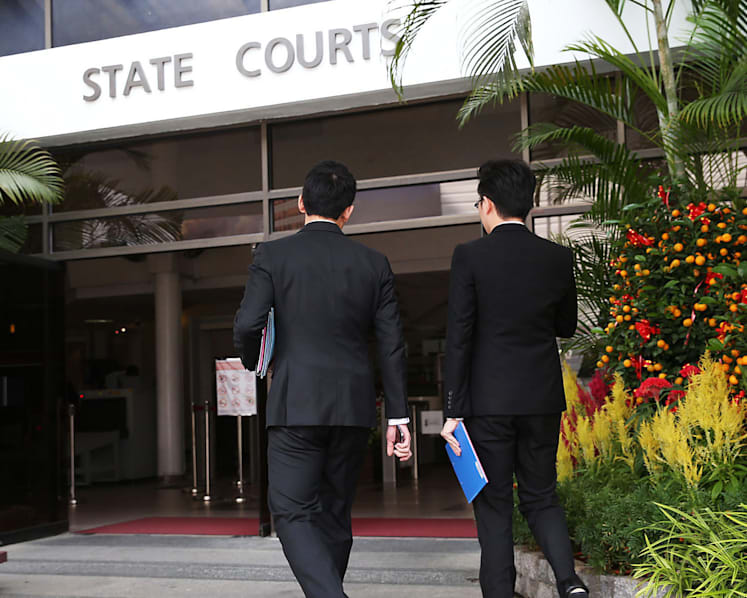
The CJC at the State Courts has at least one lawyer on hand five days a week to provide consultation. TODAY FILE PHOTO


SINGAPORE — Efforts by the Community Justice Centre (CJC) to help those representing themselves in court with some legal support is seeing a good response, with its on-site legal advice scheme seeing the average number of beneficiaries doubling to 300 a month, compared to when it was launched nearly two years ago.
The centre, which offers free legal advice at the State Courts, even extended its operations by an hour last November to cater to the growing pool of those who sought its help.
Aimed at helping those who do not have financial means to seek legal counsel, the On-Site Legal Advice Scheme (OSLAS) introduced by the CJC ensures that at least one lawyer is on hand at the centre five days a week to help self-represented litigants who lack understanding of the legal system here.
Those who drop by the “one-stop centre” between 10am to 5pm will get a 20-minute consultation on a range of issues — from civil disputes and matrimonial cases, to criminal offences — with a lawyer who has at least three years’ experience in legal practice.





Lawyers who volunteer at the centre say the sessions, though brief, help individuals size up the issues confronting them, and offer a “road map” of the options available.
“People who turn up are usually looking for sign posts. Many don’t know where to start, many perceive the law as a ‘big mountain’ ... This scheme demystifies the law for them,” said volunteer lawyer Amolat Singh, the founding member of law firm Amolat & Partners. “It resolves anxieties but at the same time, gives people a reality check on whether to take their case forward.”
Among the most heart-wrenching cases lawyer Harold Seet has seen involve foreign brides who have been “abandoned” by their Singaporean husbands. “Many are left in the lurch with young kids, they cannot work and have nobody to turn to in a foreign land. Even language can be an issue for some,” said Mr Seet.
Lawyers on duty may refer such cases to agencies that can provide financial aid or immediate relief, such as food supplements, bringing their roles beyond that of giving legal advice.
“For this time to be effective, the lawyers must not only be well-versed in a spectrum of legal issues, but also be acquainted with the myriad of social assistance schemes available,” said Mr Seet.
These sessions are also good opportunities to address misconceptions people have about the legal process, said Mr Singh, citing enforcement of small claims as an example.
“Some involved in civil matters think the Government and the police must help them realise the fruits of the judgment. We have to correct that impression, advise them on various methods of enforcement … Tell them, you have to take steps to actively chase and get paid,” he said.
In the next year, the CJC aims to amass cases addressed by OSLAS into a digital database.
“(This platform) will aim to provide easy and instant access to legal issues that even the man in the street can understand … Information collected can help the CJC identify trends so that more targeted services can be created to serve the public’s needs,” said the centre’s executive director Leonard Lee.
While the scheme has gained traction among litigants, Mr Seet felt that the eligibility of such free legal assistance should be clarified.
“How can we encourage those who can afford legal advice to seek it elsewhere, so that this avenue can be reserved for those who are really needy,” he mused, adding that he had come across help-seekers who have already engaged legal counsel but “wanted a second opinion”.
As of March this year, about half (48 per cent) of those who get help at the centre earn a monthly salary of less than S$1,800, according to the CJC.
Mr Singh also suggested matching litigants to lawyers specialising in the areas of concern, although there could be “practical difficulties” in realising this: “The nature of this centre is to offer immediate advice, so we don’t always get the heads-up on what issues each person who walks in faces.”
Other CJC programmes which have seen a surge in take-up include the Primary Justice Project — which offers basic legal services like early dispute resolutions in family and criminal matters for a fixed fee — and the Enhanced Guidance for Plea Scheme, which helps self-represented accused persons clarify the viability of their defences and in some cases, make their pleas of guilt earlier.
Pro bono lawyers appointed under the enhanced scheme helped resolve 91 cases last year, up from 37 in 2014.
The centre is also piloting a support programme for family members of the incarcerated.
With a network of more than 70 social service agencies, such as family service centres, the Singapore After-Care Association, Migrant Workers’ Centre and various religious agencies, the CJC hopes to play the middleman in referring families to relevant avenues of help.




