







One woman from Joo Koon collision still in hospital, SMRT ‘looking into’ compensation
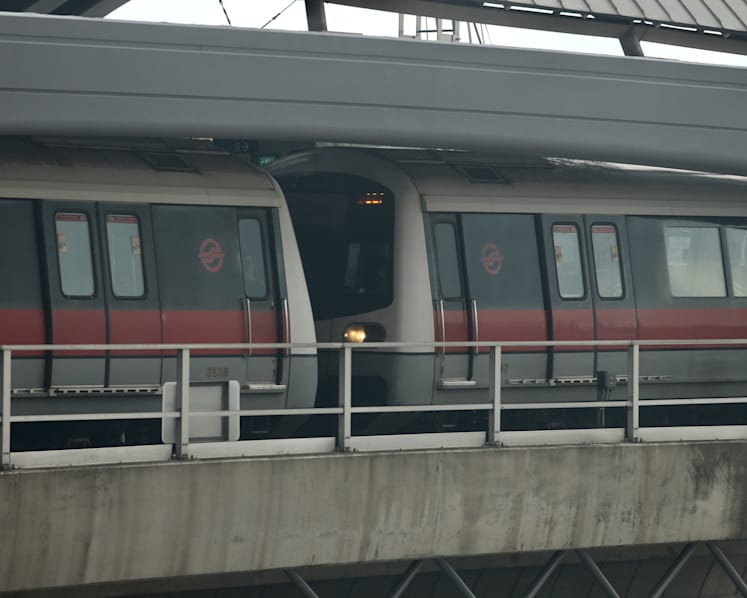
Photo: Koh Mui Fong/TODAY


SINGAPORE — About a week after two SMRT trains collided at the Joo Koon station, a female commuter remains in hospital with neck and back pain.
She is among the 38 people hurt in last Wednesday’s incident, the worst to hit the new signalling system here.
Giving an update on her conditon, SMRT Trains’ chief executive Lee Ling Wee said at a press briefing on Tuesday (Nov 21) that she remains warded at the National University Hospital for observation.
“We will try our best to provide assistance to the commuters,” Mr Lee added, without elaborating.





Asked about the type of compensation that will be offered the injured, he would only say: “We will be looking into these issues.”
Most of the 38 people injured in the collision were taken to hospitals for treatment, and have since been discharged.
Those affected by the incident may call SMRT’s hotline on 1800 336 8900 for assistance, or approach any SMRT station officers for help.
Giving an update on investigations into the collision, the LTA and SMRT said on Tuesday that the protective features designed to keep trains at a safe distance from one another had been knocked out not once, but twice that day.
The first happened as the faulty train left Ulu Pandan Depot to start its east-bound service that morning.
An “abnormal” loss of communications between on-board computers had disabled the feature that creates a so-called “first protective bubble” around a train.
Another protective bubble then kicked in, but as the train passed Clementi on its way to the east, a trackside device which had not been modified for the new signalling system knocked this second one out, too.
After the train captain discovered the first abnormal condition at Pioneer on its return journey to the far west, he was directed to Joo Koon, the next stop, to disembark commuters before the train was to have been withdrawn from service.
Things went awry when the driver closed the platform screen doors at Joo Koon, which lifted a “closed-track” protection mechanism, which prevents other trains from pulling in.
Failing to detect a protective bubble around the faulty train at Joo Koon, the second train — which was about 36m behind it — lurched forward and hit the faulty train.




