







Over 650 Volkswagen diesel vehicles here fitted with cheating devices
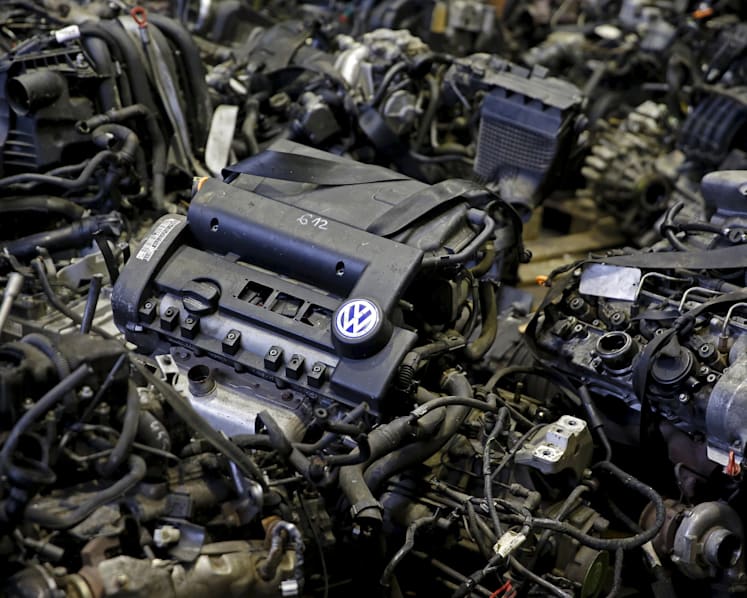
Volkswagen diesel engines. The 662 affected vehicles here include passenger and commercial vehicles, and models such as the Touran, Scirocco, CC and Caddy, said a Volkswagen Singapore spokesman. Photo: Reuters


SINGAPORE — German automaker Volkswagen’s global emissions scandal hit Singapore’s shores today (Oct 12), with news that more than 650 of its diesel vehicles registered here have been found to be fitted with devices designed to cheat in emissions tests.
In a statement released today, the National Environment Agency (NEA) said it has suspended approval for all Volkswagen diesel vehicle models fitted with the EA 189 EU5 engines. No new registrations are allowed until Volkswagen has rectified all affected vehicles.
“NEA takes a serious view of any misrepresentation by Volkswagen Group that their vehicles fitted with the EA 189 EU5 engines comply with the vehicle emission standards stipulated in the Environmental Protection and Management (Vehicular Emissions) Regulations,” it added.
Last month, Volkswagen confessed that about 11 million of its vehicles worldwide have been fitted with “defeat devices” -- software designed to reduce emissions of nitrogen oxides under test conditions.





The 662 affected vehicles in Singapore include passenger and commercial vehicles, and models like the Touran, Scirocco, CC and Caddy, said a spokesman from Volkswagen Singapore. He added that some have been plying the roads since 2010.
Volkswagen Singapore ceased sales of its diesel Touran model last month.
Following news of the emissions scandal, the NEA said it has been investigating if there are affected vehicles in Singapore.
“The top priority now is to ensure that Volkswagen provides the necessary rectification works for affected vehicles,” said the agency.
While affected owners can continue driving their cars, they will receive a notice from Volkswagen Singapore that may require their vehicles to be sent for rectification when the technical solutions are ready.
“Some of the vehicles might need a software update, and others might need some hardware changes…This is still being investigated and developed,” said Volkswagen Singapore’s spokesman. “We hope to get an update (from the headquarters) soon, and will continue to involve the government agencies and customers.”
He was unable to comment if those who decide to return the cars are entitled to refunds.
Lawyers said it will be challenging for buyers here to take legal action against Volkswagen, as any “loss” they may have suffered will be difficult to quantify.
“Unless the buyer could prove that the emission standard of the car was one of the key factors that persuaded the buyer to purchase the car, he would have some difficulty relying on this controversy as an excuse to return the car, or demand for compensation,” said lawyer Chia Boon Teck from Chia Wong LLP.
Mr Daniel Chia from Morgan Lewis Stamford noted greater room for legal recourse in Europe and the United Kingdom, where road taxes and vehicle insurance claims are pegged to emission standards.
Following findings by United States regulators that some of Volkswagen’s diesel vehicles were programmed to go on a “clean mode” when they were being tested for emissions, Volkswagen admitted on Sep 20 the deception and apologised. Third-party tests performed by the International Council on Clean Transportation had found that affected models, such as the Jetta, produced up to 35 times the legal limits in the United States.
Last month, the Obama administration directed Volkswagen to recall nearly half a million cars with the “defeat devices”.
Vehicles imported for sale to Singapore are required to comply with emission standards specified by European Union or Japanese authorities. For authorised agents, the testing is typically performed under controlled laboratory conditions during the manufacturing phase.




