







Inside an ICA dawn raid: How officers track down and arrest overstayers
A pre-dawn operation to arrest a man who overstayed for nine months reveals the planning, risks and challenges behind ICA's enforcement work.
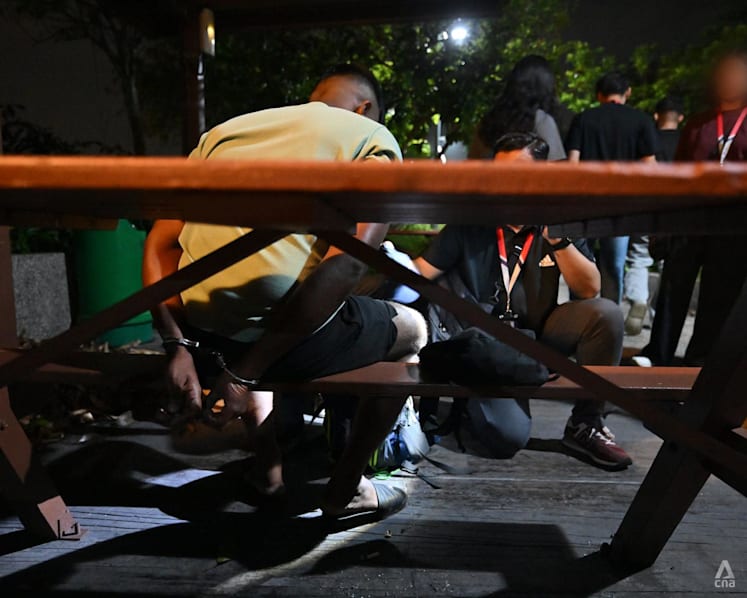
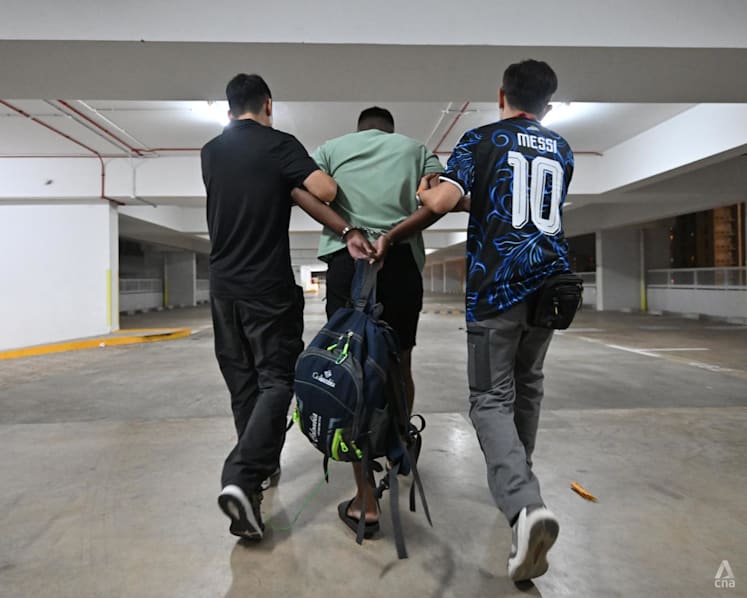
ICA officers arrest a Sri Lankan national at the multi-storey car park of Block 574 Woodlands Drive 16 on Apr 8, 2026, for allegedly overstaying in Singapore. (Photo: CNA/Jeremy Long)

This audio is generated by an AI tool.


SINGAPORE: The briefing room at the Immigration and Checkpoints Authority (ICA) building was already buzzing at 5am on Thursday (Apr 8).
A small group of officers – and journalists – had gathered for a dawn enforcement operation. The target: A 27-year-old man from Sri Lanka who had overstayed in Singapore for about nine months after his social visit pass expired on Jun 28, 2025.
Intel gathered on the ground suggested the man was rough sleeping at the multi-storey car park of Block 574 Woodlands Drive 16. Officers would verify his identity and immigration status, then arrest him under the Immigration Act for further investigation.
While the briefing was still underway, advance teams had already been deployed to the car park to watch for anything unusual.





Within 20 minutes, the meeting wrapped up and the convoy set off.
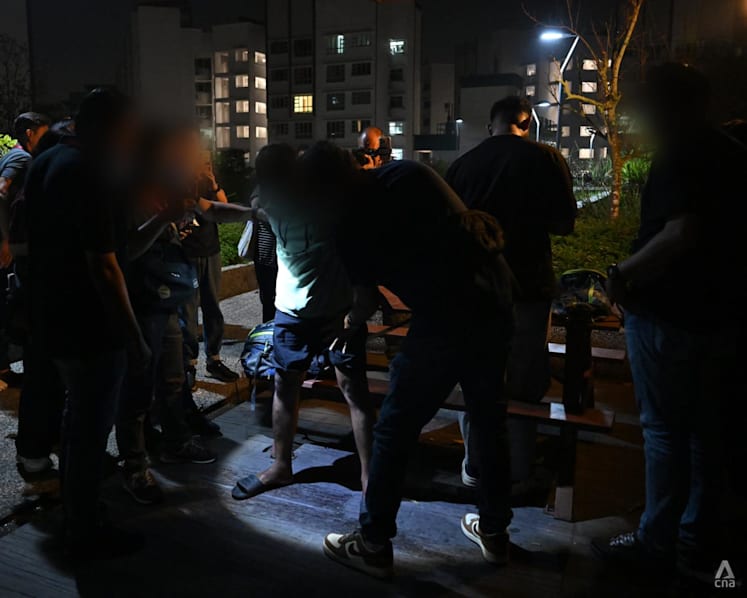
Officers arrived close to 6am. They fanned out across the car park, keeping a low profile as they scanned for the man. Once they had eyes on him, they moved quickly – approaching from both front and back.
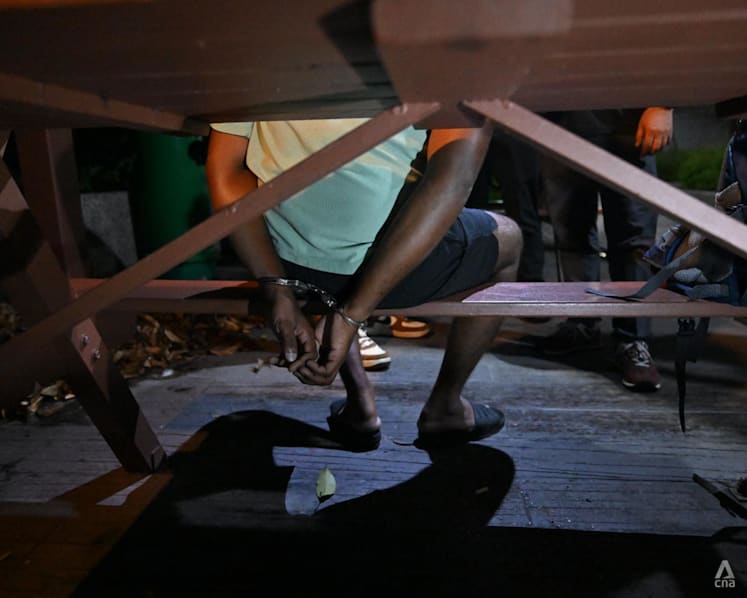
They questioned him, confirmed his identity using a mobile automated verification and identification system, then handcuffed him. Officers searched him and his belongings before leading him away.
By 7.30am, the man was back at the ICA building, handed over to the enforcement division for investigation.
SURVEILLANCE, PLANNING, EXECUTION
ICA conducts regular inland enforcement operations to arrest immigration offenders. In the past two years, the number of such arrests has remained roughly stable, the authority said.
But the mix has shifted: Arrests of illegal immigrants fell 11.4 per cent last year, while overstayers increased 1.9 per cent compared to 2024.
Before any raid, teams conduct surveillance at locations where offenders may be hiding, said Superintendent (SUPT) Toh Ah Sia, senior assistant director of the Intelligence Division.
Officers involved are briefed on their roles and objectives during what is called the pre-operations phase.
During the operation itself, officers secure all exit points – including windows – and remove any potential weapons once they gain access to a location. They verify the identities of everyone present using the mobile automated system. Those without valid stay in Singapore are arrested.
Through interviews and evidence gathered on the ground, officers try to establish who may have harboured or employed the offenders. These individuals are also arrested.
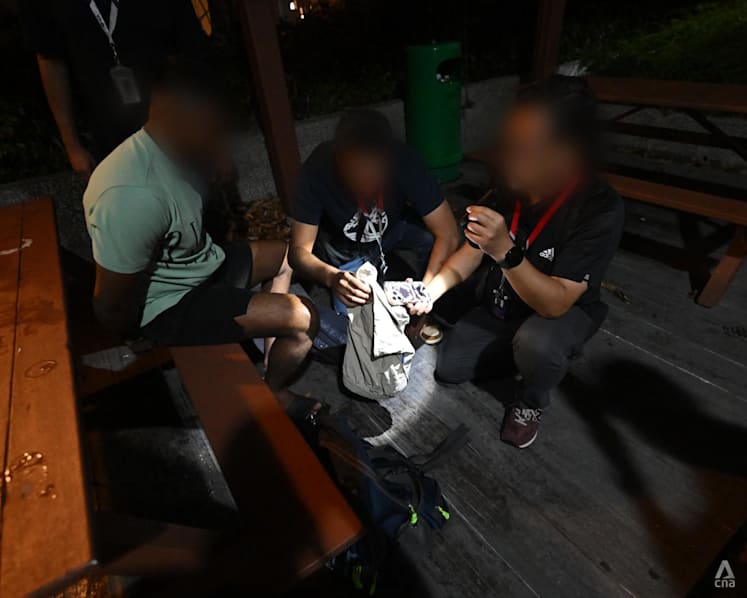
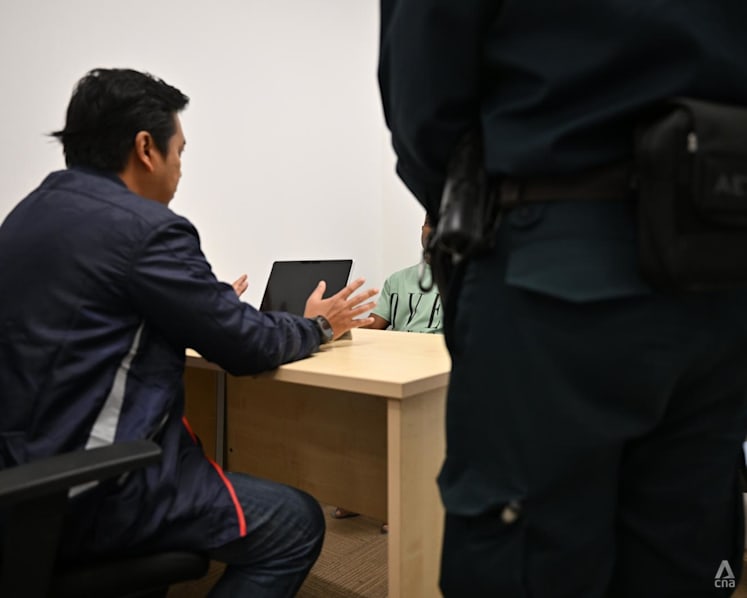
The arrested are referred to the enforcement division for investigation. Statements are recorded from the accused, and interviews may be conducted with witnesses, harbourers or employers to corroborate facts, said Assistant Superintendent (ASP) Mohamad Faiz Mohamad Kamal, officer-in-charge of the enforcement division.
Investigation officers clarify inconsistencies and verify details during interviews. They also collect evidence by reviewing documents, immigration and employment records, and digital proof such as phone calls, emails or closed-circuit television footage.
Once investigations are complete, the case is reviewed by supervisors and submitted to the Attorney-General's Chambers for prosecutorial direction. If there is sufficient evidence to prove the offence, the accused is charged in court.
After completing custodial sentences, foreign immigration offenders may be deported.
HOSTILE SITUATIONS
Safety – of officers, the public and immigration offenders – is always the top concern during operations, SUPT Toh said.
While some suspects may seem harmless or low-risk at first, initial engagement can escalate into a hostile or dangerous situation, he added. Suspects may resist arrest by putting up a struggle or climbing onto window or air-conditioner ledges.
Before each operation, the team simulates various scenarios that may occur during the actual raid. Multiple safeguards are put in place to ensure success, taking into account factors such as manpower, terrain and available information.
"The scenarios are numerous and planning more is encouraged. The challenge is to discern when the level of planning is sufficient to meet the desired operational outcomes," said SUPT Toh.
In cases where large numbers of immigration offenders are arrested, investigation officers must process complex information and carefully review evidence before making suitable assessments – often under tight timelines.
It is a role that requires sharp judgment, accountability and the ability to think on one's feet while staying objective throughout investigations, ASP Mohamad Faiz said.
These officers also regularly interact with individuals from diverse nationalities and cultural backgrounds. They must communicate effectively, navigating language barriers and cultural sensitivities while adapting their approaches to build rapport and gather accurate information.
Cross-border criminal activities are becoming increasingly prevalent, with technology improving connectivity and access to information, ASP Mohamad Faiz noted.
"Investigation officers must stay agile and keep pace with new methods used by offenders and emerging trends in immigration-related offences," he said, adding that they must develop new investigative techniques while maintaining strict standards.
On what keeps him going, the ASP said leading investigations and mentoring team members through complex cases provides a sense of fulfilment when they are successfully concluded.
SUPT Toh added that locating individuals who have deliberately gone off the grid can be demanding and requires persistence and close teamwork among officers.
"The eventual arrest of these individuals is especially gratifying for me, as it reflects the team's collective effort."




