







Panel to look into schools' adventure programmes
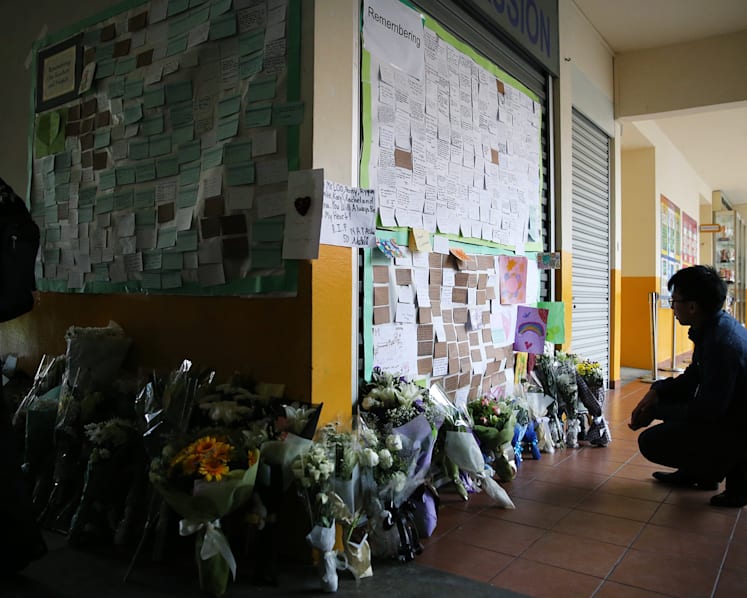
A visitor at Tanjong Katong Primary School viewing condolence notes left behind by mourners in tribute to the teacehers and students who perished in the Sabah Earthquake. TODAY file photo
SINGAPORE — The Ministry of Education (MOE) will be establishing an advisory panel to look into improving schools’ outdoor adventure learning programmes. The move comes in the wake of last month’s Sabah earthquake, which killed 10 Singaporeans, most of them primary school students.
The panel, comprising both local and foreign experts, “will provide MOE with additional input on enhancing the quality and safety of outdoor adventure learning programmes that are conducted locally and overseas”, Education Minister Heng Swee Keat said in a ministerial statement on the Sabah earthquake, delivered in Parliament today (July 14).
The MOE, which has been conducting annual audits of schools’ overseas learning journeys, will be looking into how to improve contingency plans for events such as natural disasters during this year’s audit, he added.
Members of Parliament had earlier asked whether the MOE will be reviewing the safety measures taken by schools for overseas expeditions.





The 10 Singaporeans — seven students and two teachers from Tanjong Katong Primary School (TKPS), and an adventure guide — were killed on Mount Kinabalu when an earthquake hit Sabah on June 5. A total of 18 people died in the disaster.
Mr Heng noted that overseas adventure learning programmes “have a high educational value”. As such, some schools use them to develop leadership qualities for selected groups of students, such as student leaders.
For TKPS, its leadership programme, Omega Challenge, comprises a three-day climb to the summit of Mount Kinabalu. Before sending its students on this year’s trip, the school had made several preparations such as conducting a detailed risk assessment, Mr Heng said.
On the day the earthquake struck, Mr Heng said a multi-agency delegation, together with several counsellors and TKPS teachers, flew to Sabah to provide direct support to the family members of the victims.
In light of the incident, Mr Heng said schools must continue to conduct risk assessments and take all the necessary safety measures and precautions. However, he added: “No matter how careful our schools may be in planning their overseas trips, events that are beyond our control and prediction may still occur, whether natural disasters or otherwise.”
Mr Heng said no schools will be allowed to take their students to Mount Kinabalu until its safety has been ascertained by the Malaysian authorities. He added that the Government will honour the staff and instructors who accompanied their students to Mount Kinabalu “in a manner that is befitting of their courage and sacrifices”.
Mountbatten Member of Parliament Lim Biow Chuan wanted to know what kind of counselling has been given to those who survived the earthquake.
Mr Heng said from the moment the earthquake occurred, the MOE had activated a “very large team” of counsellors from various government agencies, such as the Ministry of Health and the Ministry of Social and Family Development. He added that the students are “responding well”, and most of them are carrying on with their normal routines in school. “For those who need additional help, we will continue for as long as (they) need this, and our counsellors have been working with them,” Mr Heng said.
In response to media queries, the MOE said the annual audit of schools’ overseas learning journeys will be conducted at the end of this year, and the results will be shared with schools.




