







Plans in the pipeline to boost Singapore’s birth rate
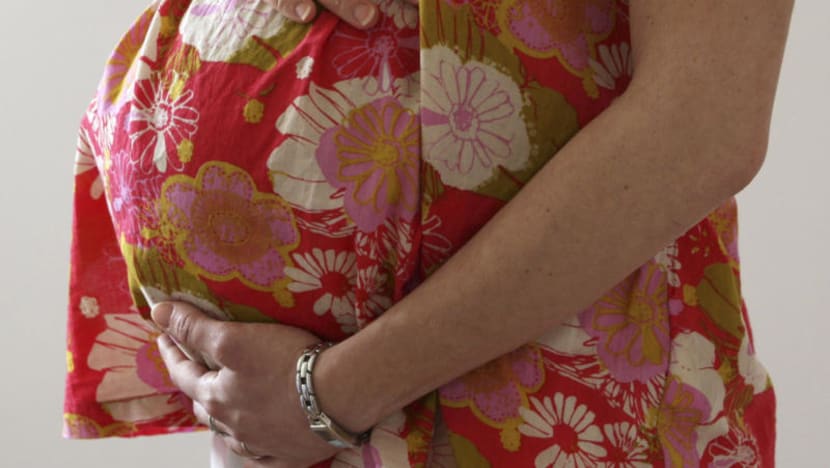
A woman in the advanced stages of her pregnancy. Reuters file photo
SINGAPORE — To boost the birth rate, the Government will provide more help to couples looking to have children. This is according to Minister in the Prime Minister’s Office Grace Fu, who shared that more details will be announced during the National Day Rally on Sunday (Aug 23).
Mrs Low Chiah Chern, 33, has always wanted a large family but she felt both blessed and anxious with the birth of her second child earlier this month. “We would love to have more children, of course, because it’s a blessing,” said Mrs Low, who is a blogger.
“As a parent, I do think that we should be able to provide financially, physically and also mentally for them. In Singapore, the fact is that education is very competitive so it totally comes down to our finances and time available for them instead of just love and fulfilling their basic needs.”
“We’ve heard from friends who had tried to apply their kids for childcare centres, and the waiting period is quite long,” said Mr Kelvin Low, a maths and science tutor. “There’s a long waiting list so we hope that through more childcare centres being built up in Singapore, this will solve the problem.





“At least it helps to encourage stay-home mums who eventually intend to go to work; at least they have a shorter waiting period before they can successfully enrol their kids.”
UPTREND IN BIRTH RATE
Despite such concerns, couples are going ahead with their childbearing plans. In the first seven months of this year, about 19,000 Singaporean babies were born - similar to that in the same period last year.
Statistics show an uptrend in the number of births from 2010. Last year, it stood at about 33,200 - the highest across 10 years. It was similar to the number of births in 2012 - the Year of the Dragon - which the Chinese consider auspicious.
For an analyst, the increase has its roots in policy adjustments. “This is the result of Singapore’s change from anti-natalist policies to pro-natalist policies in 1987,” said Mr Christopher Gee, research fellow at the Institute of Policy Studies.
“In 1988, in addition to it being a dragon year, we also had a very marked pick-up in the number of children born, so the girls who were born at that point in time are now getting to the age of 27, 28, and there will now correspondingly be more marriages and therefore, more births as well.”
The Marriage and Parenthood package was introduced in 2001. Since then, it has gone through several rounds of enhancements to make Singapore more family-friendly. By doing so, the Government hopes to encourage more couples to have children which will contribute to lifting the country’s total fertility rate, which refers to the average number of children born to a woman in her child-bearing years.
IMPROVEMENTS TO MARRIAGE AND PARENTHOOD PACKAGE
While the figure rose to 1.25 in 2014, it was still below the replacement rate of 2.1 to maintain population levels. This year, there will be further improvements to the Marriage and Parenthood package, such as in the area of childcare.
“We’re always looking at how to make our package more relevant to our young couples,” said Minister in the Prime Minister’s Office Grace Fu. “Some of them have told us that childcare arrangements are particularly challenging, especially for the younger children or infants, from zero to 18 months.
“First of all, I think they would prefer the children to be looked after at a more homely environment, and perhaps by someone that they are more familiar with, so some of the couples would look for nannies in the neighbourhood. I think these are good arrangements, and we’ll see how we can support them better.
“Mothers always struggle with this issue about whether they can balance work and family commitments, so we will look at how we can make flexi-work a little bit more prevalent in the society. They would also like to see their husbands playing a more supportive role as well, so that is another area that we’re keen to pursue.”
Ms Fu also said that to create a pro-family environment, various groups, such as employers and relatives, could play a bigger role. CHANNEL NEWSASIA




