







PM honours Lee Khoon Choy as ‘brave man who did not falter under pressure’
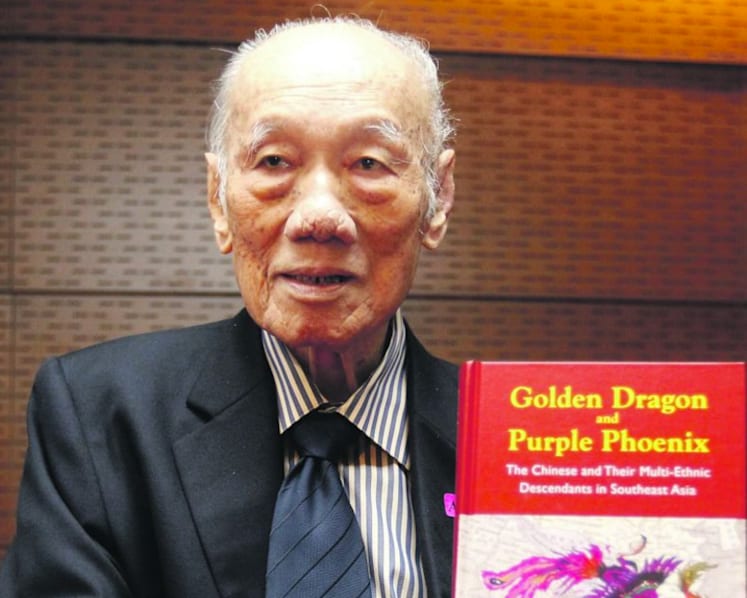
TODAY file photo


SINGAPORE — The late former politician and diplomat Lee Khoon Choy was, as founding Prime Minister Lee Kuan Yew put it, someone who “had it”: He was a man of courage who did not falter in the face of pressure.
Prime Minister Lee Hsien Loong said this on Sunday (Feb 28) in his letter of condolence to Mrs Lee Khoon Choy. The former member of the People’s Action Party (PAP) old guard, died on Saturday at the age of 92.
PM Lee noted how, in the early 1960s, when the PAP was battling pro-communist factions, the pro-communists had tried to woo Mr Lee into their camp, even resorting to scare tactics, including a death threat in the mail.
In 1961, Chinese secondary-school students staging sit-ins had also flung rotten apples and hurled Mandarin slogans of “Lee Khoon Choy, Enter the Coffin” at him.





But through it all, Mr Lee did not buckle. “He was steadfast and loyal till the end,” PM Lee wrote.
Starting out as a journalist in the 1950s, Mr Lee was recruited to join the PAP by the late former Deputy Prime Minister S Rajaratnam in 1959. He was elected Legislative Assemblyman for Bukit Panjang that same year.
Rising through the ranks, Mr Lee served as Parliamentary Secretary to both the Culture and Education Ministries.
In 1972, he was named Senior Minister of State for Foreign Affairs.
Mr Lee also boasted an illustrious diplomatic career, serving as Singapore’s ambassador and high commissioner to eight countries.
As Ambassador to Indonesia between 1970 and 1974, he was pivotal in thawing relations between Singapore and Indonesia, following the hanging of two Indonesian commandos behind the 1965 bombing of MacDonald House, which had resulted in the deaths of innocent civilians.
He had persuaded the late Mr Lee Kuan Yew to make a conciliatory gesture of scattering flowers at the graves of the two commandos in Jakarta.
“The gesture enabled Mr Lee to establish a relationship with President Suharto, and set Singapore and Indonesia on a path of friendship and cooperation,” PM Lee said.
Retiring from public service in 1988, Mr Lee returned to his first loves: Writing and painting.
PM Lee recalled launching Mr Lee’s book Golden Dragon and Purple Phoenix in 2013 — one of many works written by the late politician, whose paintings were also exhibited in Singapore and the region.
The Prime Minister, in rounding up his tribute, said Mr Lee was always interested in staying true to one’s roots.
“Indeed, as we remember his life, we remember our roots and what our pioneers like him did to put Singapore on the path it is today,” he added.




