







Getting there is the hardest part: The perennial issue of preschool absenteeism among lower-income families
On its own, financial incentives to motivate these families to send their children to preschool regularly won't work, say experts.
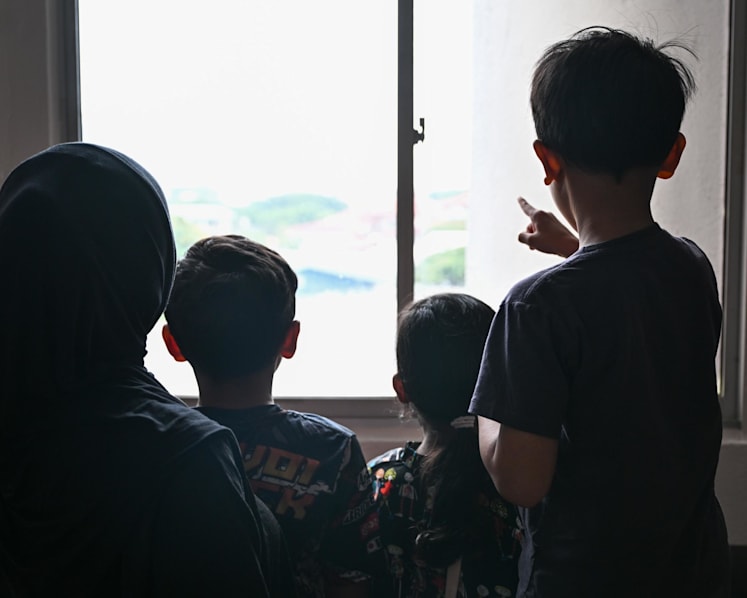
Madam Sri and her three children at Pertapis' office on Nov 22, 2025. (Photo: CNA/Tan Wen Lin)

This audio is generated by an AI tool.


SINGAPORE: Madam Sri glanced at her watch, which was set 15 minutes fast, as she hustled through her morning routine with her children in tow.
It was a school holiday, so the older primary school-aged kids were with her while she got her errands done.
Despite the frenetic rush, she called it a “good day” because her preschoolers made it in on time. Most days, just getting out the door of her rented Housing and Development Board flat is a test of endurance.
The 38-year-old unemployed mother suffers from a herniated disc and bone spurs. The pain can be so intense that even the 10-minute walk to school feels impossible.
“Every day I wake up in pain,” she told CNA. “Every day I ask myself — can I really send them to school today?”
Some nights, the painkillers knock her out so deeply that she oversleeps, said the homemaker who only wanted to be identified by her first name.
The children end up missing school.
When one child falls ill, as they often do, the entire routine also unravels.
In June and July, Mdm Sri’s two children who attend preschool ended up as absentees for nearly half the month due to sickness.
Their attendance for the second quarter slipped below a 75 per cent threshold to receive financial incentives under ComLink+, a national scheme to uplift lower-income families.
Under the scheme, introduced in 2024 by the Ministry of Social and Family Development (MSF), eligible families receive a one-off CDA top-up of S$500 when a child is enrolled in preschool in the year they turn three — and S$200 for every quarter if they attend preschool regularly.
Funds from the CDA account can go towards education, medical expenses and other essentials like supplements.
By the end of 2024, corporate organisations supported more than 500 ComLink+ programmes and activities. They contributed S$37 million (US$28.7 million) in donations and other support, such as groceries, family outings and digital literacy programmes.
There are 10,219 families in the ComLink+ scheme at the end of 2024, according to data released by the Ministry of Social and Family Development (MSF) on Dec 16. Families are also paired with dedicated family coaches, who will work with them to tailor customised action plans and motivate them towards achieving their goals, among other things.





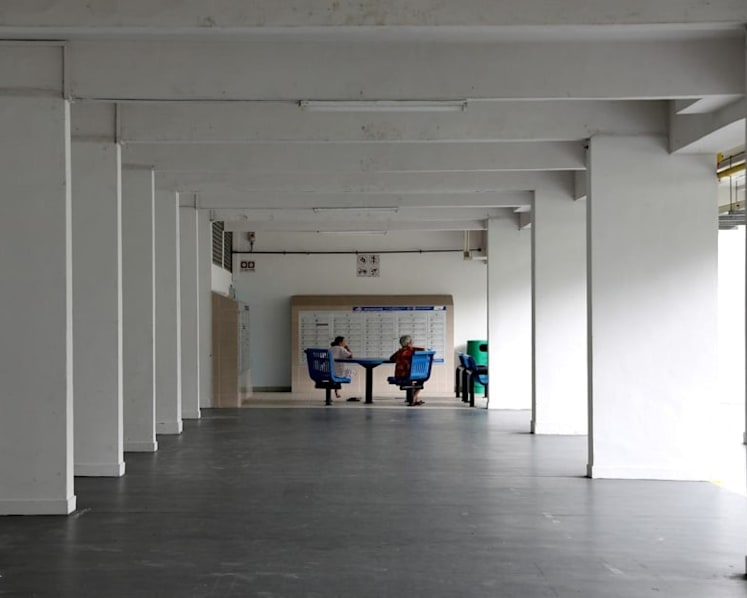
According to the MSF report, the number of ComLink+ families in 2024 who had children who were enrolled in a preschool, vaccinated and attended preschool regularly increased from 405 in 2023 to 712 last year.
The increase is due to changes in data collection to include more preschools, MSF said.
The report’s findings also showed that 46 per cent of ComLink+ families in 2024, or 1,593 households, had children who were enrolled in preschool and had received compulsory vaccinations but did not attend regularly.
There were also 1,158 families within the programme whose preschool-aged children were neither enrolled nor vaccinated in 2024.
These numbers still show that preschool attendance remains an issue for lower-income families.
Speaking to CNA, several social workers said the barriers to daily preschool attendance are layered and complex, noting that no two families share the same circumstances or challenges.
Some of the most commonly cited factors include long distances between home and school, irregular working hours, limited caregiving support and the fact that these challenges often intersect.
ARE FINANCIAL INCENTIVES ENOUGH?
Low preschool attendance is a perennial issue for low-income families, and many families living in rental flats face similar challenges as Mdm Sri.
Lower-income families interviewed by CNA said they are keen to grow their children’s CDA savings and rely on the S$200 quarterly incentive, though social workers believe that other non-financial support is also needed.
The incentives for regular preschool attendance aim to encourage families to prioritise their children’s preschool education and help improve their school readiness and future educational outcomes, MSF previously said when the programme was launched.
While these financial rewards are helpful, monetary incentives are not enough on their own, said Ms Joyce Ang, group head of Touch Integrated Family Group at Touch Community Services.
"The financial incentive works as a nudge for stable families but does not address the core issues affecting many low-income families which are largely structural and related to caregiver bandwidth."
Responding to queries from CNA, a spokesperson from Beyond Social Services said the issue is also less about motivation but about practical support.
“Financial incentives are useful but work best when complemented by community-based support, such as trusted networks within the neighbourhood that can help families manage day-to-day disruptions.”
“This is why the next step cannot rest on incentives alone. What more needs to be done is to strengthen community-based support within neighbourhoods, trusted, practical help that families can rely on in real life.
Ms Lim Sheau Huey, senior social worker at Fei Yue Family Service Centre, suggested that instead of an “all-or-nothing approach,” where parents either receive the S$200 incentive or do not, a scaffolding model might better motivate families.
“Start where families can manage and incentivise incremental improvements.”
PROXIMITY TO PRESCHOOL “CRUCIAL” TO KEEP ATTENDANCE UP
For many lower income families, experts said sending a child to preschool also involves juggling multiple stressors - irregular work hours, caring for multiple children with differing needs, managing physical health or mental-health challenges and coping with financial strains.
For one, the distance between a child’s home and school is a major contributor to irregular attendance as it often determines whether a parent has the capacity to send them to school.
“When the preschool is far, any obstacle can make it harder for them to cope. For some families, distance is not just an inconvenience, it is the trigger point that makes regular attendance unsustainable,” said Ms Ang from Touch Community Services.
Mr Clivon Heng, a family coach at MSF, said the home’s proximity to the preschool is “crucial” for maintaining regular attendance.
This is what he has experienced with a number of his clients, such as Ms Maznah, who has to send one child to an early intervention for infants and children (EIPIC) centre, and her other children to another pre-school.
While the EIPIC centre is a 15-minute bus ride away, the preschool is less than a five-minute walk from home.
With it being so close by, she is able to send her children to school regularly and meet the monthly attendance requirements.
“For some families in rental flats, the location of the school nearby has a long waiting list. Even if they are able to find an alternative, it can be quite a distance away and this increases their transportation costs,” said Mr Mohamed Noh Adam, manager of programmes and community outreach at Pertapis.
More often than not, these are families living paycheque to paycheque, and even small additional costs for transportation can strain their budgets.
“We do have families that really want to enrol their children into a preschool which may require travelling. When the transport issues come, it can prevent or hinder them in terms of regularity of attendance,” said Ms Lim from Fei Yue.
In fact, Ms Lim noted that for many families with children attending early intervention programmes at a different location, the added travel creates extra hassle and cost.
“From my experience, there is a sizeable number of families who would really benefit from financial assistance for transportation,” she said.
Offering transport subsidies or incentives, including Grab vouchers or credits for parents, could provide short-term support to families in need, Ms Lim added.
Another concern is that some parents perceive preschool as “just a place where children go to play”, and may therefore feel it is not worth the time and effort it takes to get their children there regularly.
“While most parents generally understand the importance of education, our experience suggests that life circumstances often make it difficult to prioritise preschool attendance,” said Touch’s Ms Ang.
“For instance, if families are struggling to meet fundamental needs like putting food on the table, they will naturally de-prioritise preschool education to ensure they can meet basic human needs.”
In October, a preschool in Bukit Merah that served children from lower-income families announced that it would close down by end-2025 due to falling enrolment arising from the fact that more affordable and accessible preschools have become available in the estate.
Nevertheless, Beyond Social Services, which operates the Healthy Start Child Development Centre preschool, said that families still struggle with transport issues and irregular work hours, among other issues.
Responding to queries by CNA on preschool proximity, MSF said that ECDA (Early Childhood Development Agency) plans for the supply of preschool places to meet anticipated enrolment demand.
“It considers various factors including demographic trends, projected resident birth rates, enrolment patterns and availability of preschool places within each planning area.”
ECDA further works with anchor operator preschools to provide priority enrolment to children from families with a gross monthly income of up to $6,000.
ECDA is also supporting a pilot programme in select anchor-operater preschools to offer additional support for preschool attendance and learning for children from lower-income families, the ministry said.

A SHARED DESIRE TO IMPROVE ATTENDANCE
Despite the daily obstacles, many parents understand the importance of preschool — and are trying to make it work.
While attitudes differ across generations, it tends to be the younger families who place stronger emphasis on early education, said Pertapis’ Mr Mohamed.
“We do see that younger parents recognise the importance of education. They want their children to break out of the cycle and to start on the same footing as their peers,” he said.
Lina (not her real name), a mother supported by Beyond Social Services, said she looks forward to hearing about her children’s day at school.
“The kids are more cheerful after they attend school and will go on and share their day and what they did,” said Ms Myna Raju, a community worker at the social service agency who supports Lina.

“On top of academics, it is the social aspect, the regulation of moods, and using up their energy so they are not as restless when they get home because they are meaningfully engaged throughout the day.”
CNA also spoke to families under ComLink+ who do not face major barriers with attendance, to understand what helps.
For one rental flat resident who wanted to be known only as Raudhah, a structured routine and setting clear roles with her husband, such as who does the dropping-off and the picking-up of the kids, made all the difference.
“Having the school close by really helps because we can quickly drop them off before heading to work. It also puts our minds at ease knowing they are being engaged in school,” she said.
“If they miss school, I will have to take childcare leave to look after them. That is also not always easy.”
SUPPORT AVAILABLE
Over the years, social service agencies have developed a range of support programmes to help families navigate such challenges on the ground that cannot be resolved by financial incentives.
MSF has been hiring family coaches and progressively extending ComLink+ support to eligible families too.
“Over the next few years, MSF aims to support around 10,000 families living in public rental housing that have agreed to work with us, and another 3,000 families eligible for KidSTART or with children at risk of long-term absenteeism, but not living in public rental housing,” the ministry said in a report from 2024.
At Touch Integrated Family Group, social workers have found that the “most effective” approach for improving preschool access is through targeted and personalised support rather than mass programmes.
“This requires understanding each family's unique situation and addressing the active barriers that keep them from accessing preschools. These obstacles often vary from one family to another,” said Ms Ang.
“Ultimately, support must be extended to improve a family's overall circumstances, such as employment, finances, savings, and health, to ensure families have the necessary resources and cognitive bandwidth to focus and prioritise their children's longer-term needs.”
Another pilot programme, Project Care by Beyond Social Services, aims to strengthen the capacity of low-income parents through community-based support.
It helps families tap into community resources and encourages meaningful engagement with their children’s development both in school and at home.
The project also supports early learning habits among toddlers and young children aged 18 months to six years.
“While these children continue to attend mainstream childcare, the initiative helps them build regular attendance habits and develop key competencies to better prepare for primary school,” said Ms Raju.
Still, parents and social workers said more could be done, especially to ease the logistical and emotional load.
For one, financial assistance for transportation would make a significant difference to help parents send children to preschools that are further away. Others proposed peer support networks that allow parents from the same block to bring their children to school together.
Fei Yue’s Ms Lim also highlighted that it is important for all parties involved to be more understanding and flexible in how the needs are met.
“If there could be more collaboration and more understanding in the processes, we can make it easier and smoother for the parents to access support.”




