







Residents in all constituencies to be trained over the next two years as 'active responders' in times of crisis
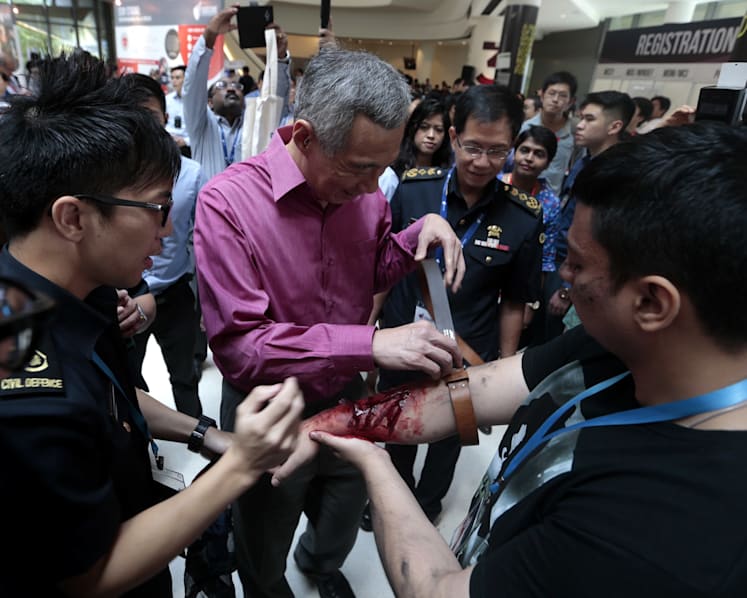
PM Lee Hsien Loong attending the official launch of SG Secure at SUTD where he wraps a bandage on a mock victim. Photo: Jason Quah/TODAY


SINGAPORE — As part of the counter-terror SGSecure movement, at least 300 residents in every constituency will be trained in basic life-saving skills, such as how to administer cardiopulmonary resuscitation using automated external defibrillators (AEDs).
The aim is to empower the community to be "active responders" in times of crisis. To date, more than 1,800 residents have been trained in six pilot constituencies: Bedok, Bukit Panjang, Chua Chu Kang, Pasir Ris West, Radin Mas and Tampines West. From 2019, AEDs will also be installed at every other Housing and Development Board block. So far, 387 units have been installed at the lift lobbies of blocks in the pilot constituencies, said Prime Minister Lee Hsien Loong, who provided updates on Saturday (Sept 24) on the official launch of SGSecure.
New vocations have also been formed in the Singapore Police Force and Singapore Civil Defence Force to educate the public on how to cope with the terror threat. Since May, national servicemen and full-time national service officers have been visiting homes in Singapore to raise awareness, explain what to do in a crisis, and encourage participation in SGSecure programmes.
At least one person in each household must be trained to identify suspicious behavior and items, and report them to the authorities, said Mr Lee.
Another key feature of SGSecure is the revamped Emergency Preparedness Day (EP Day), which simulate terrorist attacks in the heartlands and train residents in emergency skills.
This has been launched in Chong Pang, Jurong Spring and Toa Payoh West-Balestier so far, with more than 2,700 residents and volunteers in these areas trained in basic life-saving skills. EP Days will be rolled out in all 89 constituencies over the next two years.
Crisis response exercises will also be conducted to train community leaders and emergency response teams on how to manage communal relations and "bounce back quickly" after an incident, said Mr Lee. The People's Association will also hold workshops to equip residents with relevant skills and knowledge on on community vigilance.




