







CNA Explains: What are Roblox and Gorebox, and how might they be used for radicalisation?
Roblox started as a user-driven endeavour, but it has been used for child grooming and radicalisation. CNA’s Fabian Koh takes a closer look at the dangers that lurk on such platforms.
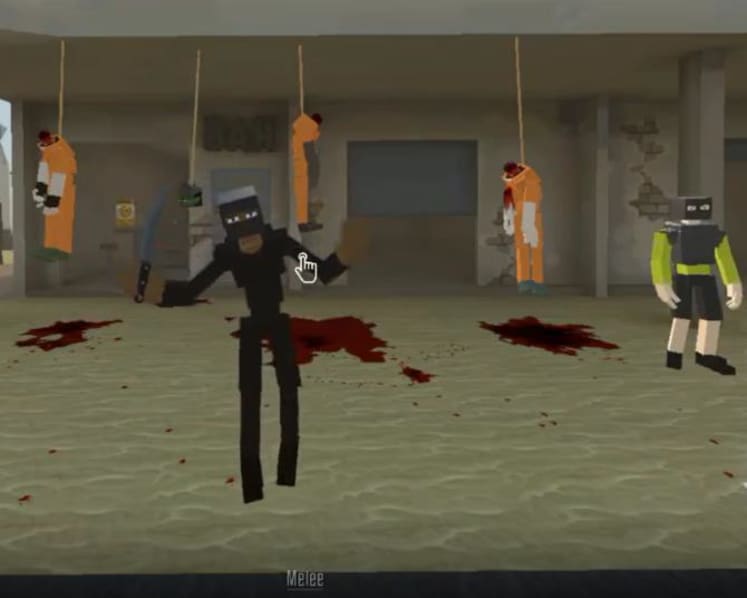
Screenshot of a 14-year-old boy's Roblox and Gorebox gameplay footage, where he recreated ISIS attacks and executions. (Image: Internal Security Department)

This audio is generated by an AI tool.


SINGAPORE: A 14-year-old boy used Roblox and Gorebox to recreate terror attacks and executions, roleplaying as an ISIS fighter killing “disbelievers”.
The Internal Security Department on Wednesday (Jan 28) said the teenager was issued a restriction order under the Internal Security Act for self-radicalisation.
This is not the first instance in Singapore where such online platforms have emerged as a tool for the radicalisation of youths.
In 2023, a 16-year-old boy was similarly issued a restriction order after he joined multiple ISIS-themed servers on Roblox and regarded himself as an ISIS member in these games.





While several countries have moved to ban Roblox, experts told CNA that it exists in a grey area when it comes to Singapore legislation, as it does not count as a social media platform.
CNA takes a closer look at the draws and dangers of such platforms.
WHAT ARE ROBLOX AND GOREBOX?
The name Roblox was derived from a mash-up of the words “robot” and “blocks”. It was released to the public by founders Dave Baszucki and Eric Cassel in 2006.
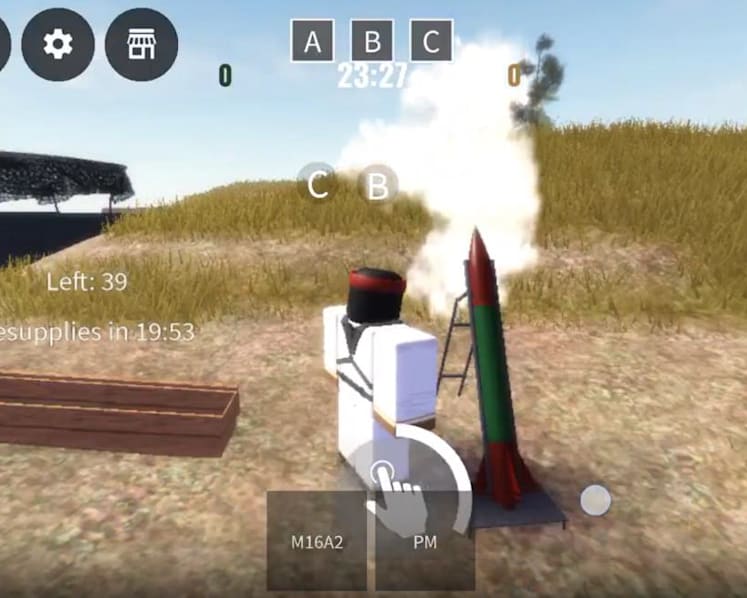
Users on the US-based online platform can play games – known as “experiences” – created by themselves or others.
These games can vary from simple puzzles to complex shooting or role-playing simulations. Users are also able to chat and form groups to play games together.
Games are created with a tool called Roblox Studio, which has an interface that guides users through the process. This includes creating game environments such as obstacle courses, designing characters and objects and testing and debugging games.
The BBC has reported that Roblox is one of the world's largest gaming platforms, with more monthly users than Nintendo Switch and Sony PlayStation combined.
According to Roblox’s website, it has more than 150 million daily active users, with 3.5 million developers as of the third quarter of 2025.
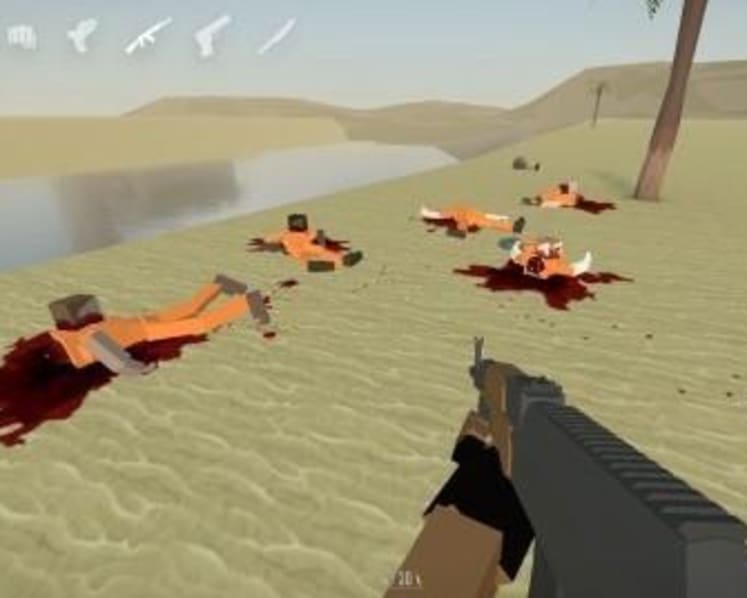
Gorebox is a newer game, released in July 2022, that focuses on extreme violence, gore, and destruction. It can be downloaded on PC gaming distribution platform Steam and on the Google Play Store.
On Steam, the game is described as “a chaotic physics-driven sandbox where creativity meets destruction”. Players can customise their characters and battle with friends.
HOW ARE THEY HARMFUL?
The dark side of the gaming platforms includes youths being exposed to violence and radicalisation, and sexual predators grooming victims online.
An S Rajaratnam School of International Studies (RSIS) paper published in October last year noted that online gaming spaces have become fertile ground for extremist ideologies since the mid-2010s, particularly with the growth of social gaming.
What was once dismissed as harmless trolling has, over the past decade, evolved into a pathway for radicalisation and violence, wrote research intern Noah Kuttymartin.
“Extremists have not only gamified hate, embedding it in the language, aesthetics and culture of gaming, but have also operationalised it by using gaming platforms as tools for recruitment, planning, and psychological conditioning,” he said.
They leverage gaming’s appearance as harmless entertainment to subtly spread hateful content, such as by embedding extremist narratives within the norms, humour and aesthetics of gaming culture, making it harder to detect.
Associate Professor Razwana Begum, head of global security and strategy at the Singapore University of Social Sciences, said that repeated exposure to violent narratives, especially when framed through play, role-play or simulation, can gradually reduce one's emotional resistance to harm.
"Over time, violence may feel less shocking and more familiar, particularly to young users who are still forming moral frameworks," she said.
Gaming platforms also blur the boundary between fiction and reality.
When users are encouraged to create content, simulate violence or role-play scenarios, harmful ideas may be experienced as abstract or detached from real-world consequences, which partly explains how harm can take root subtly and cumulatively, she added.
RSIS Associate Research Fellow Jasminder Singh noted that the easy access to such content also "desensitises a person and they begin to think it is fine to actually partake in all this activity that they see online".
Such online platforms have flipped the script on the radicalisation process, from offline to online to the other way, he said.
"In the past, it was offline to online – you would meet the person offline first, then you start to exchange messages online. Now it's online to offline," he added.
Young users' views and perspectives are also reinforced by the groups that they form and the people they interact with online, said experts.
"It is an echo chamber because you are only interacting with people who agree with your thoughts," said Mr Singh.
"Here comes a stranger whom you've never met, you do not know who it is, but to you he's the right person because he agrees with your thoughts."
Assoc Prof Razwana noted that individuals are rarely drawn into harmful belief systems through content alone, but through relationships formed through shared interests, humour, collaboration and trust.
"Social gaming platforms enable exactly these kinds of relationships, often in private or semi-private spaces where oversight is limited," she said.
GROOMING DANGERS
Besides radicalisation, young users on the platform are also exposed to other dangers.
Earlier this month, 15-year-old Thomas Medlin went missing from school in New York. Detectives told his family they believe he had rushed off to meet someone he reportedly met on Roblox.
In the UK, a nine-year-old girl was befriended by a sexual predator on Roblox before being sent sexually graphic images and messages, according to her mother.
The girl had been asked to download Discord, where the stranger then sent her these explicit messages and materials.
Bloomberg reported in 2024 that since 2018, police in the US have arrested at least two dozen people accused of abducting or abusing victims they had met or groomed using Roblox.
Mr Singh said that while such cases of grooming have not really been seen here, it is something that should not be taken lightly.
"It all comes down to building trust. If you look at today's generation, their communication is very much different.
“There is this sort of thing, maybe we can call it a generational gap, that they feel they trust people in their age group more than people who are older," he added.
Anonymity makes it difficult for children to accurately assess who they are interacting with, noted Assoc Prof Razwana.
"Research on online harm consistently shows that young users often assume they are engaging with peers, even when that is not the case," she said.
Mr Singh explained that in such situations, children tend to divulge too much information to the stranger, who takes advantage of them.
The aesthetic and emotional design of gaming platforms also lowers perceived risk for younger users, said Assoc Prof Razwana.
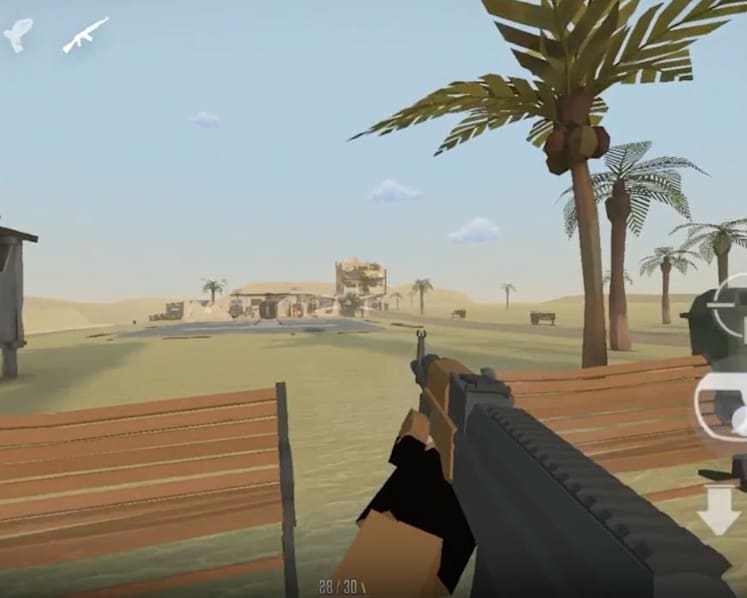
"Bright visuals, playful avatars, fantasy worlds and cute imagery create an environment that feels safe and familiar, even when harmful interactions are taking place," she said.
Groomers also exploit the developmental gaps of children, who are developing critical skills such as impulse control, boundary recognition and the ability to detect manipulation.
Many children also remain silent in such encounters due to fear of punishment, shame or losing access to games, hence letting the harm escalate without adult awareness, said Assoc Prof Razwana.
WHAT SHOULD SINGAPORE DO?
Mr Singh noted that "there is a grey area" when it comes to regulating a platform like Roblox.
"The issue is that it sits between a game and an application. If you look at the IMDA's regulations and everything, it's more to do with social media," he said. "Do we need a new law or legislation altogether to look at games like Roblox?"
He added that when gaming platforms first emerged as a radicalisation threat back around 2015, they typically targeted older players.
"For Roblox, it seems the target group is much younger children," said Mr Singh.
Singapore introduced the Code of Practice for Online Safety–Social Media Services in July 2023, which requires designated social media services to put in place systems and processes to prevent Singapore users, particularly children, from accessing harmful content.
Designated app stores must also put in place age assurance measures by Mar 31 to prevent users under 18 from accessing inappropriate apps.
A Bill to establish a new Online Safety Commission would also be tabled.
In parliament in November last year, MP Elysa Chen (PAP-Bishan-Toa Payoh) asked the government to consider extending privacy safeguards and age assurance measures to gaming platforms and other apps that young people use.
Assoc Prof Razwana said that regulation should focus less on platform labels and more on their functions.
"Roblox may not fit neatly into existing categories such as 'social media', but it clearly operates as a social, creative, and immersive ecosystem. Risk assessments and safeguards should reflect how platforms are actually used, not how they are classified," she said.
She added that there is scope to strengthen age-appropriate safeguards within platforms, such as safer default settings for minors, reduced discoverability of unmoderated spaces and clearer reporting and feedback mechanisms for young users.
Beyond regulation, more can also be done at the societal level to combat this scourge, said experts.
Assoc Prof Razwana said community-based prevention and digital resilience, particularly at home, in schools and at the neighbourhood level, should be strengthened.
Research on radicalisation has shown that early intervention is most effective when trusted adults notice changes in behaviour, ask difficult questions and stay engaged without judgement.
"This requires equipping parents, educators, and youth workers with the confidence and language to talk about online experiences, including gaming, rather than approaching these spaces with fear or unfamiliarity," she said.
In the latest case of the 14-year-old, his family and friends were aware of his extremist views and support for ISIS, but none of them reported him.
There is a need to foster shared norms of care within youth communities, added Assoc Prof Razwana.
Peer relationships are powerful in gaming spaces, and young people often turn to one another before turning to adults.
“Community-based programmes that encourage empathy, bystander responsibility, and moral courage can help young users recognise harm and support one another before issues escalate," she said.
WHAT ARE OTHER COUNTRIES DOING?
Roblox announced in September last year that it would be expanding age estimation to all users.
“Using a combination of facial age estimation technology, ID age verification, and verified parental consent, this process will provide a more accurate measure of a user's age than simply relying on what someone types in when they create an account,” said chief safety officer Matt Kaufman.
Australia implemented a social media ban in December last year, but those rules do not apply to Roblox.
In the US, some states are taking legal steps against Roblox. Texas Attorney General Ken Paxton filed a lawsuit against the firm, accusing it of neglecting safety laws and misleading parents about the dangers posed to young users.
In Louisiana, Attorney General Liz Murrill sued Roblox for failing to implement effective safety measures to protect child users from adult predators.
Florida's Attorney General James Uthmeier said his office is issuing criminal subpoenas to Roblox, calling the video gaming platform a "breeding ground for predators" that puts children at risk.
Malaysia’s Southeast Asia Regional Centre for Counter-Terrorism is studying the experiences of gamers within online environments, and looking at potential ways to counter the trend of extremist influence in these spaces.
The gaming platform is also blocked in China and Russia.
There has been a wave of regulatory crackdowns across the Middle East in response to rising child safety concerns on Roblox.
In Saudi Arabia and the United Arab Emirates, communication features on the app, including voice chats and text messaging, have been suspended.
Other countries, including Iraq, Qatar, Turkey and Oman, have restricted or blocked access to Roblox entirely.




