







S R Nathan a great advocate of closer M’sia-S’pore ties: Najib
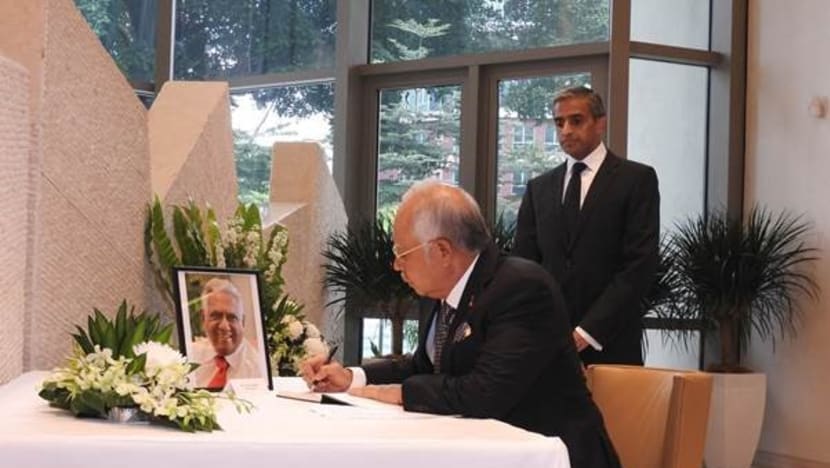
Malaysian Prime Minister Najib Razak signing the condolence book of former President S R Nathan at High Commission of the Republic of Singapore in Kuala Lumpur on Aug 26, 2016. Photo: Ministry of Foreign Affairs
SINGAPORE — Malaysian Prime Minister Najib Razak on Friday (Aug 26) lauded Mr S R Nathan’s efforts in forging bilateral ties between Singapore and Malaysia as he paid tribute to the Republic’s former President.
“The late President, when he was a High Commissioner and subsequently President of Singapore, was a great advocate of closer ties between Malaysia and Singapore, and for this we are very much appreciative of his contributions,” Mr Najib wrote in the condolence book at the Singapore High Commission in Kuala Lumpur on Friday morning.
“On behalf of the government and people of Malaysia, I express my heartfelt condolences.”
In a tweet later in the afternoon, Mr Najib reiterated his condolence message and tribute to Mr Nathan.





“He’ll be remembered,” Mr Najib wrote on Twitter.
Mr Nathan had served as Singapore’s High Commissioner to Malaysia between 1988 and 1990. During Mr Nathan’s stint in Kuala Lumpur, he deftly managed several difficult bilateral issues including the signing of a new agreement in 1990, to supplement the 1962 Water Agreement.
This new agreement led to the building of Linggiu Reservoir, which allows the PUB to draw water from the Johor River, an important water source for Singapore.
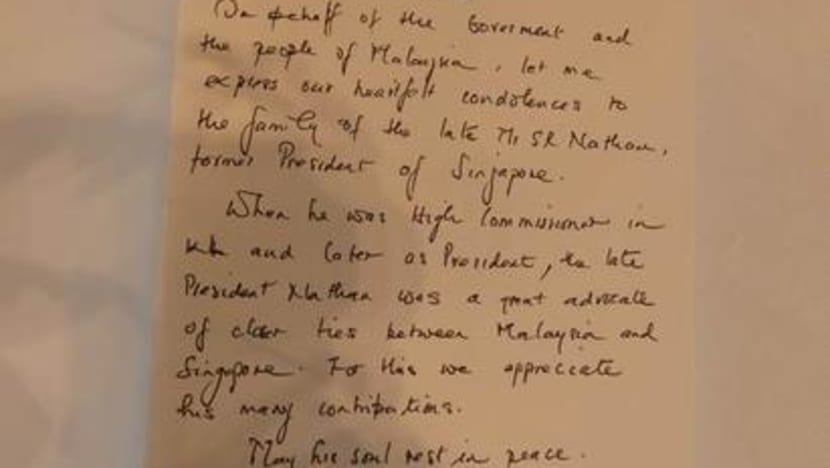
Malaysian Prime Minister Najib Razak’s condolence message to Mr S R Nathan. Photo: Ministry of Foreign Affairs
Other world leaders also penned condolence messages at various Singaporean overseas missions, as a mark of respect for Mr Nathan.
Mr Najib was one of the first world leaders to express his condolences on Aug 22, posting his condolence message on Twitter shortly after Mr Nathan’s death.
On Friday, three Malaysian Ministers attended the State Funeral held at the University Cultural Centre, led by Transport Minister Liow Tiong Lai. He was accompanied by Youth Minister Khairy Jamaluddin and Minister in the Prime Minister’s department, Joseph Kurup.
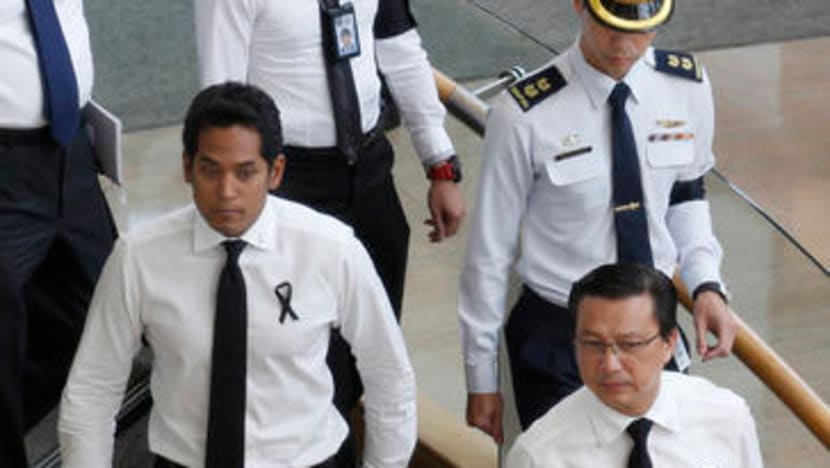
Malaysia's Minister for Youth and Sports Khairy Jamaluddin and Malaysia's Minister of Transport Dato' Sri Liow Tiong Lai. Photo: Raj Nadarajan
“Malaysia would like to express our heartfelt condolences to Singapore and Mr Nathan’s family. We lost a good friend and a great diplomat who had contributed a lot to the bilateral ties between Malaysia and Singapore,” said Mr Liow to TODAY.
Mr Liow added: “He has been helping to build bridges between Malaysia and Singapore, working very hard to improve bilateral relations, and we can see the results today.”
“We are really deeply saddened over his demise and we will remember him for a long time. Mr Nathan was a very calm and polite, very fatherly figure to us,” he recounted, adding that even after he became President, he continued to visit Malaysia to see his “old friends”.
Indonesia’s Minister of Foreign Affairs Retno Marsudi and Brunei’s Minister for Development Bahrin Abdullah also attended the State Funeral.
Before the funeral procession to the University Cultural Centre on Friday, 81 members of the diplomatic and consular corps paid their respects to Mr Nathan, on the second day of the lying-in-state at Parliament House.
On Thursday, Japanese Prime Minister Shinzo Abe paid his last respects to Mr Nathan at Parliament House. Mr Abe, who was accompanied by his wife Akie Abe, was on his way to a conference in Kenya, and had stopped over in Singapore. He was received by Prime Minister Lee Hsien Loong, and also met with Mr Nathan’s wife, Madam Urmila Nandey.
Mr Abe also wrote a letter of condolence addressed to Mr Lee. In the letter, Mr Abe called Mr Nathan, who was the Republic’s sixth President, a “friend of Japan” who had played a significant role in furthering ties between the two countries.
Noting that Mr Nathan spoke Japanese — he had been a translator during World War II — Mr Abe also paid tribute to Mr Nathan’s role in resolving the Laju ferry hijacking in 1974, which involved two members of the Japanese Red Army.
As President, Mr Nathan made a state visit to Japan in 2009. There, he met the victims of the Hiroshima atomic bomb, the first foreign head of state to do so. AGENCIES, WITH ADDITIONAL REPORTING BY KELLY NG




