







More funding for manpower, easier reporting channels to tackle school bullying
Additional needs-based funding will help schools hire youth workers, pastoral care officers and parent liaison officers.
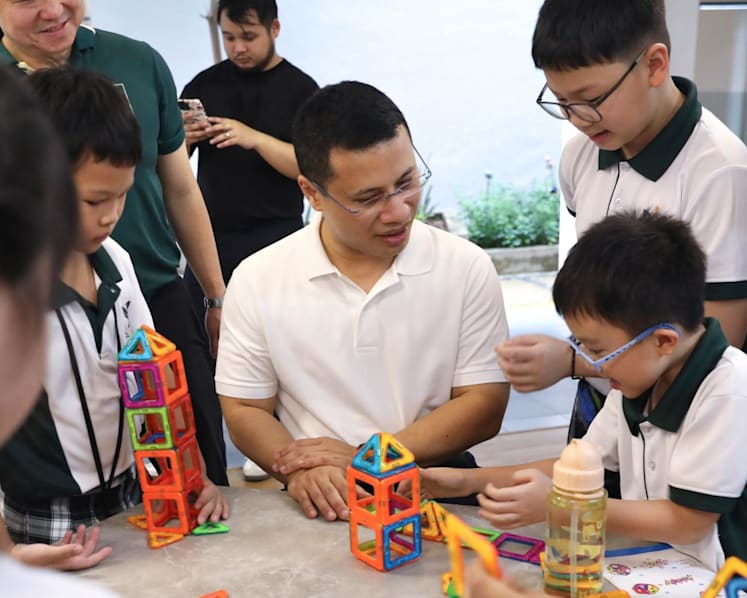
Education Minister Desmond Lee interacting with students at Teck Ghee Primary School on Apr 15, 2026. (Photo: CNA/Mak Jia Kee)

This audio is generated by an AI tool.


SINGAPORE: Schools will get more funding to hire additional manpower and reporting channels will be made more accessible as part of enhanced measures to tackle bullying, the Ministry of Education (MOE) announced on Wednesday (Apr 15).
The measures follow a comprehensive review involving more than 2,000 stakeholders, including educators, students and parents, following a spate of bullying cases in 2025.
Under the new approach, schools will receive additional needs-based funding to hire personnel such as youth workers, pastoral care officers and parent liaison officers. These roles are intended to support student management and ease teachers’ workload.
MOE said staffing decisions will vary by school. Some may prefer teachers to lead investigations, while others may bring in dedicated personnel.





Educators will also receive enhanced training in managing students and engaging parents, including skills for investigation and conflict resolution.
Reporting channels will be expanded, with a new online platform to launch in 2027. This will give students more avenues to seek help while enabling schools to respond more quickly.
Speaking to journalists at Teck Ghee Primary School, Education Minister Desmond Lee said the goal is to manage cases more effectively and detect issues earlier. MOE will monitor implementation closely and review data to assess progress.
"Discipline is needed, but ultimately, it's an educative and restorative process that we want to incorporate firmly into the whole cycle of dealing with hurtful behaviour and bullying," he said.
From 2021 to 2025, schools recorded an average of three bullying cases per 1,000 primary school students and eight per 1,000 secondary school students, MOE said.
This is higher than from 2019 to 2023, when an average of two cases per 1,000 primary students and six per 1,000 secondary students per year were recorded.
DISCIPLINARY MEASURES
Under the new disciplinary framework, first-time offenders may face one to three days of detention and/or suspension for a serious offence, similar to punishments for students caught vaping announced in 2025.
Conduct grades will be lowered, and older boys could face caning in aggravated cases.
The enhanced measures will be progressively implemented from this year.
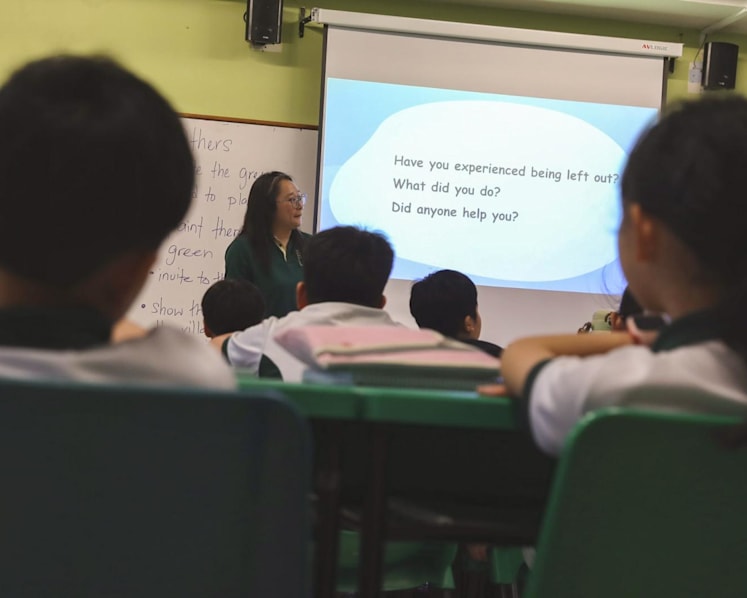
The management of bullying – including cyber-related incidents – will be strengthened with clearer guidelines on how schools should handle cases.
These include expectations around communication timelines with parents, safety planning for students, disciplinary actions, counselling and restorative processes to ensure cases are addressed in a timely and consistent manner.
The ministry also highlighted the complexities schools face when managing cases involving multiple perspectives.
Usually, the first reaction of parents who have children who may have been bullied is to protect their child and call the perpetrator's parents, MOE said. But parents may only see one side of an incident, while schools need time to gather accounts from all parties to establish a fuller picture before taking action.
While there are no fixed guidelines on how quickly schools must contact parents after an incident, schools recognise that timely communication is crucial, the ministry said.
On cases that surface on social media, MOE cautioned that a single perspective put up online may not represent the truth about how the school handled the incident.
"We are prepared to share what are the things that have been done in order for us to be fair to the educators as well as some of the other parties that have allegations made against them," said the ministry.
STRENGTHENING VALUES EDUCATION
Beyond discipline, schools will enhance values education within the curriculum to strengthen students’ character and social-emotional skills.
They will also further empower students to lead and foster a "pro-social" peer culture, where they look out for each other, stand together against hurtful behaviours and support affected peers.
At the same time, MOE emphasised that creating safe environments for children requires a whole-of-society effort that extends beyond schools.
Parents and families can reinforce positive values at home, while MOE will work with community partners to promote mutual kindness and respect.
Mr Lee also stressed the importance of strong school-home partnerships, noting that such situations can become teachable moments for students.
"We all want our school environment, and just generally Singapore as a whole ... to be a safe environment for learning ... even as we want to help our children be resilient and learn how to deal with some of these behaviours and seek appropriate help."




