







'Come back home safely': Loved ones fuel RSAF pilots’ focus in Singapore Airshow aerial display
An F-16C fighter jet and AH-64D Apache attack helicopter will execute 17 manoeuvres in an aerial display this year - some taking them within a whisker of each other.
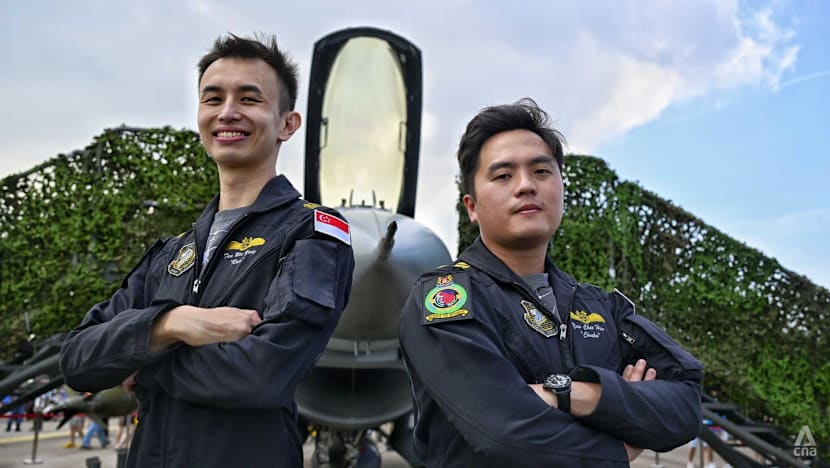
RSAF F-16C pilot Major Tan Wei Yang and AH-64D Apache pilot Captain Yew Chee Hao pose for a photograph ahead of the 10th edition of the Singapore Airshow, Jan 31, 2026. (Photo: CNA/Wallace Woon)

This audio is generated by an AI tool.


SINGAPORE: For air force helicopter pilot Yew Chee Hao, his loved ones are a motivation not just to put on a good show as he flies in this year’s Singapore Airshow, but also to return home safely afterwards.
“My loved ones are definitely on the back of my mind whenever I'm flying for the aerial display,” said the soon-to-be father.
The 30-year-old Apache helicopter pilot added that his wife, despite being pregnant, has been supportive and understanding amid his intense training schedule leading up to the show.
Flying is inherently risky, and even more so for the aerial display due to the proximity and precision involved, he added.
“However, instead of them weighing me down, they are always there as a motivating factor for me to give my 100 per cent focus, as well as my commitment to put up a good show, not just for them but for the rest of Singaporeans as well, and ultimately come back home safely,” said Captain Yew.
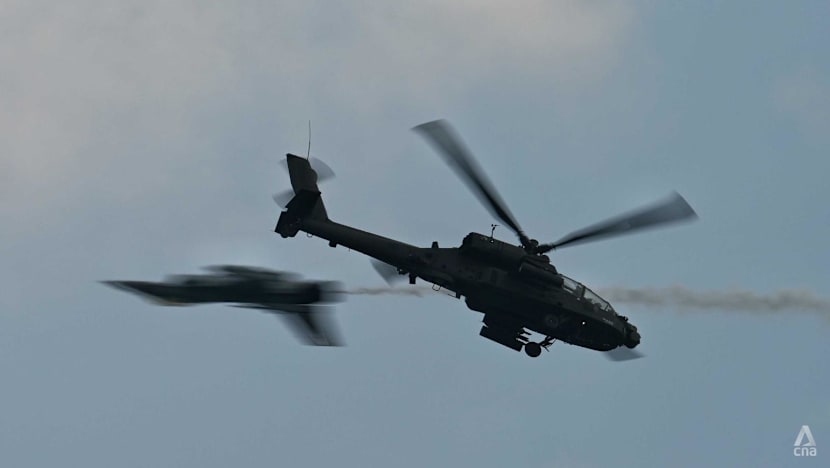
The biennial airshow returns for its 10th edition this year, and the Republic of Singapore Air Force (RSAF) will have aerial displays and static showcases.
Up in the sky, an F-16C fighter jet and AH-64D Apache attack helicopter will execute 17 manoeuvres, with some taking them within a whisker of each other.
“We definitely think of our loved ones during the lead-up to it,” said F-16C pilot Tan Wei Yang.
“However, once we are strapped into the cockpit and flying for the aerial display, I would think that part of it actually just dissolves while we put our attention and focus on ourselves and also our teammates.”
He added that performing and knowing his family members are among the crowd watching actually adds to the pressure.
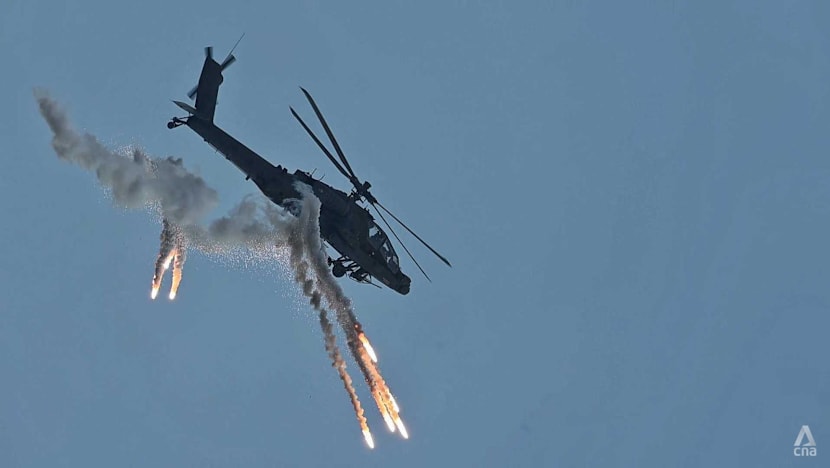
To prepare for the display, the team trained for about two months, with four to six training flights weekly.
Rehearsals included flying on simulators and a “mental flying stage”, a visualisation exercise where they sit down and imagine themselves in the cockpit, executing each manoeuvre from instinct and memory.
When asked if the pilots can see the crowd from the skies, Capt Yew said that seeing their reactions is one thing he is looking forward to the most.
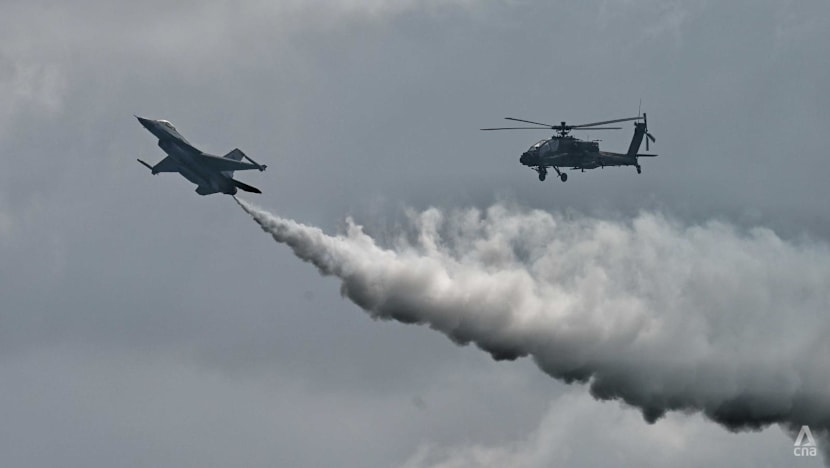
The two aircraft fly so closely to each other during the manoeuvres that pilots in both cockpits can see each other clearly.
“In fact, quoting the F-16 pilots, you can even see the name tag that is pasted on my helmet,” said Capt Yew.
“I can see both the pilots’ in-cockpit hand motions and stuff like that. That's how close we are to each other,” added Major Tan.
MIX OF EXPERIENCE AND FIRST-TIMERS
The RSAF has participated in the biennial Singapore Airshow since its inaugural edition in 2008.
To mark the milestone, its aerial display team will don custom flight suits and perform three new manoeuvres.
“For the past couple of months, the RSAF aerial display team, comprising operational pilots, has worked hard to develop and fine-tune an exciting aerial sequence for the audience,” flying display committee chairman Colonel Max Ng Han Lin.
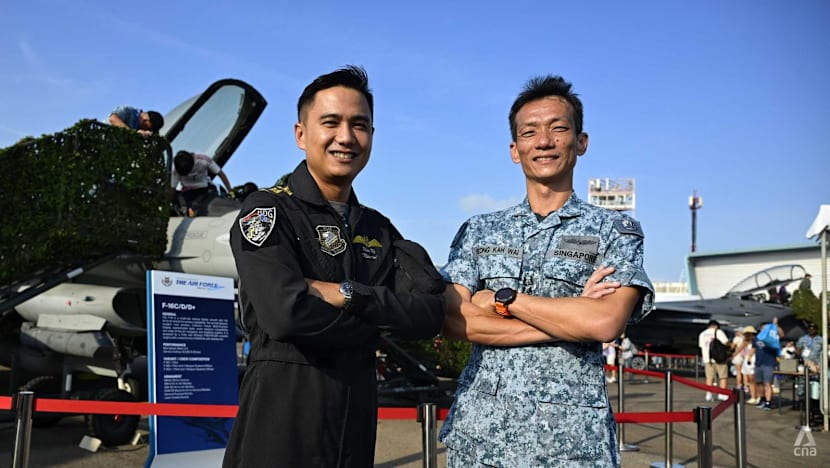
He said the F-16Cs and Apaches are “very unique and different platforms”, so one challenge lies in trying to match them together in stunts that require much communication and precision.
Along with the three new manoeuvres, the display will also feature traditional crowd favourites such as the final salute, in which the fighter jet climbs vertically while unleashing a column of flares.
Colonel Ng shared that “a lot of people” in the force indicated they were keen to be part of the airshow display.
Those with prior experience were not instantly bumped to the front of the queue either, he noted.
Applications were examined across the board, although some pilots who had flown in the airshow before were picked for their experience, said Colonel Ng.
“Apart from the training, it is also about handling the pressure and handling the performance anxiety, and a bit of experience actually makes a difference,” he said.
The time needed to train and be ready depends on experience too, with newer members requiring “a little bit more training”.
“The key thing is, I will just put it simply to three areas: one, don't hit the ground, two, don't hit each other, and then three, after that, we think through how to perform some of these manoeuvres,” said Colonel Ng.
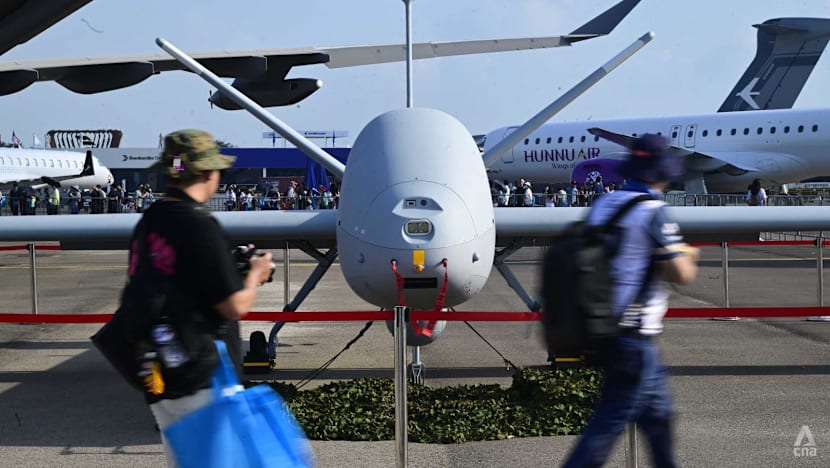
The RSAF will also be showcasing other aircraft and ground-based air defence systems at the static display area.
It will show 10 different types of assets, including the massive A330 Multi-Role Tanker Transport and unmanned aerial vehicles.
“The airshow is an excellent opportunity for the airmen and women of the RSAF to share with Singaporeans on the systems we operate, and for them to gain a deeper understanding of what the RSAF does behind the scenes to defend our skies,” said Senior Lieutenant Colonel Yeong Kah Wai, chairman of the RSAF sub-committee for this year’s airshow.
Moving the assets from their different bases to the Changi Exhibition Centre was slightly more complicated this time, said SLTC Yeong, who is chairing the sub-committee for the second time.
Although it is a familiar location for the airshow, there are currently large-scale construction works in the area, leading to obstacles and debris along the surrounding roads, he added.




