







Singapore, US scientists invent device to speed up tests for liver toxicity
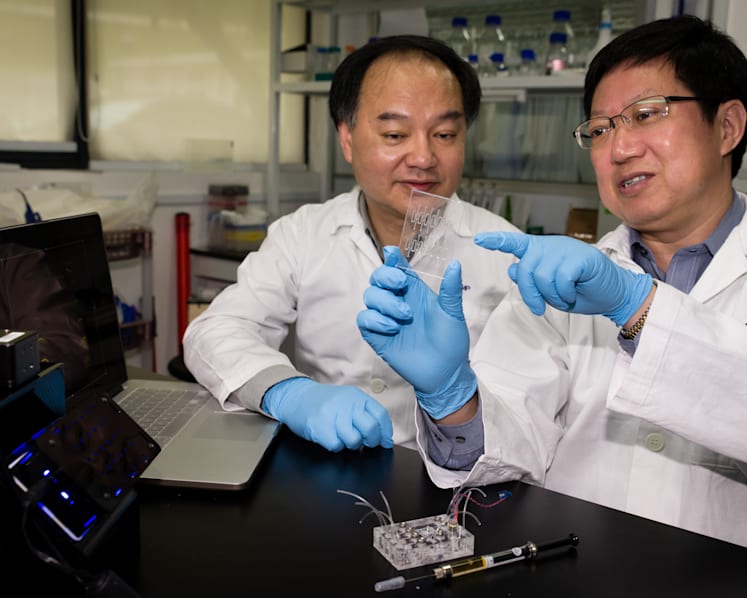
SINGAPORE — Instead of sending tissue samples to a laboratory for tests — a process that could take days — a research team has developed a new device to test for liver toxicity that will be able to provide results in under an hour.
These means doctors could more quickly discuss treatment options with patients, for example. The device could also be useful in detecting cases of liver toxicity among chemotherapy patients — liver toxicity is a common side effect of chemotherapy.
Conceptualised five years ago, the device is the brainchild of a 10-man joint research team from three institutions — from Nanyang Technological University, the Agency for Science, Technology and Research’s Singapore Institution of Manufacturing Technology (SIMTech) and the Houston Methodist Hospital Research Institution, which is affiliated with Cornell University.
Speaking during a media conference on the new device today (Sept 23), NTU Professor Joseph Chang, 54, who is from the university’s School of Electrical and Electronic Engineering, said the team was trying to address the complexities of operating a hospital. “This is important in many developed countries because of the ageing population. There are not enough people to do things… other than the simplicity and cost, we are also talking about the hospital infrastructure and the community at large,” he said.





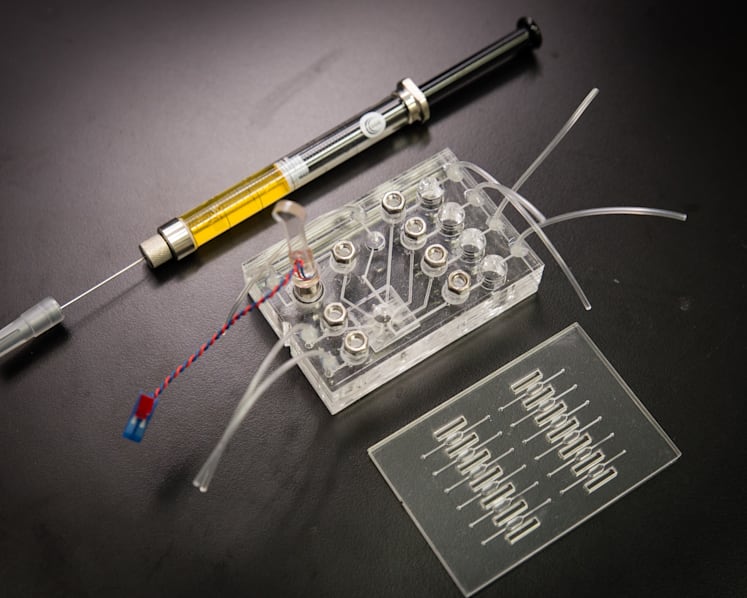
Dubbed “a lab in a needle”, the device comprises two components: a chip that prepares the patient’s blood sample and another that tests and analyses the purified sample.
Said Dr Chang: “If you compare the standard practice, you would need to take a biopsy, the hospital would send the samples to a pathology lab, and they do their standard tests that takes several days, so the patient would need to come back, results will be given to the patient and if necessary the patient would have to come back to the operating theatre.”
The current prototype of the device can identify three basic genetic indicators of toxicity: alanine transaminase (ALT), aspartate transaminase (AST), and a variation of AST. These are the most widely used bio-markers to detect liver toxicity.
Dr Wang Zhiping, 53, the director of SIMTech Microfluidics Foundry (SMF), said the team will refine the device so that it can detect 10 biomarkers. The team plans to integrate both chips into a single, compact device, and in future, develop the kit for mass production.
In time, the researchers hope to reduce the time taken for analysis to 30 minutes. They are also exploring whether the device can be used for tissue extractions from other parts of the body.




