







'Caught off guard': S'poreans in Hong Kong tell of destruction heavy rains brought to city
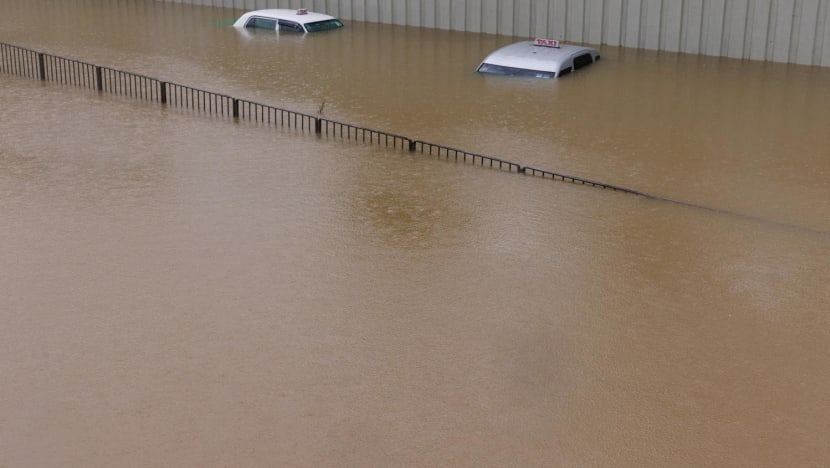
A view of cars submerged at a flooded area after heavy rains, in Hong Kong, China, Sept 8, 2023.


SINGAPORE — For Ms Fenyx Seah who had just moved to Hong Kong with her husband in April this year for work, experiencing their first typhoon – the Super Typhoon Saola, which hit the city on Sept 1 – was an “eye-opener”.
“It was something new to us, being Singaporeans,” the 30-year-old cafe manager told TODAY.
The couple had first sensed that “something was off” when they saw banks being boarded up leading up to Sept 1, something they do to protect their glass facades from shattering during a typhoon.
The pair then realised that a T3 typhoon warning had been issued.





Considering that the warnings could range from T1, which basically tells people to standby for a typhoon, to T10, which means a hurricane is approaching, it did not seem too concerning.
“Nothing really changed and nothing was really happening, it just felt windier than usual and we enjoyed the breeze especially since it was summer time,” said Ms Seah.
On Sept 1, the warning had been raised from T3 to T8. Still, she felt that “T8 felt manageable to us”, and that the typhoon “felt like a seaside breeze that went on longer than usual.”
But then came the warning that another typhoon, Typhoon Haikui, was approaching. A T8 signal was issued on the morning of Sept 7.
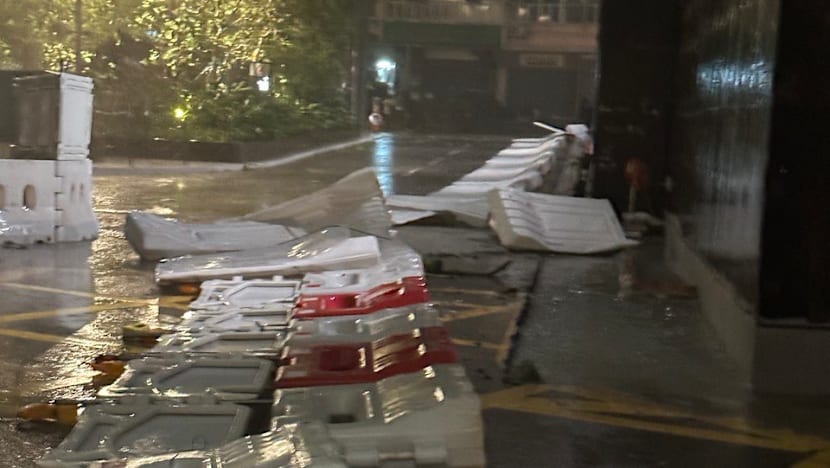
“At around 4pm onwards, the winds were extremely intense, road barricades and tin roofs were flying,” Ms Seah recalled.
“At this point, (the authorities) issued the T10 signal. The roads leading out of my apartment were inaccessible due to the debris all over the road.”
Most stalls began packing up and public transportation such as trams and buses started cutting back on their services.
Late on Thursday night, the city’s weather bureau issued a “black rainstorm warning” as the city was blanketed by its heaviest rainfall since records began 140 years ago.
The torrential rain was brought by Haikui, a typhoon that made landfall in the Chinese province of Fujian on Tuesday – bringing huge volumes of rain to areas still inundated by Super Typhoon Saola a week earlier.
TODAY spoke with six Singaporeans based in Hong Kong in the aftermath of the deluge – which has killed two people and injured more than 140, according to reports by state media.
BLACK RAIN ‘REALLY UNEXPECTED’
Singaporeans living in Hong Kong told TODAY that Typhoon Haikui had been more disruptive than Typhoon Saola, which they said was “tamer”.
They were also able to better prepare themselves for Typhoon Saola, as warnings had been issued prior to its arrival.
On the other hand, “there weren’t adequate warnings” for Typhoon Haikui, said 43-year-old Tim Russ Fernandez, who moved to Hong Kong from Singapore almost two decades ago.
“I think none of us expected the water to come in so fast,” said the founder of Russ Dance Factory, a dance studio in Hong Kong’s Causeway Bay.
Mr Fernandez had been checking the weather forecast, and was lucky to leave Causeway Bay, where he was on Sept 7 night, early.
“When I went to collect my car, the water was already over my ankles. The whole of Causeway Bay was already flooded. I knew I had to drive off as soon as possible to higher ground, where I live,” he said.
“It was really hard to navigate as there was a lot of debris floating around, people on the road trying to get away, and the uncertainty of what’s actually on the road and what I’m driving on or over.
“I’ve seen a lot of heavy rain in Hong Kong, but not at this level where it went on for so long.”
Singaporean doctor Timothy Yang, 38, who has been living and working in Hong Kong for the last nine years with his wife and four-year-old twins, said they had been warned about Typhoon Saola four to five days in advance, and were able to prepare by stocking up food.
“Typhoon Saola was assumed to be the megastorm which was very powerful so we prepared more for that, whereas when Typhoon Haikui came, we were caught off guard,” said Dr Yang.
He added that there was “worse disruption with Haikui” as a result.
Ms Suzanne Lee, a PhD candidate in education at the University of Hong Kong, said: “The black rain was really unexpected as black rain is typically issued after T8-10 (warning signals) and lasts for a few hours, but this time there were no T8-10 typhoons before the black rain, and it lasted for 16 hours till Sept 8.”
She had been out with her husband attending a university alumni dinner on Thursday night, leaving the venue at some time past 10pm.
“When we arrived at our resident estate, it was raining very heavily and flooded. We had to walk in the heavy rain, strong wind and flood, without using the umbrella as it was too windy, to our resident building. Thank God we reached home at 11pm, just before black rain warning was issued,” said Ms Lee.
While Hong Kong experiences a few typhoons every year, Dr Yang believes this to be “the worst so far”.
LIFE ‘BACK TO NORMAL’
By Friday night, Singaporeans living in Hong Kong said that the rain had subsided and the situation was “pretty much back to normal”, though it would likely take a while for the streets to be completely cleared of debris.
“(There was) flood damage around a lot of areas but by Saturday, 99 per cent of Hong Kong was back up and running. Only one of the train lines was down, but they provided shuttles,” said Dr Yang.
He added that restaurants and bars were open on Saturday night and while it “rained a little bit” on Sunday, it was nothing serious.
“Landslides are starting to surface in different areas, so I guess in the coming days, we might hear more of the destruction the floods and rains might have caused,” said Mr Fernandez.
“Roads in general are cleared of sand and debris, but there’s still a lot to do. Asphalt roads have been broken up, fallen trees from the typhoon have yet to be all cleared, furniture or items destroyed by the flood are starting to pile up. Slowly but surely, it will be dealt with.”
Responding to TODAY’s queries, the Singapore Consulate-General in Hong Kong said that it shared on its Facebook page on Aug 31 that its office would closely monitor the situation in view of Super Typhoon Saola.
On Sept 8, it also published a Facebook update that its office would be closed in view of the black rainstorm warning issued by the Hong Kong government.
The public could still contact the Singapore Consulate-General’s Duty Officer at a number provided on its Facebook page, for any emergencies.
“During this period, we were not contacted by any Singaporeans in Hong Kong requesting help or support during the recent typhoon and rainstorm,” it added.




