







Singaporeans must not let terror threat breed fear, suspicion and distrust of each other: Shanmugam
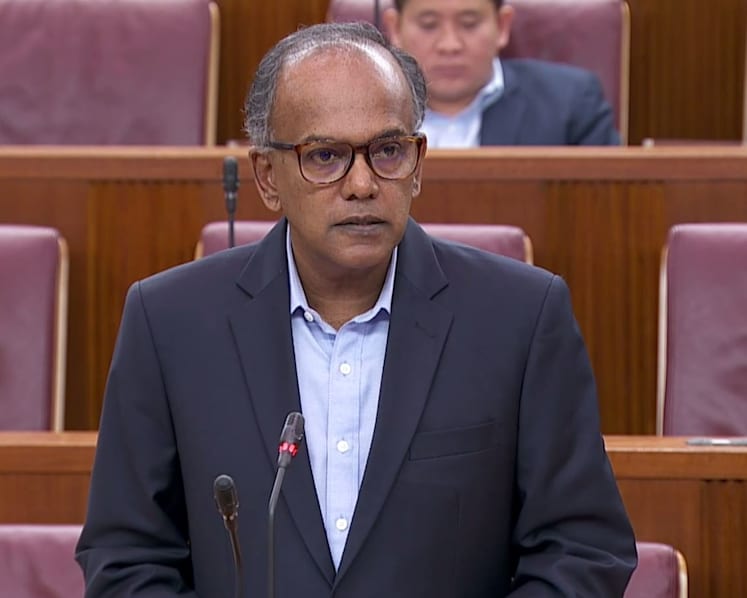
Law and Home Affairs Minister K Shanmugam speaking in Parliament on Friday (Mar 2). Screengrab: Parliament


SINGAPORE — While the Republic faces the threat of terrorism, Singaporeans must not let it breed fear and distrust of each other, said Law and Home Affairs Minister K Shanmugam.
Citing the incident of an Indian man chiding a tudong-wearing Muslim woman on a bus to “stay in Iraq” as “Muslims did not know the value of staying in Singapore” following the detention of the first woman under the Internal Security Act in June last year, he said Singapore is not immune to Islamophobia.
Speaking at the Home Affairs Ministry’s Committee of Supply debate on Friday (March 2), Mr Shanmugam noted that there have been “few” incidents.
“Most people don’t behave like this, but we need to keep watch. We must not allow the threat of terrorism to breed fear, suspicion and distrust of each other,” the minister cautioned.





To that end, community and religious leaders here have done much to foster respect and understanding between communities, he said.
He cited how the Mufti of Singapore, Dr Mohamed Fatris Bakaram, had participated in other communities’ festivities, such as Deepavali and Christmas; while the Anglican bishop Rennis Ponniah invites people from different faiths to an annual Christmas tea at his official residence.
Mr Shanmugam said: “It is the respect of different faiths, the willingness to share in each other’s lives, that nurtures a harmonious common living space.”
The Republic also works with community and religious groups to prevent extremist or segregationist teachings from taking root, he added.
While acknowledging that some members of public had asked if the recent banning of foreign preachers was an “over-reaction” on the Government’s part, Mr Shanmugam stressed that they were “carefully considered decisions”.
In October last year, the authorities said no to two foreign Muslim preachers, Ismail Menk and Haslin Baharim, from coming here to preach on a religious-themed cruise. A month before, two foreign Christian preachers were also banned from speaking here.
Using Mr Menek as an example, Mr Shanmugam noted that he has been sharing messages on how Islam is “more authentic and more valuable” than other religions, and that Christianity is “just a bubble that is blown such that you feel emotionally high”.
“If you look at all his teachings, the main message that comes out is clear, and that the divisiveness is not acceptable,” he said.
In his speech, he also touched on the raft of legislative reviews conducted by his ministry to strengthen the criminal justice system.
For instance, the authorities are still studying the possibility of removing immunity for marital rape. “Violence against women is wrong: No ifs, no buts — on this,” said Mr Shanmugam.
The Penal Code is also being reviewed to enhance protection for vulnerable individuals, including children, those with mental disabilities and domestic workers.
To better protect child victims of sexual abuse by family members, the police will pilot a new interview model in June this year — together with the KK Women’s and Children’s Hospital and other partners — that streamlines the interview process.
“It is necessary to gather the facts from these children, but one can imagine the stress (they) will undergo (from) various interviews by the police, doctors, child protection officers can add to the stress... We will seek to integrate these interviews so children need not repeatedly recount the traumatic experience,” said Mr Shanmugam.
A new scheme will also be launched this year to support offenders who are confronted with other problems and complex circumstances. Bukit Batok Single Member Constituency Member of Parliament Murali Pillai had called for more to be done to involve the community and voluntary welfare organisations to support offenders with mental health conditions and other medical issues.
Under the new Home Team Community Assistance and Referral Scheme, or HT Cares, officers will be stationed at every police division to assess whether social interventions like counselling, mental health assistance and financial support, are needed.
This is part of the authorities’ effort to root out “basic issues that lead people to crime”, said Mr Shanmugam.




