







Social safety nets to be strengthened: Chuan-Jin
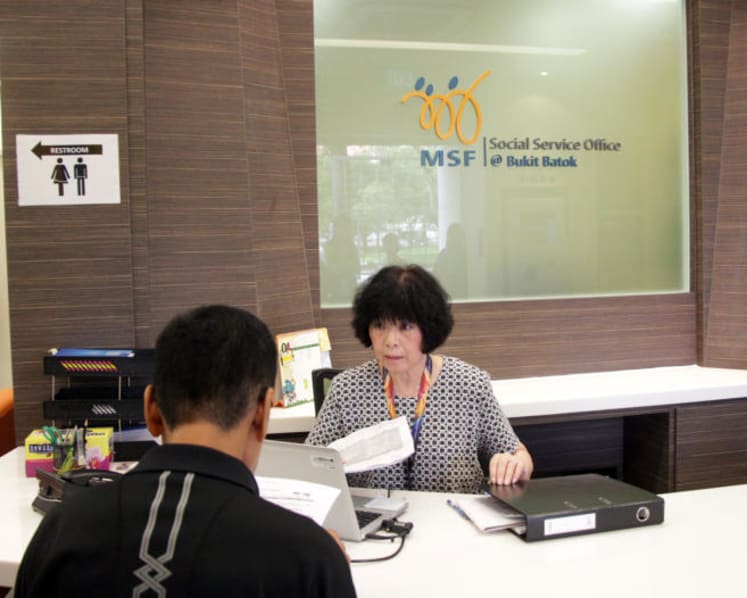
Social Service Office at Bukit Batok. TODAY file photo


SINGAPORE — The social needs of Singaporeans are becoming more complex amid changing demographics, economics and family structures, but those with less and are in need will receive more help, said Social and Family Development Minister Tan Chuan-Jin today (Jan 20).
To that end, the Ministry of Social and Family Development (MSF) will continue to strengthen the social safety net here, review legislations and policies and improve services to “keep in step with emerging needs”, added Mr Tan in his ministry’s addendum to President Tony Tan’s address on Friday to open the 13th Parliament.
“Our social policies and services must evolve so that we can continue to nurture resilient individuals and strong families. Our societal culture must also evolve so that we can become a more inclusive and caring society where no Singaporean is left behind,” the minister said.
For the vulnerable, the MSF plans to expand the Social Service Net (SSNet) – an information-sharing and case management system that links the ministry with other government and voluntary welfare organisations (VWOs) – to cover more help agencies.





The first phase of SSNet, which has since been completed, was rolled out to seven Social Service Offices (SSOs) and 43 Family Service Centres (FSCs) last year.
The SSOs will also take on a bigger role in the coordinating and delivery of social services for residents within each HDB town. The network of 24 SSOs was completed last month, and together with the FSCs here, 95 per cent of the needy residents here now have access to help within 2km of where they live and work.
The next Enabling Masterplan for persons with disabilities will also be developed to provide assistance in early intervention, education, training and employment, which will help this group “maximise their potential at different stages of their lives”, said Mr Tan.
Continuing with its plans to expand childcare capacity, the Early Childhood Development Agency will build more childcare centres, particularly in housing estates, to provide a childcare place for one in two children by 2017.
Vulnerable children from low-income or disadvantaged families will also be identified to support their developmental needs during their early years.
The MSF will introduce initiatives to help these families improve their home environments for their children’s learning and development.
There are also plans to broaden the care options for children who need protection or care outside their homes, and these include working with VWOs and volunteers to increase the number of foster families who can provide a nurturing environment for the children to grow up in.
Likewise, more support will be given to couples, in the form of parenting programmes, marriage preparation and support programmes for young couples and Singaporeans marrying foreigners, among other things.
Amid the changing demographics and family structures here, Mr Tan said: “The family must remain the basic block of society. The ministry is committed to making Singapore a great place for families.” In a separate post on the blog, MSF Conversations, Mr Tan wrote that his ministry will share more details of its plans “very soon”.
Asked what she would like to see in the next Enabling Masterplan, Member of Parliament (Jalan Besar GRC) and long-time special needs advocate Denise Phua said she would like to see more inclusive education models that will allow more special education (SPED) students to study in the same facilities as their mainstream peers.
There should also be more support for SPED students in tertiary institutions, including private ones, she said, adding important initiatives such as SkillsFuture could also have special provisions to customise lifelong learning for the special needs community.




