







S’pore must prepare for long haul given uncertainty over Wuhan coronavirus: Chan Chun Sing
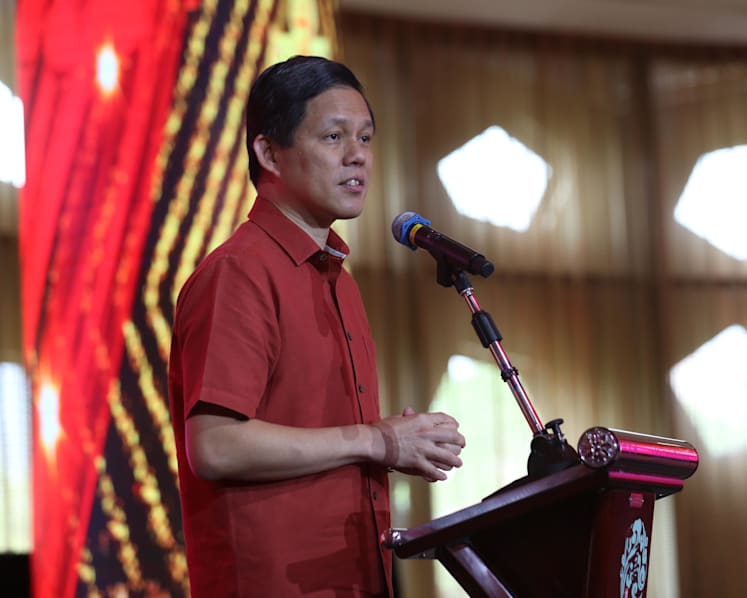
Trade and Industry Minister Chan Chun Sing said that Singapore has come out of several challenging episodes — such as the severe acute respiratory syndrome outbreak in 2003 and the financial crises — over the past few decades “stronger than before”, and can do it again.


SINGAPORE — Singapore must prepare itself "psychologically, emotionally, economically and socially for the long haul” as no one knows how long the Wuhan coronavirus outbreak will persist, Minister for Trade and Industry Chan Chun Sing warned on Sunday (Feb 2).
He also cautioned Singaporeans against succumbing to “things that will divide our society”, citing how he has heard of how “some of us are rejecting our neighbours” who might be served a leave of absence during this period.
Mr Chan, who is also Member of Parliament for Tanjong Pagar Group Representation Constituency, was speaking at a Chinese New Year lunch held at the Toa Payoh Safra club.
In his speech, he addressed concerns about the coronavirus situation and Singaporeans’ jobs and livelihoods in the upcoming year. As of Saturday evening, 18 cases have cropped up here. All, except for two Singaporeans, are Chinese nationals from Wuhan.





Given the uncertainty over how long the coronavirus situation will last, Mr Chan said that all measures that the Government takes must be sustainable.
“We cannot just be taking actions for the short haul, thinking it will blow over… If it turns out shorter than what we anticipated, we are all happy. If it turns out longer than what most people are thinking, then we’re prepared,” he added.
Given how the virus outbreak has disrupted global supply chains, Mr Chan pointed out that Singapore must think about how long its stock of essential supplies, such as surgical masks and medicine, will last.
Everyone must not think about protecting himself and his family alone, he said, but to be part of a collective effort to protect each and every Singaporean.
A collective defence against the coronavirus is the best defence, he stressed, adding that it would give Singapore a “much higher chance to overcome this situation much better than many other places in the world”.
Mr Chan further urged Singaporeans not to snub those on a leave of absence, which was mandated for all Ministry of Education schools, as well as staff in public and private healthcare institutions, about a week ago.
Nearly 1,000 students and staff had to take a two-week leave of absence after recently returning from China, the education ministry said on Friday.
Those on a leave of absence are not contagious but have been kept away “to give us added assurance”, Mr Chan said, while appealing to Singaporeans not to spread misinformation about the coronavirus outbreak.
“Sometimes, often, the virus has not even reached us, but the fake news has reached us many times to cause us to panic and take irrational actions. If we continue to allow the fake news and fear mongering to affect us, then I fear that we will not succumb to the virus. We will succumb to the fake news,” he added.
GOVT PREPARED TO HELP WORKERS UPSKILL, RESKILL
Even before the virus outbreak, he noted that people are concerned about jobs and livelihood, given the United States-China tensions, Brexit and other geopolitical issues, and continuing technological disruptions.
Mr Chan said that the Government is acutely aware of these concerns, as he spoke of the need to “create good and better jobs”, and to keep attracting good quality investment to Singapore.
Those who need to learn new and more skills should have nothing to fear about today’s jobs, and the Government is working with unions and trade associations to help them, he added.
Mr Chan also touched on the foreign worker policy, pointing out that businesses constantly “ask… every Government agency for a greater quota of foreign workers to complement the workforce”.
“How many foreign workers we can bring in… depends on the following: If we can take care of Singaporeans, give them a sense of fair play, I am confident that Singaporeans will continue to welcome foreign workers. We are not afraid of competition, but I know Singaporeans all want a fair, level playing field,” he said.
Businesses must also work with the Government and social civic organisations to “manage the externalities brought about by the influx of foreign workers”, Mr Chan advised.
“We will continue to encourage and nudge the companies to make sure they localise many of the higher skill sets to Singaporeans, so that Singaporeans feel they have a chance to rise up to the top,” he added.
Concluding his speech, Mr Chan said that Singapore has come out of several challenging episodes — such as the severe acute respiratory syndrome outbreak in 2003 and the financial crises — over the past few decades “stronger than before”.
“We’ve done it before, we can do it again,” he said.




