Singapore’s only full marathon still draws crowds, but what will it take to become world-class?
From a fun run in 1982 to a 55,000-strong event in 2025, the Standard Chartered Singapore Marathon has come a long way. But the race that represents local marathoning ambitions still faces an insurmountable problem: the heat.
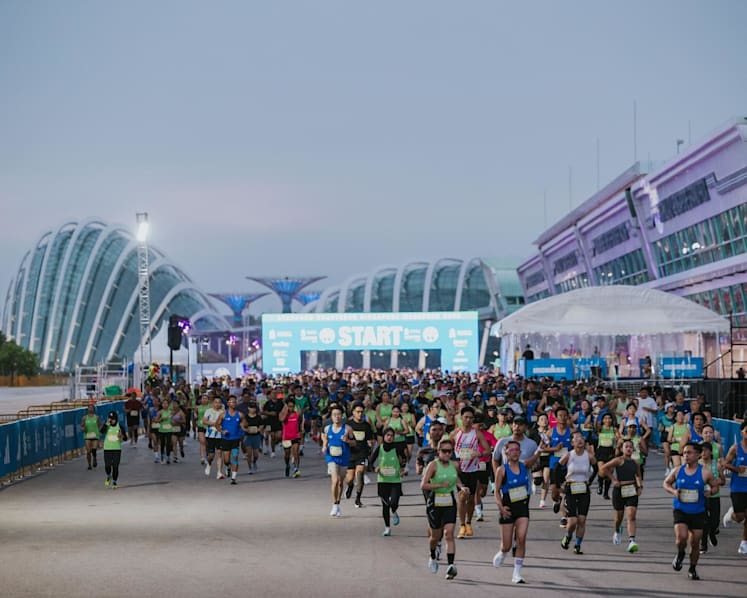
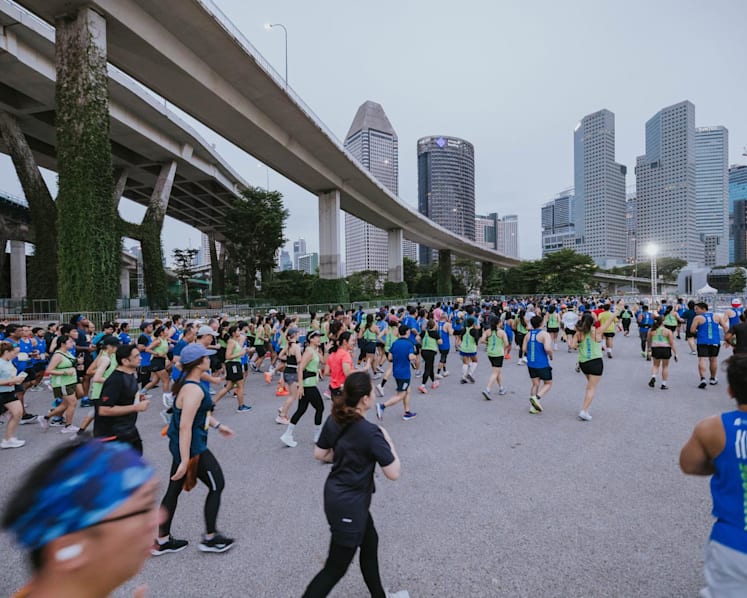
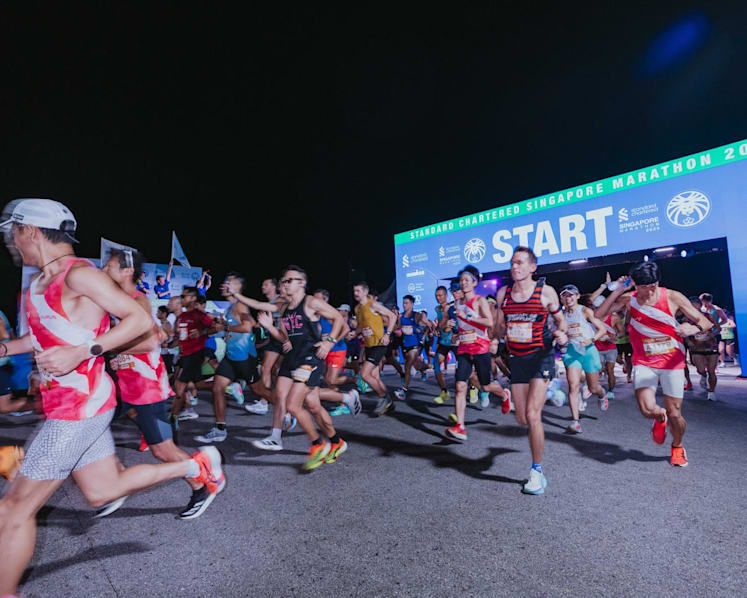
Runners flagged off at the start line at the F1 Pit Building at the Standard Chartered Singapore Marathon. (Photo: Standard Chartered Singapore Marathon)

This audio is generated by an AI tool.


SINGAPORE: When Mr Law Dong Woei toed the line at the inaugural Singapore Marathon in 1982, he was an 18-year-old national serviceman eager for a challenge.
Back then, the race was billed as a “fun run" with a token entry fee, and drew about 15,000 participants. The route was far from today’s city-centric course. Runners flagged off at City Hall, wound through Paya Lebar and Ang Mo Kio, and finished at the old National Stadium — all under a punishing tropical sun.
Mr Law said the race began around 7am and ended for him in the sweltering 1pm heat. “At that time, I could run quite a fast 2.4km, and I enjoyed running,” said Mr Law, who now works in the finance sector. “(But) I was not really trained, and had some cramps along the way.”
There was little support from spectators too, he added. Although the route snaked through the Housing Board heartlands, no one came out to watch the race or cheer. It was only along Orchard Road where a few tourists would offer encouragement to the marathoners.





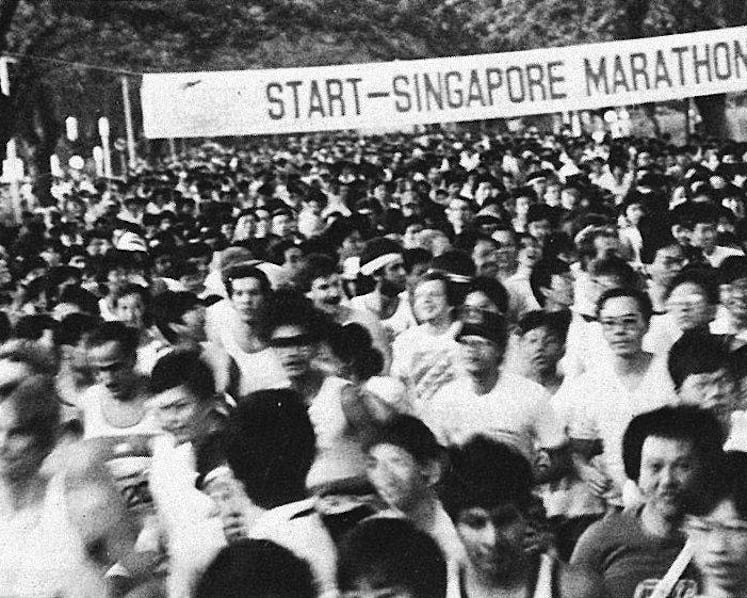
During that era, the marathon was still unfamiliar to Singaporeans, according to then-Senior Parliamentary Secretary and chairman of the Singapore Marathon Committee Chan Chee Seng in a speech in 1982.
He noted that Singapore took a longer time to “catch the marathon fever” which had gripped many parts of the developed world, but that there was a growing number of recreational runners.
“Although a small number of these have actually completed the full (marathon) distance, the time was ripe to provide the marathon challenge to those who have graduated from jogging, into the realm of serious running,” he said.
Since then, the race has grown in scale and prestige. It was reintroduced in 2002 under a new title sponsor and was officially named the Standard Chartered Singapore Marathon, attracting 6,000 runners.
Now in its 24th edition, the event is emblematic of Singapore's running scene, said Mr Law.
The 61-year-old who also ran the 5km and marathon distance race in this year's event, which was held on Dec 6 and 7: “More people are running, and more people are interested in running a marathon, and a lot of them have improved quite a lot."
The 2025 edition attracted about 55,000 runners, which is almost four times more than the inaugural race in 1982. Race participation has grown by 31 per cent in the marathon and 46 per cent in the half marathon over the race’s past three editions.
The number of participants this year also edged out the last pre-pandemic race in 2019, where there were about 51,000 runners.
On top of growing participation numbers, the race has also maintained its gold label status since 2012, the only race in Southeast Asia to be categorised as such.
A gold label race is one which meets the World Athletics’ standards for elite athlete participation, organisational excellence and extensive media coverage, among other criteria.
Once one of several marquee running events in the country, it is now the last full-distance marathon still standing in Singapore. The Sundown Marathon, once a mainstay on the calendar, held its final race in 2023.
And yet, for all its endurance, the Singapore Marathon has never quite made the leap to the sport's elite tier - held back by Singapore's stifling climate, low spectator turnout and the logistical challenges of staging a city race.
Organisers mounted a 2017 bid to attain World Marathon major status but faced several hurdles that dented its ambitions in becoming recognised among the most distinguished performance races of the world, including Berlin, Chicago and Tokyo Marathons.
History of the Singapore Marathon
1982: The Singapore Marathon was established, starting out as a fun run.
1984: It returned for a second edition, following the success of the inaugural event.
2002: Standard Chartered became Singapore Marathon’s title sponsor. That year, the event attracted 6,000 runners.
2012: The Singapore Marathon earned the IAAF (now called World Athletics) Gold Label Road Race status.
2016: It was acquired by the Ironman Group.
2017: Singapore was announced as a candidate city for the Abbott World Marathon Majors, a series of the largest and most renowned marathons in the world.
2019: The full- and half-marathons were held in the evening in order to fulfill criteria to be listed in the Abbott World Marathon Majors, instead of the usual flag off timing at dawn. This led to congestion due to road closures, resulting in public outcry.
2020: Event moved to a virtual format due to the COVID-19 pandemic.
2021: The marathon dropped out of its bid to be a part of the World Marathon Majors. Event returned to in-person participation.
GOLD LABEL, BUT DOES IT MATTER?
For some, the gold label status means that it is a notch above other races and for runners, participating in it carries a certain prestige.
Speaking to CNA before her race, Indonesian runner Dewilia Krisnawati said she chose to run the 10km precisely because the Singapore Marathon is the region’s only World Athletics gold label race.
“This is one of the best races in Asia,” she said, calling it an “Asian major”.
On the other hand, most runners CNA spoke to do not think the label matters much. More important than prestige is community, atmosphere and of course, convenience, they said.
First-time participant Ms Kelda Ng, 19, said that she signed up for the half marathon as she wanted to experience the race atmosphere and large crowds.
“I feel like I signed up for the ‘vibe’ of running with other runners,” said the university student. “It’s more of a friends thing, than a performance thing.”
Like Ms Ng, almost all the runners that CNA spoke to either did not know or did not care how prestigious the race was. They also did not know anyone who was in the elite field.
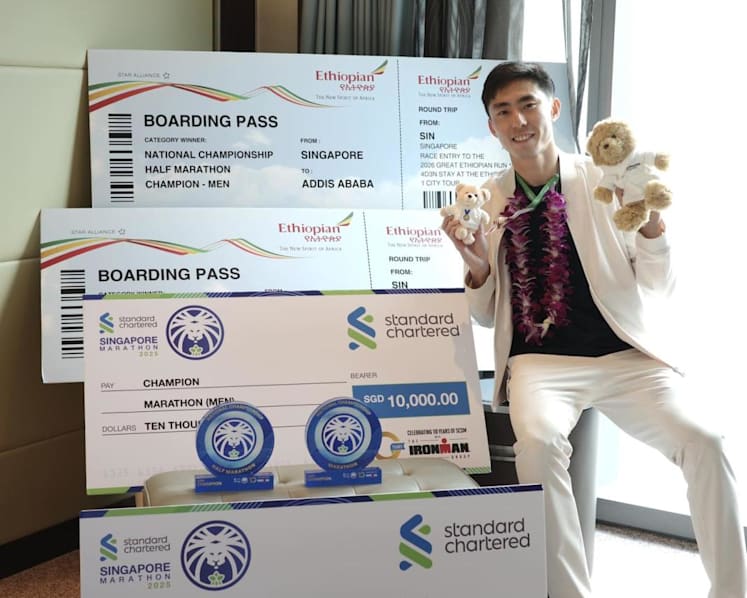
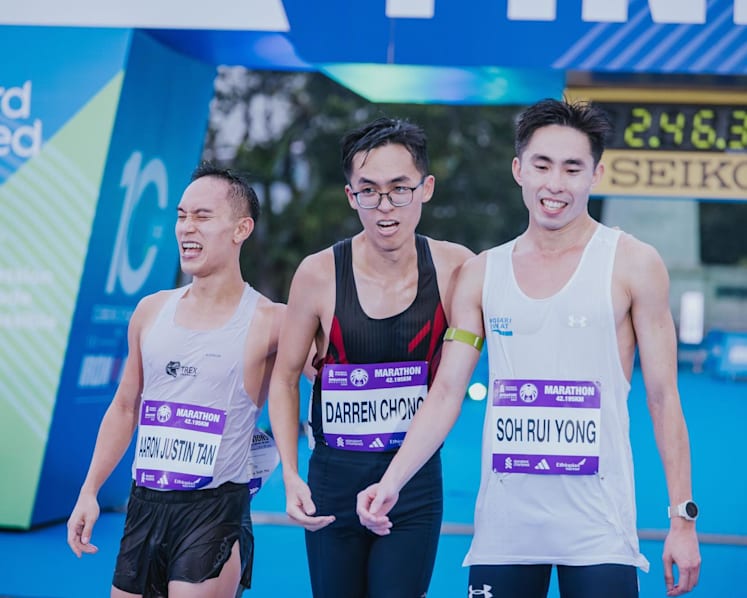
National marathoner Soh Rui Yong, who won both the half marathon and marathon national titles over the weekend, said most runners do not care about labels.
“This whole ‘label’ thing is a very bureaucratic, antiquated way to measure a race’s success,” he said, noting that Gold Label requirements - such as attracting athletes with “elite label” timings - do little to excite the public.
“Ask any Singaporean to name one elite runner who came to Singapore, and they can’t.”
NOT YET ON THE INTERNATIONAL CALENDAR
Experts said there are good reasons why Singapore may never be able to transform its marathon into a world-class performance race: its tropical heat and humidity is too intense for top runners.
Running coach and influencer Mike Trees - who helped bring elite Kenyan runners for the 2019 race - said world-class athletes have always struggled here.
“It’s too hot to do well in a full marathon,” said Mr Trees, who chose to run only the 10km this year.
What the heat means is that elite runners, who usually race only two marathons a year, avoid courses where a personal best is unlikely. And without these top athletes participating, the Singapore Marathon therefore cannot claim to be a top running destination.
This year’s winners reflected the constraints:
Men’s marathon winner Abel Boniface Sikowo from Uganda won in 2:15:40 — over five minutes slower than his personal best.
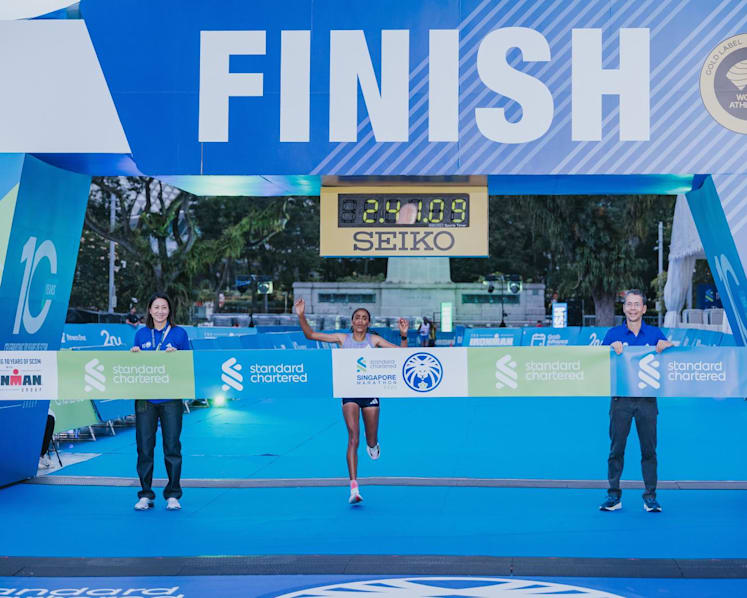
Women’s marathon champion, Ethiopian Shuko Genemo, won in 2:41:24, far from her 2:21:35 best.
Heat also limits spectatorship. Deloitte’s Asia-Pacific sports business leader James Walton noted that early start times keep crowds away.
“You’re never going to get big crowds in Singapore, because it’s not pleasant to stand out there and watch in the heat, and because it’s early in the morning at a challenging time,” he said.
The other hurdle? The difficulty in closing roads.
Mr Walton said that the race would be more attractive to international runners if it went through “more tourist attractions, rather than Nicoll Highway and the like”.
The fallout from excessive road closures is not new to organisers and the public.
The 2019 evening race caused major congestion across the city, affecting weddings, restaurants and weekend traffic, leading to a public outcry in the days that followed.
It is this catch-22 that makes the marathon less appealing to international runners, said Mr Walton.
“With no real crowds, with a very difficult timing and climate, with the fact that you are very unlikely to (run) a good timing … it’s simply not that appealing for people outside Singapore,” he said.
He added that the Singapore Marathon is more of a “community race”.
“It’s a community race for Singaporeans to have their very first marathon and the only marathon of the year that’s right at your doorstep, which means you don’t have to fly anywhere,” he said.
“But it’s not really on anybody’s international calendar.”
WHAT'S NEXT?
Asked what's next given the marathon's perennial challenges, race organiser the Ironman Group said the goal is to keep growing participation as well as improving experiences.
“For us as organisers, we never lose sight of our core mission, which is to grow each edition of the race, increase participation and deliver an exceptional experience for runners from Singapore and around the world,” said Mr Santoz Kumar, the general manager of the Ironman Group.
Title sponsor Standard Chartered Bank said that it will continue to explore ways to create experiences “that go beyond race weekend” and can benefit the wider community.
For example, this year, it offered 200 complimentary race slots to volunteers and running enthusiasts from community organisations such as Special Olympics Singapore, and Running Hour, which benefits those with special needs.
On how the marathon will continually raise its appeal to international runners, Mr Santoz said that the group has “extensive experience in international marketing and promotion”, which has helped grow overseas participation at the event over the years.
The race attracted 14,000 international participants from 80 countries – about 25 per cent of the participants. In comparison, participation statistics from the Berlin Marathon, a World Marathon Major, showed that over 40 per cent of its participants are from overseas.
Mr Santoz noted that international participation has increased by about 10 per cent compared to last year and the organiser will “keep refining our outreach to sustain this trajectory”.
The Singapore Tourism Board (STB), one of the marathon's partners, said it will continue working closely with the event organisers and relevant government agencies to attract more overseas participants.
“To keep the event exciting and engaging, we will support efforts to establish the Singapore Marathon as the ‘must-attend’ marathon race in Southeast Asia through introducing fresh programming,” said director of sports at STB, Ms Lilian Chee.
She added that the Singapore Marathon is part of a “diverse portfolio” of events that aims to attract sports tourism such as Hyrox, triathlons and pickleball, all of which target different communities and demographics.
“We will intensify efforts to attract world-class sports events that appeal strongly to both locals and visitors,” said Ms Chee. “These events generate significant economic benefits and global branding value for Singapore, with positive spillover effects across retail, dining and hospitality.”
In any case, running has become an increasingly popular sport in Singapore.
Sport Singapore’s (SportSG) 2024 National Sports and Exercise Participation Survey results showed that running was the second most popular sport just behind walking, with 25 per cent of Singaporeans and permanent residents indicating that they run regularly - up from 19 per cent in 2018.
A SportSG spokesperson said that the Standard Chartered Singapore Marathon has “played a vital role in uniting our running community, inspiring participation, and fostering a sense of national pride and community bonding.”
“The increasing number of participants each year is also a reflection of the event’s popularity, and SportSG aims to build on this every year,” the spokesperson added.
Beyond funding support, SportSG is also actively involved in the race operations, including event planning and liaising with partners and other public agencies to ensure the smooth conduct of the event.
Agreeing, Mr Santoz said that the marathon represents “an important tradition that brings the running community together”.
“So, as long as there is strong interest from runners and continued support from government agencies, our commitment is to keep the marathon going.”
OFFER SOMETHING ELSE
At the performance end, experts suggested that there is more that can still be done to elevate the Singapore Marathon.
If Singapore cannot offer the ideal conditions for runners to beat records, perhaps it can offer something else, they said.
Mr Trees believes that the Singapore Marathon should embrace its climate instead of selling itself as a fast, flat course. “Market it as the toughest marathon,” he said. “Make it about the experience, not the time.”
Mr Walton said that instead of focusing on the World Marathon Majors, Singapore Marathon could create its own marathon majors.
For instance, the marathons in the region, such as those in Malaysia, Thailand, Indonesia. Vietnam and Cambodia, could work together to have a new marathon major series just for the Southeast Asian region.
“They could join together and have a sequence, and if runners complete all the marathons, they get a special medal, and form a mini version of (the World Marathon Majors),” he said.
“That would bring people from Malaysia, Indonesia, Thailand and even further afield into Singapore in an effort to finish this ‘Asean collection’ of medals.”
Singapore could leverage on other factors outside of the race to get runners to travel here.
“They could look at how to do stronger destination and tourism packages that really pitch the marathon along with a tourist experience,” he said.
“Singapore is a great place, so you have to sell it as a tourist destination rather than just a marathon,” said Mr Trees.
Mr Soh added that inviting recognisable elite runners — not just fast ones — would generate buzz.
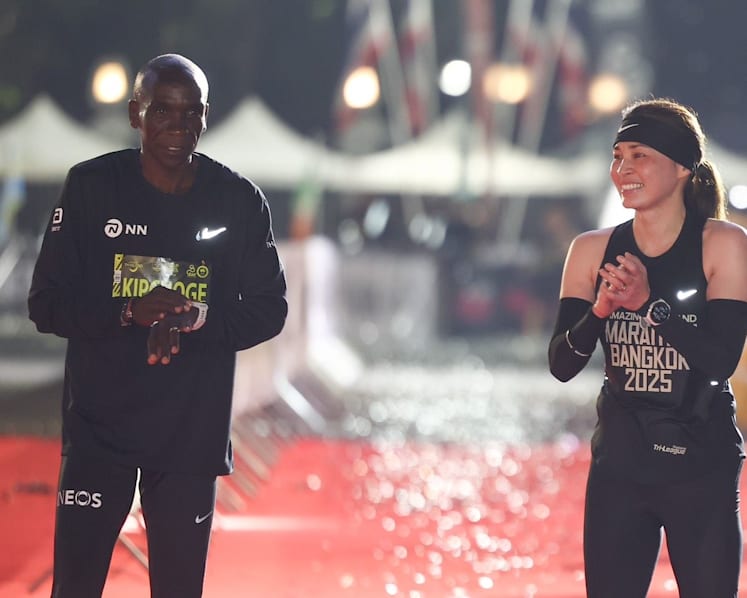
He cited how double Olympic champion Eliud Kipchoge ran the Half Marathon at the Amazing Thailand Marathon alongside the Thai queen.
“If Thailand can get Kipchoge, don’t tell me Singapore can’t,” he said.