From slushies to carbon-plated shoes: What it’ll take for organisers, runners to ensure safe races
After two deaths and a rise in heat injuries, the question arises as to how safe Singapore’s races are. The programme, Talking Point, finds out how better coordination, proper training and practical heat-proofing strategies could help.
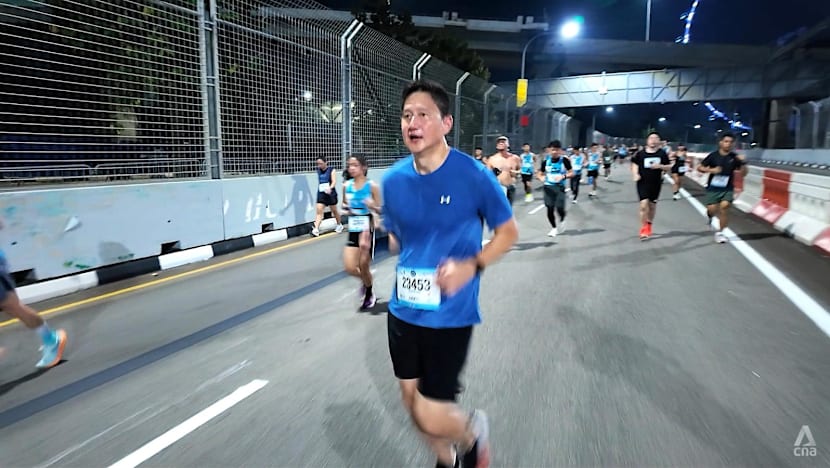
Talking Point host Steven Chia running his first half-marathon in October, in the Garmin Run Asia Series — Singapore 2025.

This audio is generated by an AI tool.




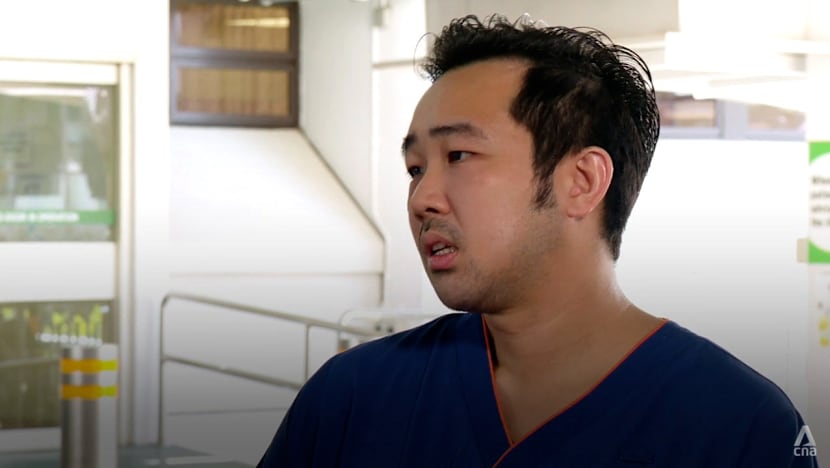
SINGAPORE: As an emergency doctor in the Singapore General Hospital (SGH), Jason Yeong has seen all sorts of heat-related injuries: heat cramps, heat exhaustion and people fainting.
Some of the cases have been heat stroke, with patients coming in “very agitated, very confused, sometimes even aggressive”, said the associate consultant.
“We do tend to see heat injuries come in (from) half-marathons and above. And that’s largely due to the distance (people) are running.”
Given its central location, SGH is typically the hospital that injured runners are brought to during or after a race. And it has seen more heat-related injuries in recent years.





The numbers have increased from about 10 cases in 2022 to 30 in 2023 to 50 last year, Yeong said.
“One of the reasons is that people are being more physically active, taking part in more exercise-related activities, pushing themselves harder, signing up for these kinds of competitive runs.”
Popular races that have seen more participants include the Great Eastern Women’s Run, from 9,000 runners in 2023 to more than 12,000 this year, and the 2XU Compression Run, from 18,500 runners to more than 20,000 over the same period.
Then there is the nation’s flagship marathon event, the Standard Chartered Singapore Marathon, scheduled for this weekend with 60,000 runners expected, up from more than 55,000 last year and 44,000 in 2023.
More runners joining races does not only mean more injuries. In some cases, there have been fatalities — at least nine publicly documented cases in Singapore’s stand-alone road runs since 2007.
The last two deaths after a race were within six months of each other: this April and last December, the latter occurring at the previous edition of the Singapore Marathon.
There have since been changes concerning race safety, finds out the programme, Talking Point, in a two-part special on the risks involved and what it takes to prepare for these races, for both runners and organisers.


A LITTLE MORE CONVERSATION PLEASE
The two recent fatalities and a “huge spike” in heat injuries within six months have led emergency medical personnel like Yeong to push for dialogue with race organisers.
This year, he said, organisers have been reminded to look out for early warning signs that a participant might be “entering into a heat injury phase” and to initiate treatment rapidly.
“The most important thing when dealing with heat injury is time to cooling. Immediate cooling on site brings the best recovery rate,” he said.
“The speed of evacuation to the hospital doesn’t matter as much, as long as effective cooling is initiated on site.”
WATCH: Training for my first half-marathon! Can I survive the heat? (22:47)
He also highlighted the need for good communication so that “we know if someone is coming, how many people are coming (and) what’s been done for them on site”.
Marcus Ong, the director of Duke-NUS Medical School’s health services research and population health programme, welcomed these conversations, calling them an improvement on the way organisers “operate in silos”.
“One example would be just coordinating with the hospitals if you have a large event, such that we’re aware and we have adequate staffing and preparation during that period when we expect a peak load of casualties,” said the professor.
He also thinks Singapore can do better to train first aiders adequately. He cited what happened once when a runner collapsed and a first aider thought “this can’t be a heat stroke” because the runner’s limbs were cold and clammy.
The first aider covered the patient with a blanket, instead of removing the latter’s clothes and putting water and ice on the body to start cooling it.
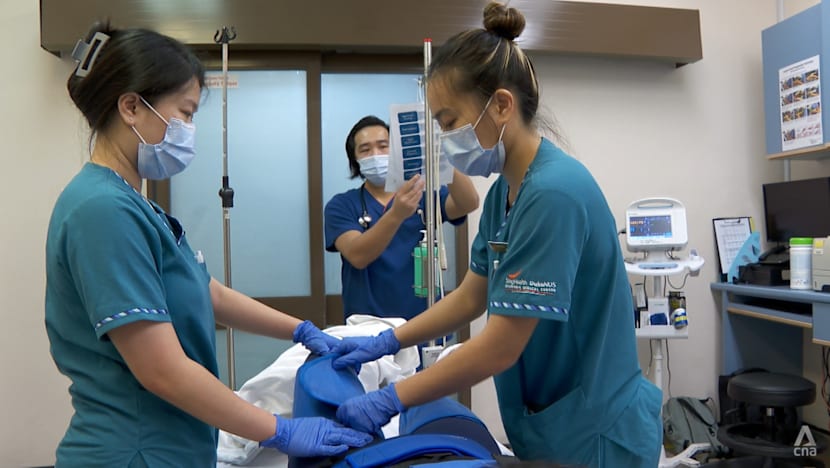
Ong, who is also a senior consultant and clinician scientist at the SGH department of emergency medicine, highlighted the Tokyo Marathon’s “very good track record”: Its participants who suffer cardiac arrest have a 90 per cent survival rate.
One of its best-practice examples is that every runner has a Fitbit or tracker device, so that the event organisers can track participants’ whereabouts in the race circuit, he cited.
The issue is not a matter of resources, he stressed. “In fact, … they use paramedic students as volunteers to support this event, so it doesn’t have to be necessarily a very expensive thing,” he said.
“We should aim for the world’s best kind of practice. And that means that every single preventable death is one death too many.”

A LITTLE MORE MONEY PUT INTO SAFETY?
One question for Singapore’s race organisers is whether more of the race fee should go towards safety and medical support, especially as prices have gone up.
It cost between S$58 and S$116 to participate in the Singapore Marathon 2022, which covered races ranging from 5km to the full marathon. These were Tier 2 fees — regular prices, without early bird discounts.
This year, it costs between S$77 and S$153 (US$59 and US$118), an increase of more than 30 per cent, including the 9 per cent platform fee this time, which goes to the registration website.
“A lot of costs have increased,” said the marathon’s event director, Santoz Kumar, who cited the manpower involved in closing roads as an example.
“You need to have traffic marshals deployed to make sure you close every junction. … You also need to man these junctions.”
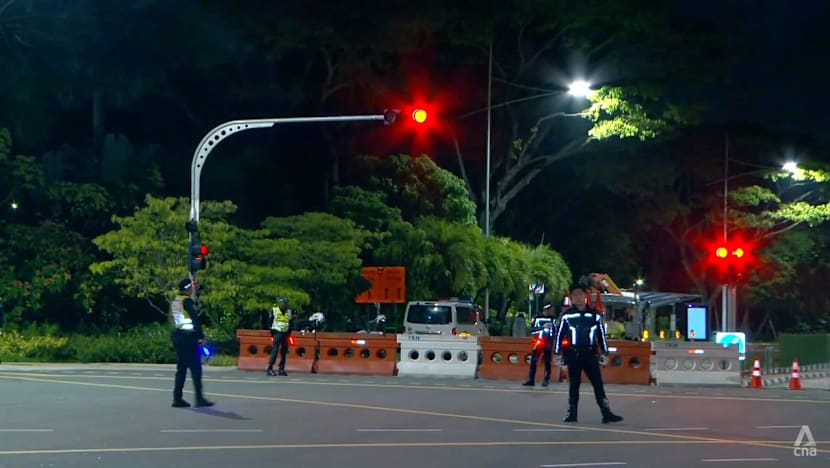
About 35 to 40 per cent of the cost goes towards road closures. There are also “heavy costs” incurred to book venues such as the F1 Pit Building and the Padang, he added.
The organisers must even fly in a Grade A course measurer from Australia — as there is none in Singapore — to measure and certify the race distances (21.1km for the half-marathon, 42.195km for the full marathon) using a calibrated bicycle.
“There’s a fee that we pay him. And when he goes out, he’s measuring the course during live road operations, so we need to arrange for security and escorts to support him,” said Santoz.
“It’s done over a period of time, so not in a single take.”
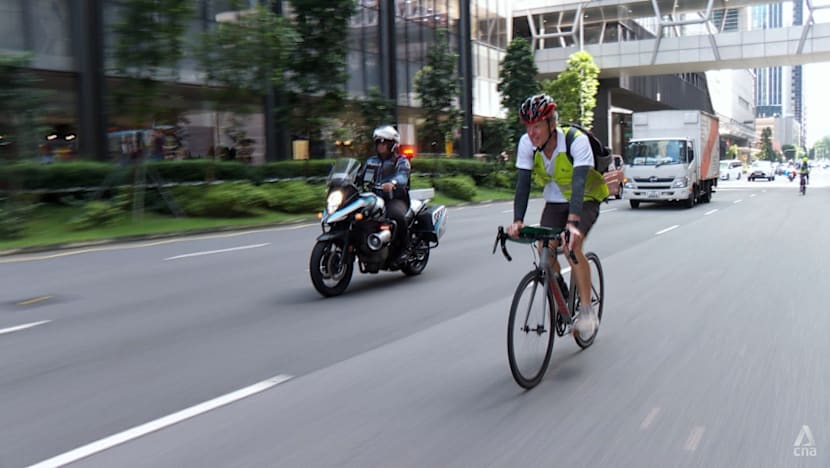
As for safety and medical support, it forms about 10 per cent of the total cost and includes the medical tents at the starting and finishing venues, medical and cooling equipment and first aid provision.
But “one of the misconceptions” is that the safety effort is centred on race weekend, said Santoz. “It’s not. We start it very, very early on.”
When participants sign up for the race, there is the Get Active questionnaire for them to be more self-aware about their health.
There is also a 16-week training programme, at no extra cost, to gear runners up and ensure they are race-ready, cited Santoz. “We’re the only race that offers a very extended training programme.”
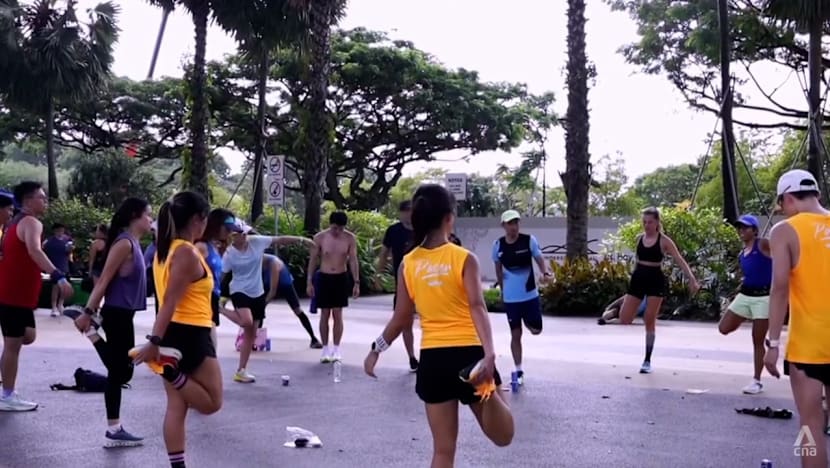
With close to 450 paramedics, nurses and close to 30 doctors on site, he thinks there is enough support provided before any runners must go to hospital.
This year, the organisers are holding the half-marathon and full marathon on separate days so that each long-distance race has its dedicated resources.
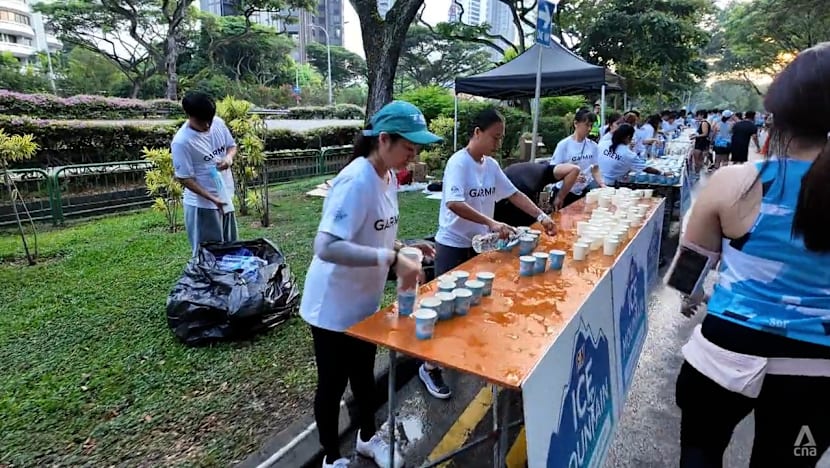
This is on top of existing guidelines, which include having water points every 5km or less, enough first aiders to reach a participant within three minutes and enough cooling interventions like immersion in cold or ice water for heat injuries.
According to Ong, most heat-related injuries from sport can be prevented but only if guidelines are strictly followed.
And to hold organisers to higher safety standards, Sport Singapore (SportSG) made a change of its own this year.
In reply to Talking Point’s queries, the government agency said it now requires event organisers to submit detailed medical safety and risk assessment plans, endorsed by a company representative who has completed an accredited risk management course.
SportSG will review these submissions before providing letters of support, which organisers need for logistics such as approval for road closures from other agencies.
This represents an enhancement in the approval framework for major sporting events, with organisers “remaining fully responsible for implementing appropriate safety measures”, said a spokesperson.
WATCH: Are race fees paying for safety? Steven tests it in a half marathon (22:13)
NAILING THE TRAINING PLAN
Beyond the organisational side of things, SportSG noted that safety at sporting events is a “shared responsibility” involving participants too. So, how does one prepare for a race?
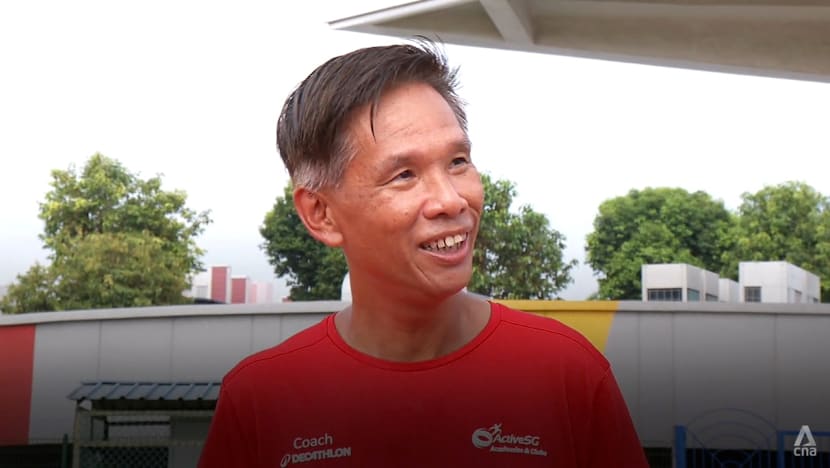
Running coach Eugene Quan from the ActiveSG Athletics Club recommends four to six months of preparation for a new runner training for a half-marathon and three to four months for seasoned runners.
About 30 per cent of his trainees are novice runners, whose training plan will typically start with 5km runs thrice weekly before they gradually increase their mileage. The aim is to run at least 12km before race day.
When Talking Point host Steven Chia, 53, was training for his first half-marathon, Quan also worked on his running gait.
“Relax your shoulders, run a bit taller,” advised the coach. “When you’re not in a good posture or … good running gait, you’re less efficient. Then you’re using more energy to run (at) the same speed.”
This is an issue especially in Singapore’s tropical climate. “Because of the high humidity here, we have problems drying out our sweat,” he said, “so for the same effort that you’re (making) here, you’ll be running slower than somewhere colder.”
Even in December, one of the coolest months, the average daily maximum temperature is 30.5 degree Celsius. And last year saw the warmest December on record, with an average monthly temperature of 27.7°C, tying with 2021 and 2015.
So, to be clear about the demands of race day and to run faster, runners should acclimatise themselves to higher temperatures in the weeks before.
“Heat acclimatisation essentially means progressive exposure to heat stress,” said Jason Lee, the director of the Heat Resilience and Performance Centre in the National University of Singapore’s Yong Loo Lin School of Medicine.
“Then some of (your) physiological responses … will get better: ability to sweat (and) to push up your blood to the skin (to dissipate heat). And that process usually takes about two to three weeks.”
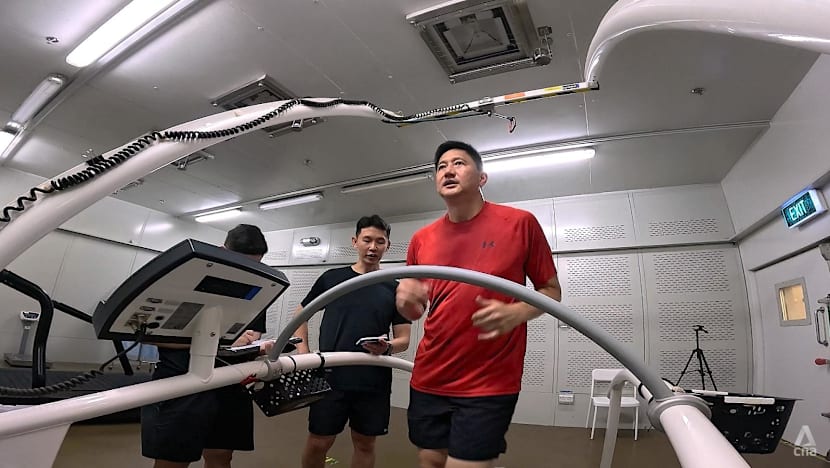
Interval training can also help with speed and endurance. Regular sessions will make one’s planned race speed feel easier. And these shorts bursts of effort followed by recovery will help build muscle resilience, lowering the risk of overexertion or injury.
COOL RUNNINGS, SUPER SHOES
Lee also recommends that runners cool their bodies artificially during training so they can “push harder”.
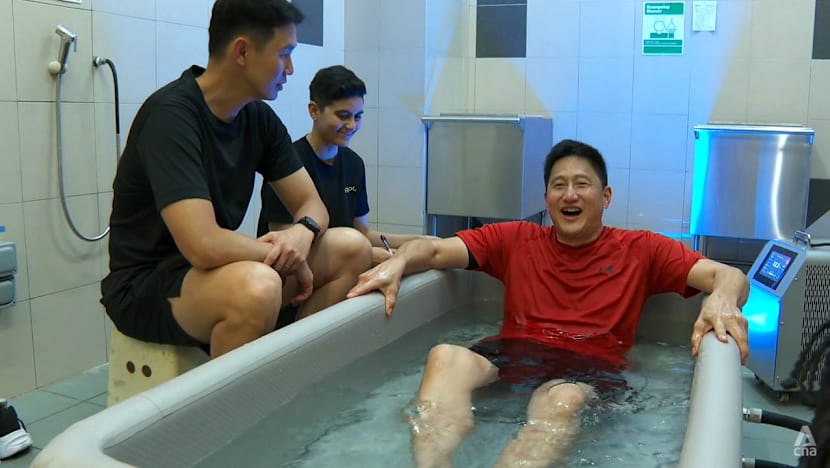
This was demonstrated when Chia took a cold plunge — in 12°C water — in between treadmill workouts. In his final round on the treadmill, he felt lighter and less fatigued, which made it easier to run.
There are wellness centres and gyms that provide cold plunge facilities. But they are not widespread, and appointments for sessions as long as 30 to 60 minutes can cost anything from around S$30 to more than S$100.
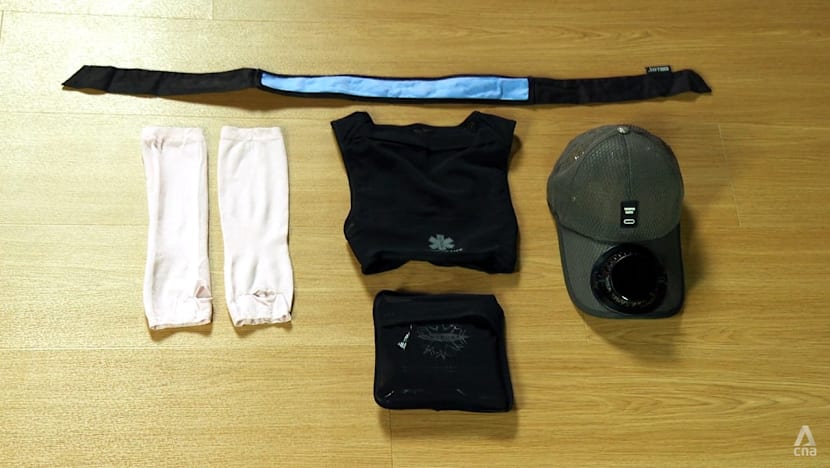
Cooling items, which have gained in popularity on the sports market, may be more practical.
There are vests with a built-in ice pack to lower body temperature, cooling sleeves made of wicking fabric that draws sweat from skin and headgear such as cooling headbands and cooling caps. But they only have an external cooling effect.
“It’ll help you feel more comfortable (and) feel good. But that’s just at the surface,” said Fabian Lim, a senior lecturer at the Lee Kong Chian School of Medicine, Nanyang Technological University.
He conducted a test showing that, in terms of body temperature regulation, drinking a slushie before and during a run was more beneficial — by a “quite significant” magnitude — than wearing a headband pre-soaked in water.
Because an iced drink cools runners from the inside, it can be an effective way to not only endure the heat better, but also reduce the risk of overheating and, possibly, heat injuries.
Lim advised runners to have one before they start their race. “You can bring that along in something that can preserve the ice,” he said. “It gives you maybe a 10 (to) 15-minute benefit.”
Many half-marathon runners may reach their breaking point, however, from the 15km mark onwards. Could “super shoes”, which are said to help their users run faster with less effort, be a game changer then?
Shoes with a carbon fibre plate inside, for example, have a “rolling effect” while the foam compresses and helps users push off — which helps them run more efficiently, according to Running Lab senior retail assistant Justin Kong.
As one’s race progresses, “that’s where the shoe kicks in and brings you forward, because every step matters throughout”, he said.
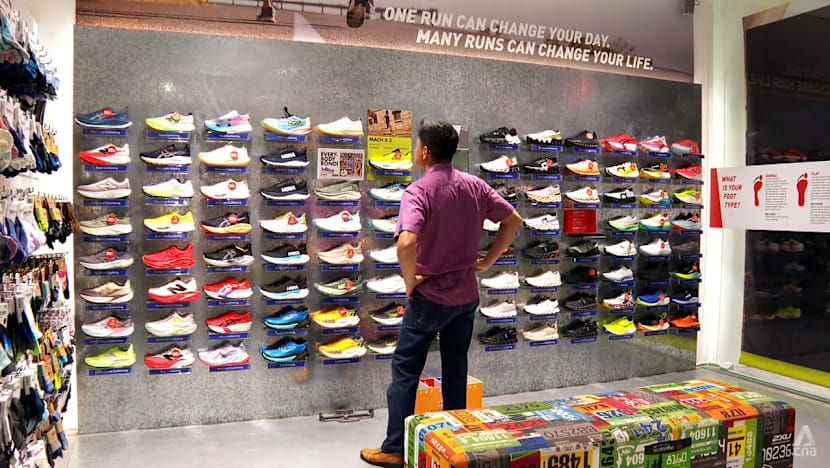
Chia tried out a pair during his training and found that they were “pretty light, responsive, and they do make you feel faster on your feet”.
But as an amateur runner attempting his first half-marathon, he was “not so sure” that he really needed them. He also cited their cost, at S$449, which was almost twice as much as a regular pair.
Not too long ago, good running shoes would set users back between S$100 and S$200.
“Staying injury-free comes from the body you build, not the shoes you buy,” he reflected. “Consistent training strengthens my muscles over time, whereas carbon-plated shoes can mask effort and tempt you to push too hard.”
Indeed, Quan had a final piece of advice about race day. “If you feel any headache, dizziness, chest tightness, all these are signs that you should stop or walk,” he said. “Know your own body.”
Watch part one and part two of this Talking Point special. The programme airs on Channel 5 every Thursday at 9.30pm.