







Study that found 6 in 10 domestic helpers exploited is ‘misleading’: MOM
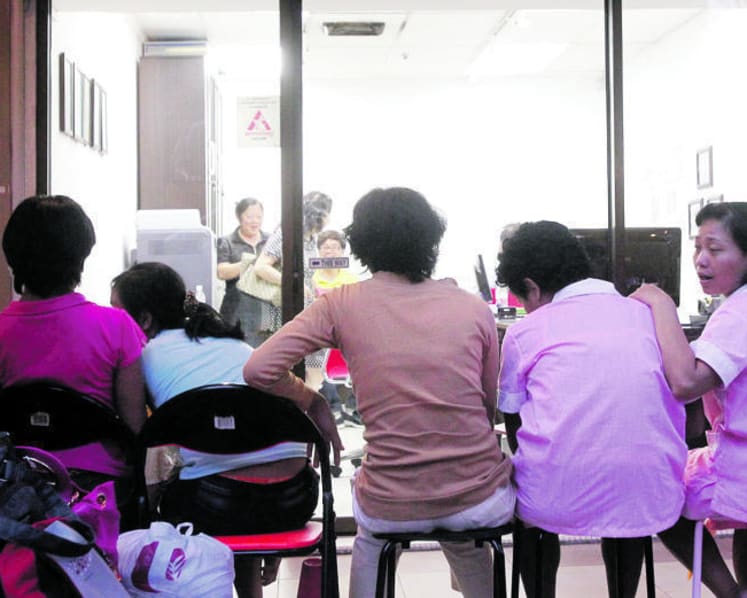
Foreign domestic helpers at a maid agency. TODAY file photo


SINGAPORE — A recent study that found six in 10 foreign domestic workers here to have been exploited was on Friday (Dec 1) deemed “misleading” by the Ministry of Manpower (MOM).
The MOM said the study, titled Bonded To The System by consultancy Research Across Borders, used an overly simplistic interpretation of the International Labour Organisation’s (ILO) indicators of labour exploitation. It trotted out its own survey and interviews that showed a vast majority of foreign domestic workers here were satisfied with working conditions in Singapore.
The study, led by Research Across Borders director Anja Wessels, found 60 per cent of 799 survey participants had taken on hazardous work, clocked excessive hours and slept in a storeroom or at a balcony, among other indicators of labour exploitation. They were surveyed between June and September 2015.
“Excessive working days or hours” was the most prevalent form of exploitation, according to the 152-page study released earlier this week that also surveyed 80 employers.





More than nine in 10 domestic workers (93 per cent) said they worked more than 12 hours daily and had fewer than one rest day a week, or worked on rest days.
The five other indicators of labour exploitation — based on guidelines of the ILO — were bad living conditions, no or low salary, wage manipulation, hazardous work and having no respect for labour laws or contracts. Singapore is a member of the ILO.
But the MOM said the study defined maids’ working hours without taking into consideration the fact that work and personal time in the context of domestic work cannot be easily differentiated.
The researchers also applied “isolation” and “confinement” to include situations when a helper needs to seek her employer’s permission to leave the house, is not given her own set of house keys, or is required to return before midnight on her rest day.
Such an interpretation is “improper, as it has not taken into consideration the employers’ responsibility for the safety and well-being of both the (helper) and family members, especially the young and the aged who require the care of the (helper)”, said the ministry.
The study found seven in 10 foreign domestic workers experiencing “isolation, confinement or surveillance” in their employment.
One in 10 workers were “trafficked” through deception and/or coercion into their current employment, Research Across Borders’ study also found. A quarter (26 per cent) said they were subjected to some form of violence – such as verbal and moral abuse, physical violence, sexual abuse or being denied food or medical treatment.
“These findings are alarming, especially as they likely only reflect the ‘tip of the iceberg’… The results overall suggest that foreign domestic workers in Singapore experience harsh working and living conditions, especially in comparison to international standards of labour law,” said the research team.
“The majority of exploitative practices by (employers), as investigated in this research, are not regulated or prohibited by law in Singapore,” it added. “Thus, working conditions of (foreign domestic workers), including accommodation, wages and rest days, are largely at the discretion of their respective employers.”
The MOM said domestic workers are not covered by the Employment Act due to the nature of their work arrangement, but are protected under the Employment of Foreign Manpower Act. This holds employers responsible for paying wages promptly, providing proper food, rest days, accommodation, medical care and safe working conditions for their domestic helpers.
The government has strengthened measures to improve the well-being of foreign domestic workers over the years, such as enhancing maximum penalties for employers who violate the law and tightening safety requirements.
The MOM’s own surveys of helpers show they are satisfied with working in Singapore, it said. In the 2015 survey of 1,000 helpers, 97 per cent were satisfied working here and 76 per cent intended to continue working here after completing their current contracts.
The MOM interviews more than 3,000 new foreign domestic workers yearly after their first few months working here. “More than 95 per cent indicated that their workload was manageable, and did not raise any well-being issues,” it said.
“MOM has and will continue to work with our social partners…to ensure fair and proper treatment of our foreign domestic workers.”
The researchers suggested two regulatory amendments to improve working conditions and mitigate labour exploitation, including providing live-out options for the workers and abolishing the security bond of up to S$5,000 that employers currently have to pay to the Government.
Of the employers surveyed, 67 per cent preferred the live-out option. Some said it would foster a “healthier working relationship” and allow both parties to have more privacy, while 65 per cent felt the absence of a bond would not make a difference to the extent of freedom they give to their helpers.




