







SUTD grads get higher starting pay than peers: Survey
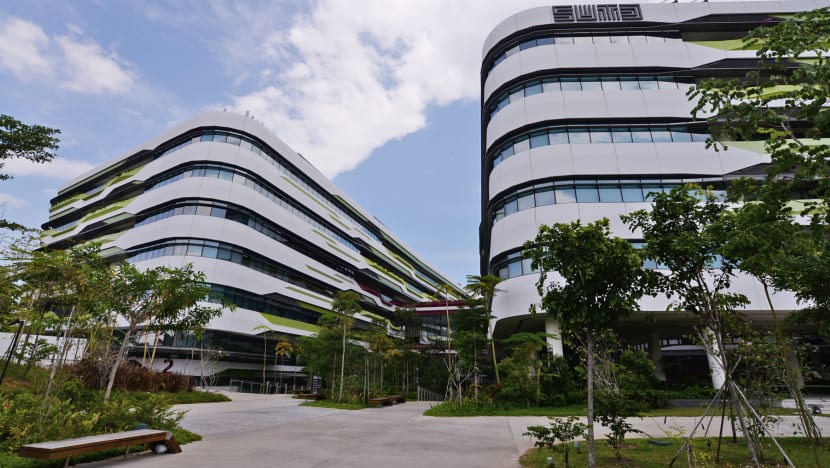
Singapore University of Technology and Design, exterior. Photo: Robin Choo/TODAY


SINGAPORE — The pioneer batch of graduates from the Singapore University of Technology and Design (SUTD) had higher starting salaries compared to their peers, but fewer of them found full-time employment within six months of completing their examinations.
These were the findings of a Graduate Employment Survey released by SUTD on Monday (March 28), which revealed that about 85 per cent of its fresh graduates found a job within six months after completing their final exams, compared to an average of 89.5 per cent of the respective cohorts from the other universities.
The top sectors that hired SUTD graduates were the research and development and the infocomm services industries.
TODAY had earlier reported on the findings from Nanyang Technological University, National University of Singapore and Singapore Management University, where student graduation usually takes place in May. Students from SUTD graduate in late August or early September.





Of the 298 graduates from SUTD last year, 86 per cent of them took part in the survey — which was a first for the university — and it was done between mid-February and this month.
SUTD also found that the median gross monthly salary for its fresh graduates in full-time employment was S$3,600, compared to S$3,300 for graduates from the other publicly funded universities.
For SUTD fresh graduates who majored in information systems technology and design, they earned a median gross monthly salary of S$3,950, while those from engineering product development were paid S$3,600. At the other end of the spectrum, graduates who majored in engineering systems and design received a median gross monthly salary of S$3,500.
With its new permanent campus near Changi Business Park now, SUTD Provost Chong Tow Chong said that the university is hopeful admission numbers would increase this year, as a result of ongoing outreach programmes. “(The) last three years, we were in an interim campus (at Dover Drive) and it was difficult for us to expand,” he reasoned.
Last year, the university admitted 386 students, up from 332 in 2014. For its next cohort in May, the university hopes to increase its intake to more than 400 students.
It offers a total of four courses: engineering product development, engineering systems and design, information systems technology and design, and architecture and sustainable design.




