







Terms of KL-S’pore HSR postponement ‘fair’: Khaw
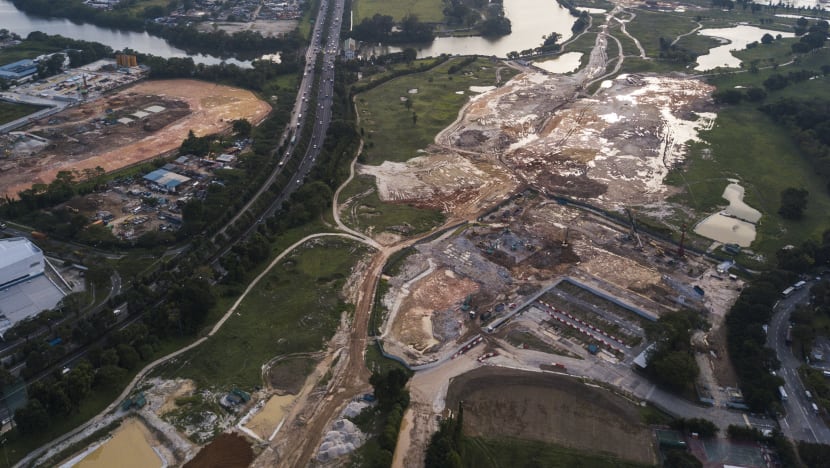
An aerial view of construction site of the Kuala Lumpur-Singapore high speed rail terminus in Jurong East.


SINGAPORE — Calling the terms of the postponement of the Kuala-Lumpur Singapore high-speed rail (HSR) project a "fair arrangement", Transport Minister Khaw Boon Wan said Singapore could have turned down Malaysia's request, but decided to work out an alternative "in the spirit of bilateral co-operation".
In the meantime, the suspension of the project is not without cost to Singapore, he added.
Speaking in Parliament on Monday (Oct 1), Mr Khaw said the postponement "protects Singapore's interests, while reasonably accommodating Malaysia's request".
"It also shows that we can manage our bilateral ties on the basis of mutual respect, and resolve issues amicably in accordance with binding agreements and international law," he said.





"Singapore looks forward to continue working with Malaysia to see through the HSR project. Both sides recognise the mutual benefits of the HSR project, which will bring both countries closer together by improving connectivity, deepening people-to-people ties, and catalysing further economic co-operation," he added.
The minister was responding to questions tabled by Members of Parliament over the project's delay, including the key considerations that led to Singapore agreeing to Malaysia's request, and the major works which will be suspended.
Last month, after lingering uncertainty over the fate of the multi-billion-dollar project, Mr Khaw and Malaysian Economic Minister Azmin Ali signed an agreement to postpone the project for nearly two years, with Malaysia to fork out S$15 million in abortive costs to Singapore by January next year.
Malaysia will have until May 31, 2020 to proceed with construction work.
If the project goes ahead, the high-speed rail services between Singapore and Kuala Lumpur are expected to start by Jan 1 in 2031, four years later than the original schedule of Dec 31, 2026. The four-year delay is due to the extra time needed by both countries to push out the project after it resumes, including the calling of fresh tenders and carrying out extra technical work.
Mr Khaw told the House that if Singapore had turned down Malaysia's request to suspend construction on the project, enforced legal rights on termination, and sought compensation, it would have been "fully in accordance with the bilateral agreement" inked between the two countries in December 2016.
"After that, if and when Malaysia was again ready to pursue such a project, we could discuss a new bilateral agreement for it," he added.
"However, in the spirit of bilateral co-operation, we decided to work out an alternative resolution to the problem, especially since Malaysia reassured us that it did want to resume the HSR project, albeit after a delay."
The fate of the project had been thrown into doubt since Malaysians elected a new government headed by Prime Minister Mahathir Mohamad in May. Dr Mahathir had said at first that he wanted to scrap the project to rein in the country's RM1 trillion (S$330 billion) debt.
Mr Khaw explained that suspending the project was not without costs to Singapore. Singapore will have to pay contractors for terminating ongoing contracts and to wind down operations safely for the period of suspension.
For instance, ongoing excavation work must be wound down safely, by backfilling to render the site safe. The site will be re-excavated once the project resumes, cranking up costs.
SG HSR — Singapore's infrastructure company which is a wholly-owned subsidiary of the Land Transport Authority (LTA) — has already hired many employees who have worked hard on the project, he added.
During the suspension period, these people will be offered alternative roles in the LTA. "I thank them for their good work and dedication to this project. I am confident that they will continue to contribute in the LTA family, and to the HSR project if and when it resumes," said Mr Khaw.
Malaysia's government also requested that during the suspension period, both sides could discuss the way forward for the HSR project, with the aim of reducing costs. Mr Khaw said: "Singapore is open to such discussions. We are not obliged to accept automatically any proposals offered, but we will assess any proposals from Malaysia carefully and objectively."
The HSR, mooted by Malaysia in 2013, is a 350km line that would have cut travel time between Singapore and Kuala Lumpur to 90 minutes, compared with about four hours by car.
The cross-border rail network was to have eight stations. There is the Jurong East terminus in Singapore and, on the Malaysian side, the Bandar Malaysia, Sepang-Putrajaya, Seremban, Melaka, Muar, Batu Pahat and Iskandar Puteri stations.




