







Veteran social worker heartened by growing interest in profession
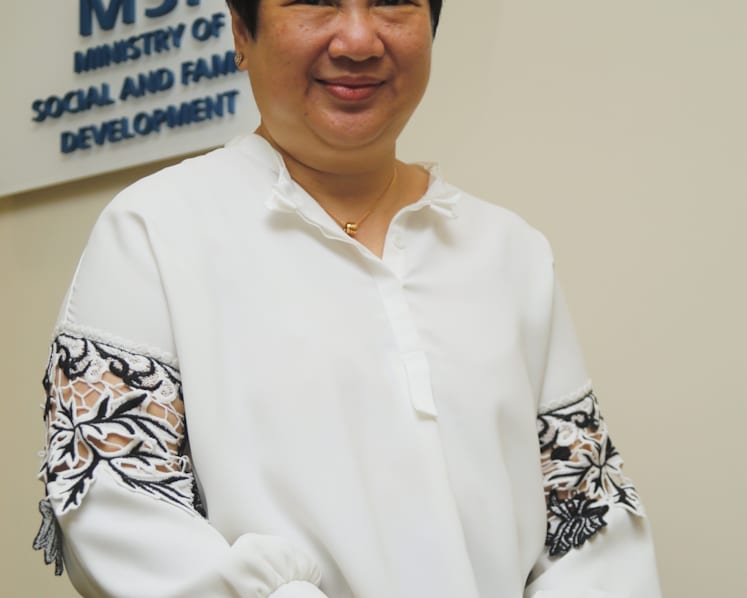
Ms Nancy Ng, winner of Oustanding Social Award. Photo: Ernest Chua


SINGAPORE — She had a hand in helping to set up the Bachelor of Social Work programme at SIM University (UniSIM) — the second full-time social work programme here — and led a review of the Children and Young Persons Act, which saw more rehabilitative penalties for young offenders and introduced emotional abuse as a criminal offence under the Act.
On Tuesday (Nov 8), Ms Nancy Ng was one of two social workers to receive the annual Outstanding Social Worker Award from President Tony Tan at the Istana.
The 53-year-old, who has devoted almost three decades to the profession, is today a director of professional practice development at the Ministry of Social and Family Development (MSF). She also teaches twice a week at UniSIM.
Calling social workers “a bridge in many people’s lives”, she said it is important that Singapore has a bigger pool of social workers serving the needs of the community at a time when social issues are getting more numerous and complex.





Hence, she added that it was heartening to learn that more than 400 applicants had vied for 53 places in UniSIM’s pioneer intake for the Bachelor of Social Work programme this July, which required students to clock 1,000 hours of field work, more than National University of Singapore’s (NUS) 800 hours.
Even more importantly, the undergraduates who opt to study social work today often already have several stints in the field. During her time, NUS was the only institution to offer full-time social work studies. And she went into it because she “did not want to go into commercial sectors”.
Kicking off her social-work career in the Singapore Armed Forces’ counselling centre, before moving on to the MSF in 2001 to focus on youth and families, Ms Ng has experience in both working on the frontline and in policy work.
During her years as a probation officer, she introduced the use of voice biometric technology to enforce curfew orders, easing the officers’ burden. In the MSF, she led a review of the Children and Young Persons Act, introducing amendments to protect whistle blowers of child abuse, among others.
A strong believer in practice-based learning, Ms Ng said she gained many of her most-valuable lessons by listening to those she was trying to help.
“There are always people who fall outside the bell curve, emotions and behaviours you will not be able to predict or address with a good policy paper,” she said.
The very people social workers are trying to help may not always appreciate the assistance and may lash out, she added. So social workers sometimes also need to be “good actors”, she said, recalling an occasion where she had to temper her response and to carry on calmly despite being verbally attacked by an abuse-stricken family she was working with. She said: “I had to get a grip on myself ... To muster some inner strength and tenacity to do what I went there to do.”
Moving forward, Ms Ng said she hopes to see the local social-work profession advance through innovation and ground-up collaborations between social-service organisations. These will be important, given the twin challenges of manpower constraints and growing social needs.
Besides Ms Ng, Ms Chee Wai Yee from Dover Park Hospice was also awarded the top honour in social work. Two young social-work professionals also received the Promising Social Worker Award. They are Ms Lin Jingyi, senior medical social worker at Tan Tock Seng Hospital, and Ms Lee Kaiyi, who works at the Institute of Mental Health.




