







Virus-free certificates? Enough medical staff? MPs pepper ministers with questions on novel coronavirus
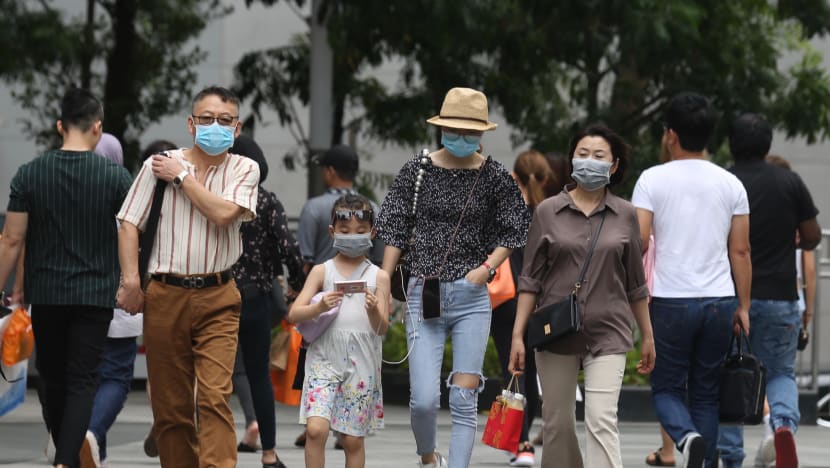
A total of 20 Members of Parliament asked questions about ongoing efforts in Singapore to fight the novel coronavirus outbreak.


SINGAPORE — In the first parliamentary sitting after the widespread outbreak of the novel coronavirus, including 18 cases in Singapore, 20 Members of Parliament (MPs) spent more than an hour raising questions on ongoing efforts to contain the outbreak and contingency plans if the situation worsens.
The MPs' questions on Monday (Feb 3) ran the gamut from whether certificates could be issued for workers to provide proof to their employers that they are virus-free and safe to work to how doctors are deciding when is the right time to discharge an infected patient.
Here are some of the questions and answers, edited lightly for length and clarity.
Dr Lily Neo, MP for Jalan Besar Group Representataion Constituency (GRC): Could there be a system of certification for employees to show employers to state that they are coronavirus-free?





Health Minister Gan Kim Yong: There is no such thing as (being) coronavirus-free. We test the patient based on his viral load, and there is an incubation period during which the patient may have very low or zero viral load, but at the same time, because it is the incubation period, the virus may emerge later on.
Therefore, at any point in time when you test a person and it is negative, it doesn’t mean that he is virus-free. He may be virus-free at that moment, but he may already be infected but within the incubation period, so it is not possible for the hospital or any screening centre to give a certificate that this person is virus-free. You can only say that at this moment in time, the test shows no virus detectable in his bloodstream. But the virus can emerge the following day, the following hour…
I will also take this opportunity to urge employers not to send their workers to our hospitals for testing in order to certify that they are virus-free. It is not possible for the certification to be issued. You are also simply loading our hospitals unnecessarily.
Dr Chia Shi-Lu, MP for Tanjong Pagar GRC: What are the criteria for a coronavirus patient’s discharge from hospital? There doesn’t seem to be an international consensus on that?
Mr Gan: Patients will have to do two tests. Both tests have to show negative viral load, and they are usually one day apart to make sure that they are free of virus before they are considered for discharge… At the end of the day, doctors will usually make an assessment, despite all the tests that we do, to ascertain that the person is well, doesn’t look sick and doesn’t have symptoms.
Generally, if they are quite well, we will keep them for a while longer to ensure that there is no further deterioration before they are discharged.
Our doctors are very careful, so we can leave it in their hands to make a professional judgement when it is an appropriate time to discharge.
Dr Lee Bee Wah, MP for Nee Soon GRC: Is there any plan to impose travel restrictions for those who come from Hong Kong due to its proximity to mainland China, where travel restrictions already apply?
National Development Minister Lawrence Wong: Hong Kong has fewer confirmed cases than Singapore. Maybe people might want to apply travel restrictions on Singapore then.
Our approach is to look at evidence at the source of where the virus is, how widely it is spreading, and which are the at-risk sources… We will not rule out more actions, travel restrictions, as we have said, but it has to be based not just on geographical proximity or distance, but based on evidence on the nature of the virus – how widely it is spreading and the risks it presents.
Ms Denise Phua, MP for Jalan Besar GRC: Most of the masks found in the marketplace and distributed are adult-size. Is there a supply of smaller masks for children?
Mr Gan: With some adjustments, the masks can be used for younger children. If they really cannot be used, then what you do is to use a handkerchief or whatever to cover their mouths to prevent them from spitting out droplets when coughing or sneezing. If you do that, please wash your hands. There are various ways to do it.
If you really can’t, then you just have to go to the hospital or clinic to see a doctor. And if the child is sick and there is no need to go out, please don’t take him out so that he can rest and recover as well.
Ms Sylvia Lim, MP for Aljunied GRC: What can Singaporeans who are returning from China through Changi Airport expect? I’ve a resident who returned from Wuhan via another airport. He said it was a very stressful experience for him and his family, which includes young children, as they were kept in a locked room for about four hours as they wait for vehicles to arrive.
Mr Wong: Anyone coming back from Hubei province would be deemed to be of higher risk, and therefore we would want them to be isolated and quarantined. Processes are in place.
Can we improve them? Can we make the waiting times shorter? I am sure the agencies are going all out to see how it can be streamlined or improved. But we hope Singaporeans and travellers in this category would understand… There will be some inconvenience, but please bear with us while we work through the processes and see if these processes can continue to be improved.
Dr Neo: Is there a shortage of ambulance services right now? Lately, general practitioners have had to wait many hours before their emergency cases and suspected coronavirus cases could be attended to.
Mr Gan: We have ramped up our ambulance services in order to respond to this outbreak situation. These ambulances are used to convey suspect cases because we want to make sure that they are protected and isolated when transporting them to hospitals for tests.
In the initial few days, there were some organisational difficulties among the service operators. We sat down with them, discussed with them and managed the logistics better now.
Sometimes when there is a peak, it may take a while — a few minutes to an hour — but we try to respond to it as soon as possible. We have also set up a hotline for doctors to call. This is operated by the College of Family Physicians that will help them to coordinate if there is any problem that they encounter.
Mr Yee Chia Hsing, MP for Chua Chu Kang GRC: What could working parents do if they find themselves strapped in having to look after their children when schools, even preschools, have to close in the event of a widespread community spread of the virus, as mentioned by Mr Gan?
Education Minister Ong Ye Kung: Minister Gan is trying to do the right thing to paint future scenarios that are possible, that we should be prepared for. It is not as if we are going to close schools now, but it is something that we have to consider… Bear in mind that at the height of the severe acute respiratory syndrome (Sars) outbreak, we did suspend schools for a couple of weeks. If it comes to that, we have to do what we have to do.
We will have to look at the data, the evidence, the situation, and take into account all considerations before making any decision.
Dr Intan Azura Mokhtar, MP for Ang Mo Kio GRC: Do we have enough healthcare workers and professionals to help manage cases in the National Centre for Infectious Diseases (NCID) and other hospitals?
Mr Gan: There is a heightened need for manpower because of the intensity that we are going through — inspection and testing of the cases, quarantining them and managing them… We also need to look after the suspected cases to detect signs of infections when they occur… and the rest of the healthcare needs continue (and have) to be met. Therefore, we are working with our healthcare clusters to make sure that there are sufficient manpower and proper schedules.
I’ve reminded the group CEOs just recently that they need to plan long term and not to dash to the end point. We need to be prepared that this may take months, therefore duty schedules, rosters and so on have to be prepared on a sustainable basis, to ensure that there is sufficient turnaround and sufficient rest given to doctors and healthcare workers so they are able to sustain the long term…
It is also part of the plan for our clusters and hospitals to call back some of their volunteers. Some of those who are on leave may also volunteer to come back and help to supplement the manpower… As we go along, we will continue to augment our manpower resources.
At the same time, part of the plan is to see how we can reorganise ourselves during a crisis or outbreak mode, so that we can operate differently. So some of the medical care that is non-urgent or elective procedures may need to be postponed. We may manage them in a different way to lighten the load for our core medical manpower.
Dr Walter Theseira, Nominated MP: What are we doing to encourage employers to be generous in giving paid medical leave for workers who are sick and may need to self-isolate?
Manpower Minister Josephine Teo: The treatment for people who are on leave of absence (LOA) is quite clear. We have sent out an advisory to employers that because LOA is a requirement, they will have to find ways of supporting it. Whether the person on LOA is provided with additional leave or that duration is treated as paid vacation leave or sick leave, there are certain suggestions on how employers may treat it.
I think the member’s question also extends to persons who are not required to be on LOA but who either sense that they should stay away because they are not feeling well, or who have to look after someone who is on LOA. In those instances, I think we have to allow the employers to exercise some flexibility.
If this is a situation where the employer has come into agreement with this individual, well and good, I think the employers know what to do. But there is really no requirement for a person to stay away from work if they themselves are not being asked to fulfil an LOA requirement.
Ms Tin Pei Ling, MP for MacPherson: How are countries including China responding to the imposition of travel restrictions on people with a recent travel history to China?
Mr Wong: Given the way that the virus is spreading and the situation is unravelling, I believe China understands why some of these restrictions are needed. China itself has restricted its own people from travelling outside of China, precisely because they do not want to spread this virus to other countries. So they, too, see the need and recognise the need for travel restrictions on its own people...
Similar restrictions that we and many other countries have put in place are really complementary to China’s own actions… It is in our collective interest to tackle this situation together as a global community to limit the spread of the virus and contain it as much as possible.




