







New volunteering scheme for firms launched as businesses with social impact keep Singapore's edge: David Neo
Businesses can be powerful engines of social change, said Acting Minister for Culture, Community and Youth David Neo.
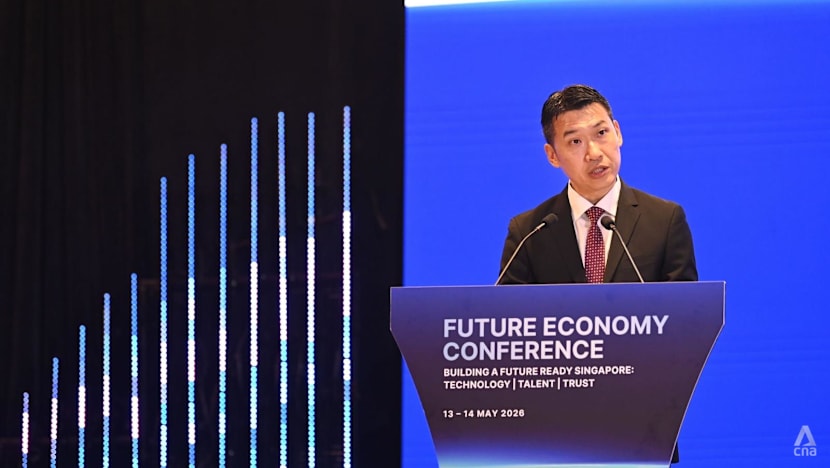
Acting Minister for Culture, Community and Youth David Neo speaks at the Singapore Business Federation's Future Economy Conference on May 14, 2026. (Photo: CNA/Liew Zhi Xin)

This audio is generated by an AI tool.


SINGAPORE: Businesses that create good jobs and social impact help Singapore to grow and remain competitive in a changed world, said Acting Minister for Culture, Community and Youth David Neo on Thursday (May 14) as he launched a new volunteering initiative for firms.
“They contribute to a cohesive ‘we-first’ Singapore and in turn, provide a stronger environment for businesses to thrive,” said Mr Neo, adding that such “purpose-driven” companies also attract talented workers and customers alike.
He was speaking at the second day of the Singapore Business Federation’s Future Economy Conference, where he launched the VolunteerInc initiative that connects businesses with suitable volunteer opportunities.

The launch comes after the ESR released its final recommendations on Wednesday following engagements with more than 7,700 people from trade associations and chambers, unions, businesses and workers. Mr Neo elaborated on the thrusts aimed at empowering workers, including through the artificial intelligence transition, in his speech.
“This is an important and timely effort to position Singapore for the longer term, as we enter into a new phase of our economic journey in a very much changed world,” said Mr Neo, who co-chaired the ESR committee on human capital.
Beyond this, Mr Neo said businesses can also give back to their communities “to help weave a stronger social fabric and be an engine for social change”.
“In Singapore’s dynamic economy, businesses have an extraordinary opportunity to do more than generate profit – our businesses can be powerful engines of social change,” he said.
LAUNCH OF VOLUNTEERINC
To this end, businesses can give back to their communities beyond creating quality jobs and developing the workforce, said Mr Neo.
Through partnerships with social service agencies, employee volunteerism or championing causes close to Singaporeans’ hearts, companies can create shared experiences that bring people together, he said.
“This builds not just goodwill, but trust – and trust in this changed world is one of the best and hardest earned currencies,” he added.
Many companies have stepped up in meaningful ways, but more businesses want to make an impact, said Mr Neo, pointing to an SBF study that showed 90 per cent of businesses believe that social sustainability is important.
A separate National Volunteer and Philanthropy Centre study found that 30 per cent of businesses are giving back through volunteering and donations.
“This gap … suggests that many businesses want to do more, but could be held back by constraints, practical constraints, such as manpower and resources for SMEs, and difficulty measuring impact for larger firms,” he said.





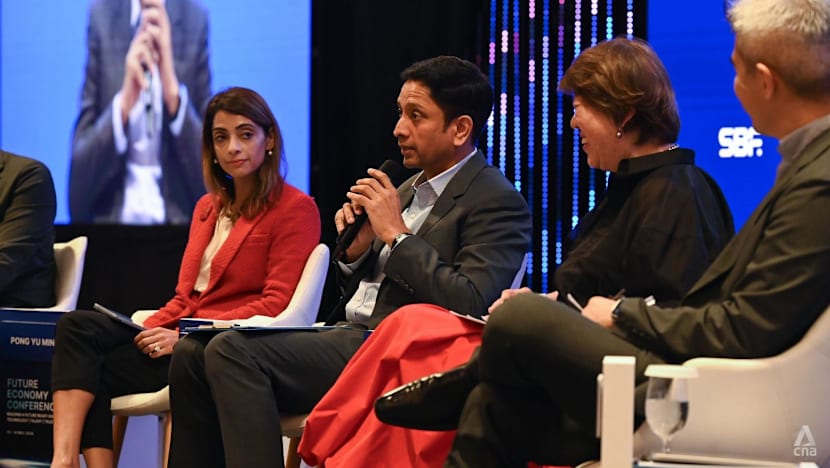
Speaking on a panel on social impact at the SBF conference, Minister of State for Culture, Community and Youth Dinesh Vasu Dash said some companies want to do good, but struggle with getting started or knowing where the needs are.
On the other hand, the mayor for the South East District said the Community Development Councils would know where the needs are.
“When we partner with businesses, we can then help to direct your resources towards areas where the impact might be highest,” he said.
Mr Neo said the government has been working with businesses and community organisations to make it easier to give back, and VolunteerInc will build on these efforts.
VolunteerInc hopes to make it easier and more impactful for businesses of all sizes to volunteer their time and skills, he said. It will reduce constraints by connecting businesses and volunteer opportunities tailored to size, interests and capabilities.
Mr Neo said SBF has partnered with more than 50 businesses and deployed 500 employees to volunteer in the community over the past nine months, while more than 120 businesses have indicated interest.
JOB CREATION AND SKILLS
Creating quality jobs is also a way for businesses to drive social change, helping workers thrive as the nature of work changes, said Mr Neo.
“A good job isn’t just a good paycheque. It is a pathway to dignity, stability, and social mobility,” he said.
Businesses that invest in fair wages, skills development and inclusive hiring help ensure Singapore’s progress is shared by all. That builds a stronger, more cohesive Singapore, and provides a stronger environment for businesses, he added.
Noting that AI is reshaping work, Mr Neo said Singapore must find a strategy that makes sense for workers and businesses.
“This means investing in and deploying AI in ways that amplify the value of our human capabilities – such as judgment, relationships and trust, and investing where AI can open up new horizons, new roles and new career opportunities,” he said.

Government support for AI adoption should lead to positive worker outcomes, such as redesigned jobs, higher-skilled workers and improved pay and career pathways, he added.
“Where these outcomes are not achieved, the government should review how support is applied and how we can do better together with our businesses to achieve these outcomes,” said Mr Neo.
He said measures have been rolled out to develop broad-based AI literacy, and the next step is to scale the effort to integrate AI into industries and workplaces to achieve positive worker and business outcomes.





