







Watch out for 'trust deficit' arising from terror attacks elsewhere: Shanmugam
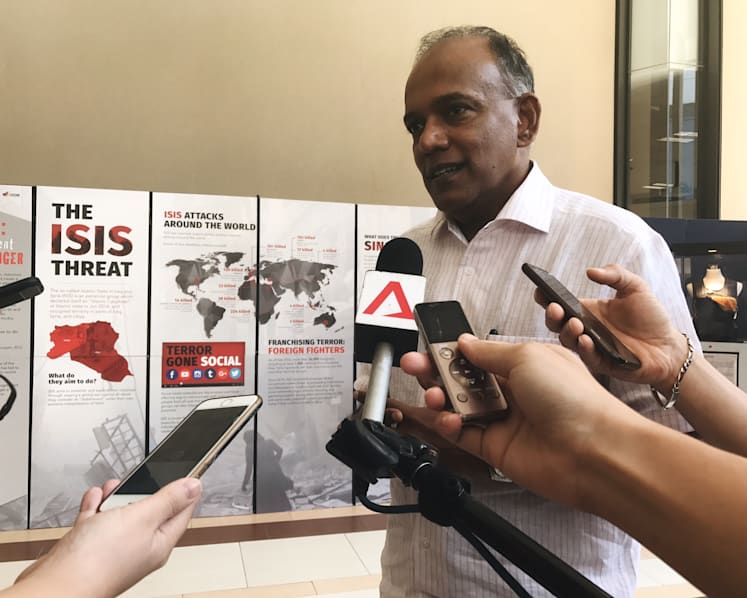
Speaking on the sidelines of a counter-extremism forum on Saturday (July 22), Law and Home Affairs Minister K Shanmugam stressed the importance of “redoubling efforts” in engaging both the Muslim and the non-Muslim communities. Photo: Wong Pei Ting/TODAY


SINGAPORE — Singapore is “in a better place” than other countries in countering Islamophobia, but it is necessary to watch out for any “trust deficit” that may fester, said Law and Home Affairs Minister K Shanmugam.
Speaking on the sidelines of a counter-extremism forum on Saturday (July 22), he stressed the importance of “redoubling efforts” in engaging both the Muslim and the non-Muslim communities. “The majority trust each other. We work with each other, we live with each other... At the same time, it behooves to recognise that there is some trust deficit,” Mr Shanmugam said. “And (terror) attacks around the world – from terrorist incidents over the last few years to the constant highlighting in headlines – have impacted a little bit on the trust.”
In the closed-door forum session attended by some 200 Muslim youths from the various institutes of higher learning, the minister addressed questions on whether there is inconsistency between being a good Muslim and being in a multiracial environment, and whether they will be classified as extremists just because they are religious.
Assuring the community, Mr Shanmugam said: “My central message is that because of the policies we have had – social, economic policies, education policies, and our approach to integration, active social intervention by the state – and acceptance of that by the people, the state of the interracial, interreligious relationship in Singapore is much better than it is in many other places.”





Saturday’s event organised by the Inter-Agency Aftercare Group (ACG) took place a day after think-tank Institute of Policy Analysis of Conflict (IPAC) published a report warning that the terrorist network battling Philippine forces in Marawi since May 23 may be prepping Muslim militants for similar attacks in Singapore and in East Asia.
The report, in particular, highlighted a Telegram posting on July 3, presumably by a militant, describing Malaysia, Singapore, Indonesia, Korea, Japan, Philippines, China, Burma and Thailand as being ruled by infidels.
In response to the IPAC report, a spokesperson from the Ministry of Home Affairs on Saturday said security agencies here have been placed on “high vigilance”, including looking out for attempts by militants to use Singapore as a point of transit to go to Marawi to join in the insurgency.
Any Singaporean who attempts to make his or her way to the conflict zones to join the armed violence will be dealt with “firmly”, the MHA spokesman said.
Added Mr Shanmugam: “We would detain anyone who intends to take up arms in a foreign conflict… We have our ways of tracking (those travelling to Marawi).”
Citing a June 1 report which assessed that the terrorism threat to Singapore is at its highest in recent years, he said conclusions from the IPAC report are not new.
“Singapore has been targeted and they have been repeating that. (However) there is no intelligence to suggest a specific threat from Marawi. But, yes, the Marawi situation doesn’t help because it heightens the threat,” he said.
The US State Department said in an annual report on Thursday that both countries have “unprecedented levels of cooperation” to thwart terrorism and have shared information last year.
Commenting on the positive assessment, Mr Shanmugam said: “The US has been a very valuable partner for us, in terms of technology, in terms of cooperation… Many things that we are trying out here is based on technology that US has identified.”




