







From whispers to open discussion, Singapore society has shifted on LGBT issue: Desmond Lee
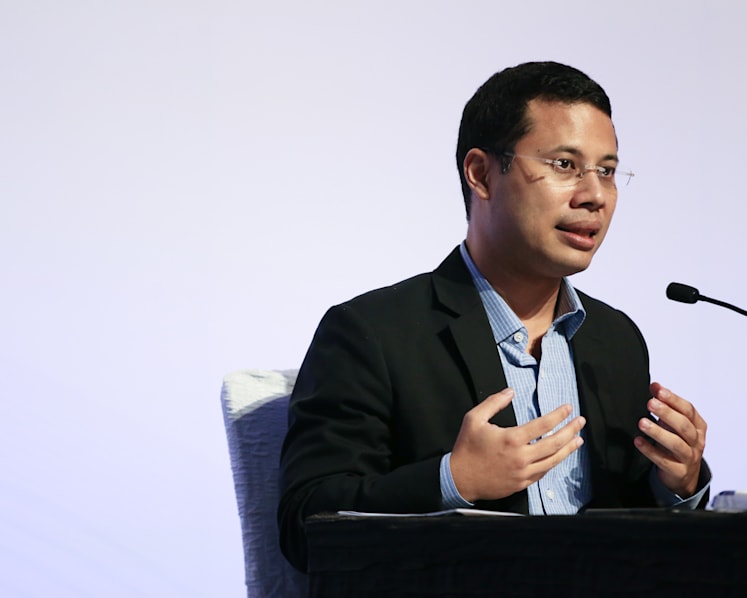
Social and Family Development Minister Desmond Lee at a conference to mark the 30th anniversary of the Institute of Policy Studies (IPS) at the Sands Expo and Convention Centre.


SINGAPORE — From being talked about in “whispers” two decades ago, Singapore society now discusses the lesbian, gay, bisexual and transgender (LGBT) issue openly, said Social and Family Development Minister Desmond Lee.
Each year, many Singaporeans attend the Pink Dot event in support of the LGBT community. Gay bars and entertainment outlets operate without having to “worry about being open”.
Section 377A of the Penal Code, which criminalises sex between men, is also not enforced actively. “So, let’s accept Singapore society has changed over the decades,” said Mr Lee on Friday (Oct 26) at a conference to mark the 30th anniversary of the Institute of Policy Studies (IPS) at the Sands Expo and Convention Centre.
He was responding to a question by session moderator Eleanor Wong, who asked if it is in the Government’s place to be neutral about the choices that people make, in reference to the debate around Section 377A.





Mr Lee spoke at a panel discussion on emerging forms of social identities and social formation.
On issues that are fraught with emotion, personal values and very contrasting visions for future generations, robust, measured and respectful dialogue must continue, said Mr Lee.
“If our society can navigate that, we will be able to better come to some consensus about a future shape of society that our children must decide for themselves,” he said.
SAFE SPACES NEEDED
India’s Supreme Court ruling in September to strike down a similar law rekindled the long-running debate on the repeal of Section 377A here. Prominent figures — including veteran diplomat Tommy Koh and two former Attorneys-General — weighed in on the issue and petitions were started by opposing sides, which garnered tens of thousands of signatures.
While a large group continues to see the family unit as a man and a woman who have children, there are activists who envisage that marriage can take a different form, between two men or two women, for instance, said Mr Lee.
“The question that is facing us today and tomorrow is, what kind of society do we see (for) the future of Singapore?”
Another speaker, sociologist Paulin Straughan, said resources must be put into creating a safe space for those with an alternative sexual orientation, mental illness or other disabilities to “come out and say ‘I am who I am and I can be a contributing member of Singapore society’”.
“Society is not yet a safe space for these friends and these Singaporeans to step out,” she said, noting that the fear of these individuals stems from social stigmatisation.
But Mr Lee noted that in societies where laws have changed for the LGBT community, the issue may not be “settled” and there may be certain groups who continue to feel very strongly about how future generations should be brought up.
Professor Straughan, who is dean of students at the Singapore Management University, cautioned that a certain type of activism could cause the agenda to move “two steps backward when others have moved it one step forward”.
Singapore society will not gain much by, for instance, burning slogans or causing disruption, she said. “We have to always remember: Do you want change for the people you’re fighting for and protecting? Or are you doing this to get that moment in the newspaper?”
Activists must learn to identify the nexus of influence, and pinpoint and resolve the “pain points” so that it becomes a “win-win situation”, she said.
MORE EMERGING FAMILY TYPES
In a speech ahead of the discussion, Mr Lee said the face of Singapore society is shifting, with more inter-ethnic marriages and a changing religious identity including rising religiosity. There are also more emerging family types including cohabiting households comprising homosexual or heterosexual couples.
While supporting marriage and parenthood remains a national priority, Mr Lee said the Government has been adjusting its policies to meet the needs of singles, such as in housing.
“Our social policies balance between maintaining strong support for marriage and family, while making space for the increasingly prominent diversity in family and social forms,” he said.
“We must remember the idea of Singapore — that we may all be different, but yet, in many important ways, we are the same.”




