







Why announce a GST hike in advance? Govt is being 'honest and upfront'
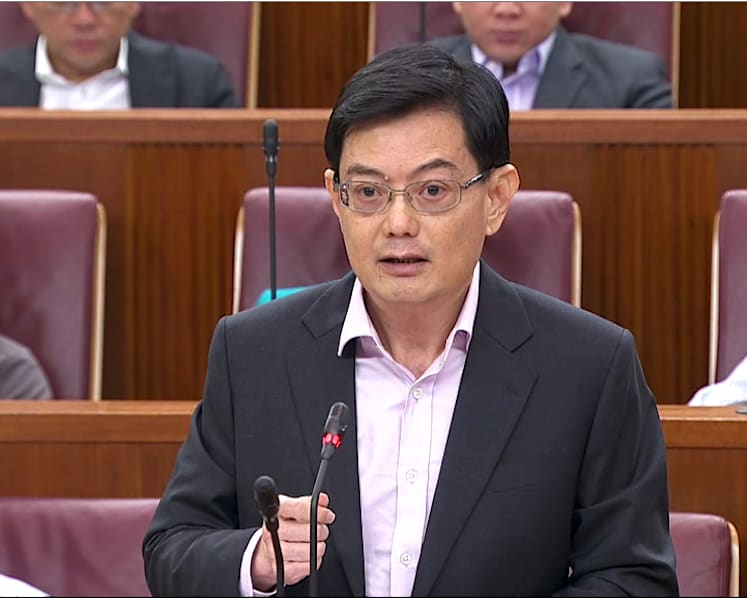
Photo: Parliament Broadcast screencap


SINGAPORE — Addressing several burning questions surrounding the impending Goods and Services Tax (GST) hike, Finance Minister Heng Swee Keat said the move to announce the measure well in advance reflected the Government’s “honest and upfront” approach towards meeting the country’s long term needs.
Rounding up this year’s Budget debate in a wide-ranging speech, Mr Heng also pointed out on Thursday (Mar 1) that the 2 percentage point GST hike, expected to kick in sometime between 2021 and 2025, would not be enough to fully cover the country’s growing spending needs, particularly in areas like healthcare, security and education.
“It is thus the prudent and responsible approach to raise GST in good time, instead of hoping for expenditure to fall,” the minister added.
He stressed, however, that the decision to raise GST was not one that the Government took lightly, and that it was mindful of the impact on households, particularly the lower-income.





Various measures would be in place to help them cope, and the Government will “enhance” the permanent GST Voucher scheme when the tax hike is implemented in order to provide more assistance to seniors and lower-income households, said Mr Heng.
The GST hike is one of the most hotly debated items in this year’s Budget. During this week’s Budget debate in Parliament, some MPs voiced support for the “advance notice” on the impending hike, while others urged the Government to delay raising the tax and to look into other ways to raise revenue.
For instance, Ms Foo Mee Har, MP for West Coast GRC, suggested that the Government review the need for a GST hike if Singapore’s economy continues to outperform the forecasts and generate recurrent budget surpluses in the coming years.
The Workers’ Party (WP) had said that it could not support the impending hike at this point, given the lack of details on how other forms of tax will add to the Government’s income. All eight WP MPs and Non-Constituency MPs, with the exception of party chief Low Thia Khiang who was absent, voted against the Budget on Thursday.
In addressing the various issues raised during the Budget debate, Mr Heng reiterated that the Government took a “long view” of the country’s needs and major trends affecting Singaporeans.
A sudden escalation in terror threats or geopolitical tension, for instance, could significantly increase the security spending required.
Meanwhile, the Government’s healthcare expenditure is expected to rise by nearly 0.8 percentage points of gross domestic product (GDP) to almost 3 per cent in the next decade, or an additional S$3.6 billion more in today’s dollars.
Spending on pre-school is expected to double in the next five years, to S$1.7 billion a year in 2022.
“These are serious commitments that we must budget for, and there are risks that overall spending could rise further,” said Mr Heng, who further pointed out that the 0.7 per cent of GDP per annum raised by the impending GST hike would not fully cover Singapore’s expenditure needs, and could only make the fiscal gap more manageable.
Nonetheless, the Government will exercise care in deciding the exact timing for the GST hike, said Mr Heng, adding: “Before we move to raise the GST, we will carefully assess the prevailing economic conditions as well as our needs at that point.”
The minister also addressed concerns that some businesses could use the GST hike as an excuse to raise prices.
Er Dr Lee Bee Wah (Nee Soon GRC) had called for a task force to be formed to ensure that businesses do not use the GST rise to exploit consumers. The Government had set up a committee to look into complaints "about profiteering" when it last announced a GST hike in July 2007.
“We expect businesses not to exploit the situation and use the GST as a cover to raise prices,” said Mr Heng. “If necessary, the Government is prepared to convene a similar Committee Against Profiteering.”




