







Woman in a man’s world: Water scientist Rita Colwell wins Lee Kuan Yew Water Prize
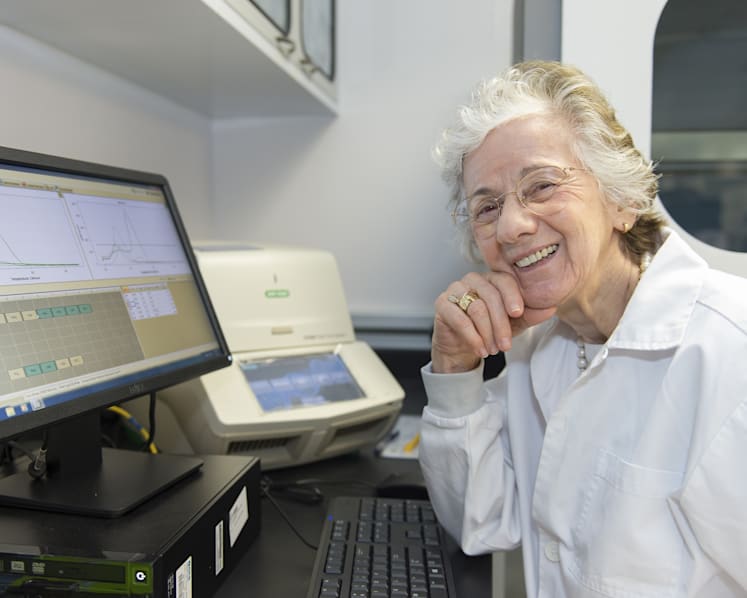
American microbiologist Rita Colwel was awarded the Lee Kuan Yew Water Prize 2018 for her study of the cholera bacteria. The prize, sponsored by Temasek Foundation Innovates, comes with a cash prize of S$300,000. Photo: PUB


SINGAPORE — She was an unwelcomed “albatross” when she first set foot in a field dominated by men in the 1960s, and Professor Rita Colwell almost missed out on the chance to kickstart a career in cholera bacteria research until her mentor, a marine microbiologist, opened doors for her.
Dr Colwell, winner of this year’s Lee Kuan Yew Water Prize, repaid his faith as she went on to make a name for herself.
“When I first started out, women were as welcome in a laboratory as an albatross... nobody wanted a woman (in their laboratories at that time), but somebody welcomed me, and somehow I ended up doing the kind of research that now is the hottest topic there is,” said Dr Colwell.
The 83-year-old American microbiologist is renowned for her breakthrough discovery, which proved that the bacteria causing cholera can enter a dormant state but still cause the deadly diarrhoeal disease.





This finding, termed as “viable but non-culturable” (VBNC), showed that the use of traditional culture-based methods to determine the safety of water was not adequate.
As a result, Dr Colwell’s discovery altered the world’s understanding of clean water, which has impacted the occurrence and transmission of cholera. It allowed Governments to improve methods of preventing, monitoring and controlling the outbreak of the disease.
In Singapore, for instance, a tool called the direct fluorescence assay (DFA), which was developed through Dr Colwell’s work, is now being used to study the occurrence of cholera bacteria in Singapore’s water bodies. This is in addition to standard microbiological culture methods.
Dr Colwell has also spent more than two decades in India, applying her scientific research to help its people.
By advocating the use of the sari cloth to filter water for drinking during a three-year study, she successfully reduced the incidence of cholera by 48 per cent in 65 villages across rural Bangladesh.
In recognition of her decades-long research on cholera, Dr Colwell was awarded this year’s Lee Kuan Yew Water Prize. She is the 11th Director of the US National Science Foundation and President of the American Association for the Advancement of Science.
Named after Singapore’s first Prime Minister, the biennial Lee Kuan Yew Water Prize was launched in 2008 to honour outstanding contributions – by individuals or organisations – towards solving the world’s water problems through innovative technologies or policies and programmes that benefit humanity. Past winners include Canadian hydrogeologist Professor John Anthony Cherry (2016), and the Californian water agency in 2014.
The award is sponsored by Temasek Foundation Innovates, and comes with a cash prize of S$300,000, a certificate and a gold medallion. This year’s Lee Kuan Yew Water Prize received a total of 74 nominations from 25 countries. It also the highlight of the Singapore International Water Week, a global platform for water solutions, technologies and ideas.
“This award means a lot of me because I’m the first woman to receive it and I think the water industry, which is now male-dominated, can benefit from lots of inspired women who can contribute to the health and welfare of the population,” said Dr Colwell.
She is planning to use the prize money to fund her research in Africa in the “cholera belt” areas such as Senegal, Congo and Cameron.
Dr Colwell added that countries and Governments need to be resourceful in reusing water, particularly with water scarcity becoming a bigger issue.
“We are going to have to be very clever in how we reuse it, and the sources that we tap into that we haven’t traditionally tapped. To show that...it is micro-biogically safe, hence human health safe, is important. So, as good as Singapore is today, it always can improve.”




