250kg World War II bomb safely disposed of, no impact on Changi Airport operations
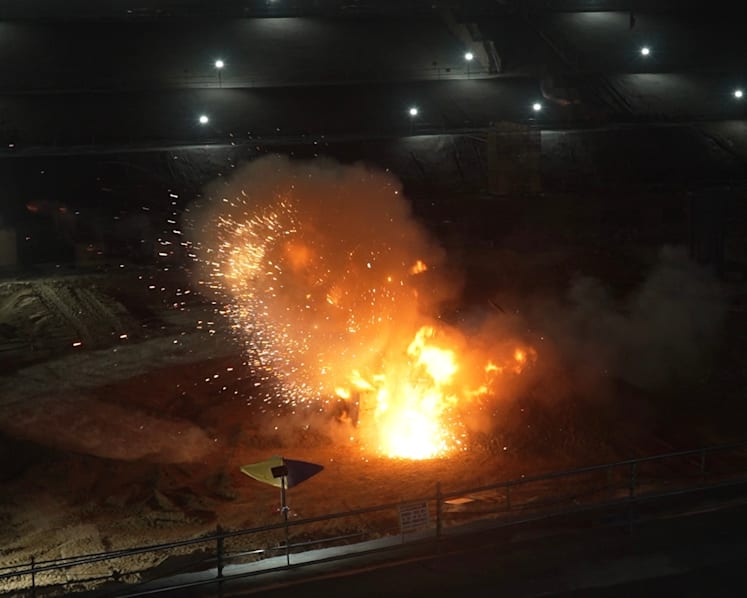
The Singapore Army carried out a controlled disposal of the World War II munition. (Photo: MINDEF)

This audio is generated by an AI tool.


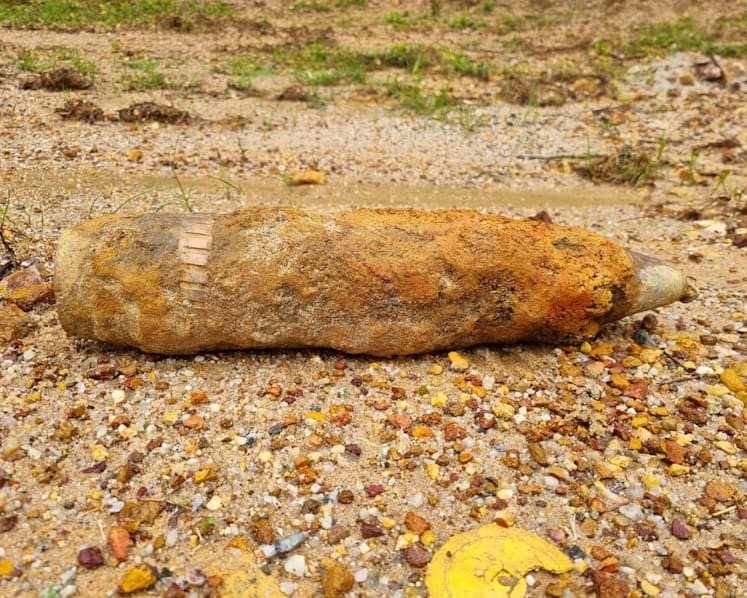
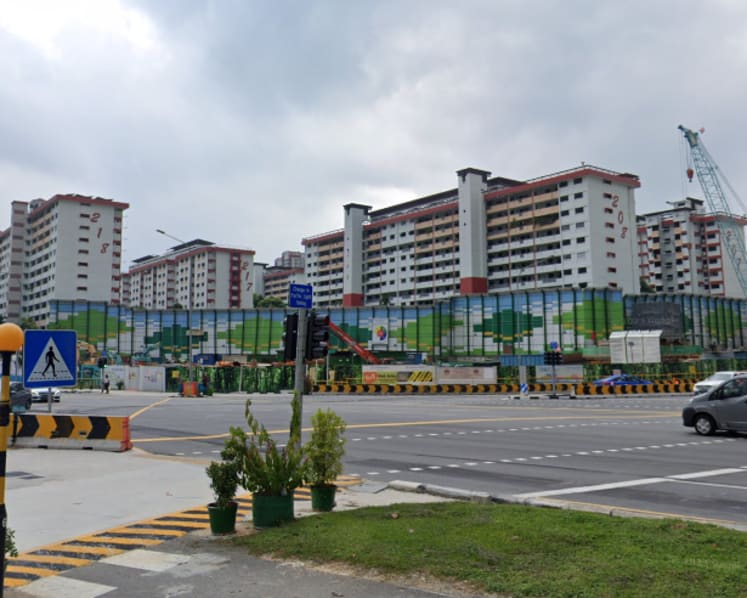
SINGAPORE: A 250kg World War II bomb that was discovered at a construction site along Tanah Merah Coast Road has been safely disposed of.
The disposal was completed early on Thursday (Apr 2) with no impact on airport operations, Changi Airport Group (CAG) said in response to CNA’s queries.
"The infrastructure and systems in the vicinity of the site were checked, and no issues were observed," it added.
Runway 2 at Changi Airport was closed for the duration of the disposal as a safety precaution.





"Since flight paths did not traverse over the disposal site, no airspace restrictions were imposed. There was no impact to flight operations," said Mr Vincent Hwa, director of air traffic services at the Civil Aviation Authority of Singapore (CAAS).
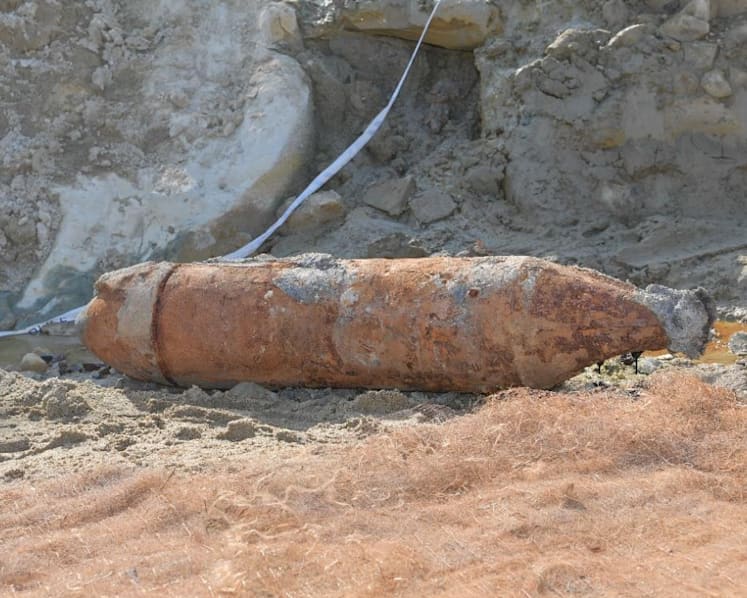
The war relic was discovered at 4.55am on Tuesday during construction works in the Changi East development area, where Terminal 5 is planned.
It was subsequently assessed by the Singapore Armed Forces’ Explosive Ordnance Disposal team to be unsafe to move, necessitating a controlled on-site disposal.
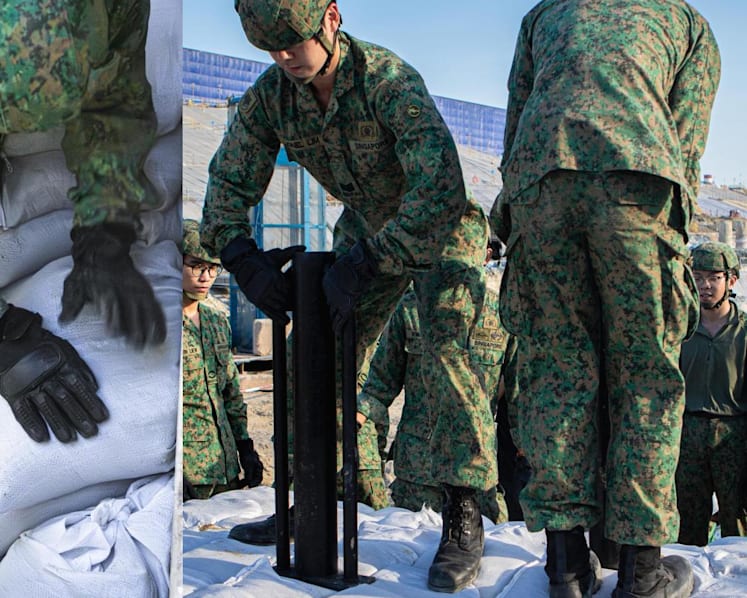
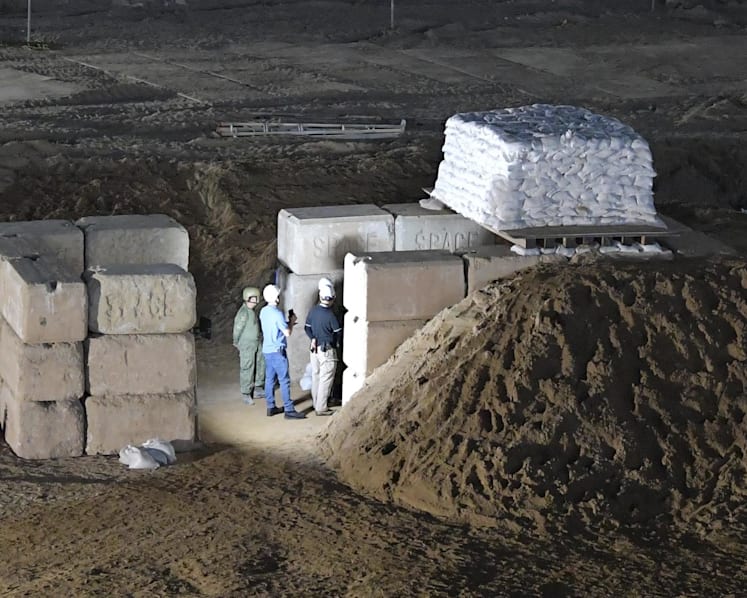
To contain the blast and any fragmentation effects arising from the disposal, the Ministry of Defence (MINDEF) said personnel from the Chemical, Biological, Radiological and Explosives Defence Group constructed protective works.
These included compacted sandbags to act as overhead cover and reinforced concrete barriers placed around the bomb.
"The ordnance was subsequently disposed (of) through a controlled detonation in the early morning, minimising disruption to the public and airport operations," said MINDEF.
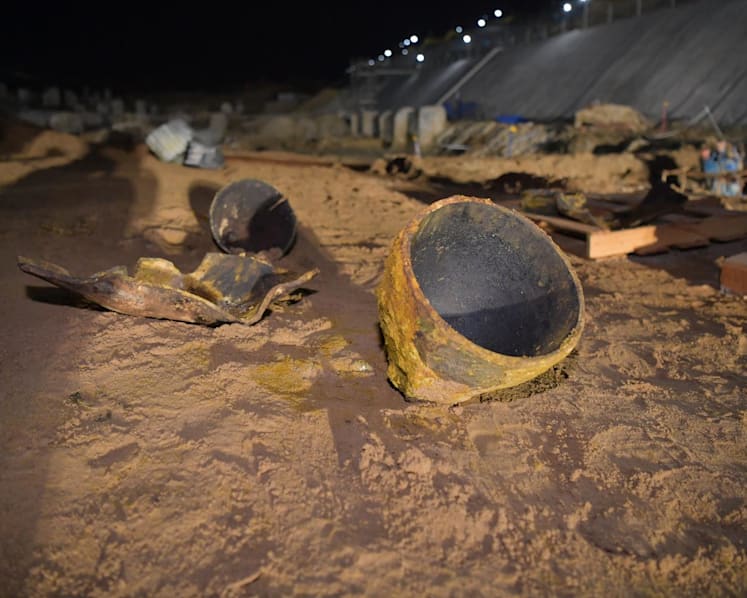
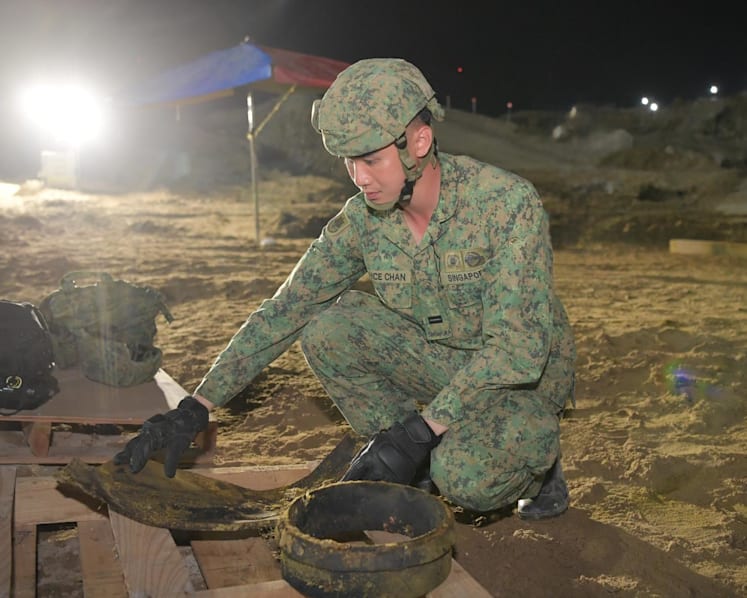
MINDEF said that soldiers worked with personnel from the police, the Defence Science and Technology Agency (DSTA), CAAS, and CAG throughout the operation.
"Safety cordons were established and protective measures implemented to safeguard personnel, infrastructure, and the public," it added.
“We maintain a high level of operational readiness and remain committed to safeguarding Singapore’s security," said the commanding officer of 36th Battalion Singapore Combat Engineers, Lieutenant Colonel Tay Jun Jie.
He added: "For such incidents, we respond swiftly, plan thoroughly and work closely with partner agencies to mitigate risks effectively and execute operations safely."
Ng Chor Boon, senior principal engineer from DSTA's blast simulation and testing group, said that "advanced numerical modelling techniques" were applied to determine the effects of the blast on its surroundings.
"These techniques were applied using protective engineering design and explosives effects validation tests. These enabled us to compute the safety zones, which enabled the SAF commanders and planners to better balance operations and mitigate risks to the surroundings."