IOC accepts charter changes on sports neutrality and Olympic programme
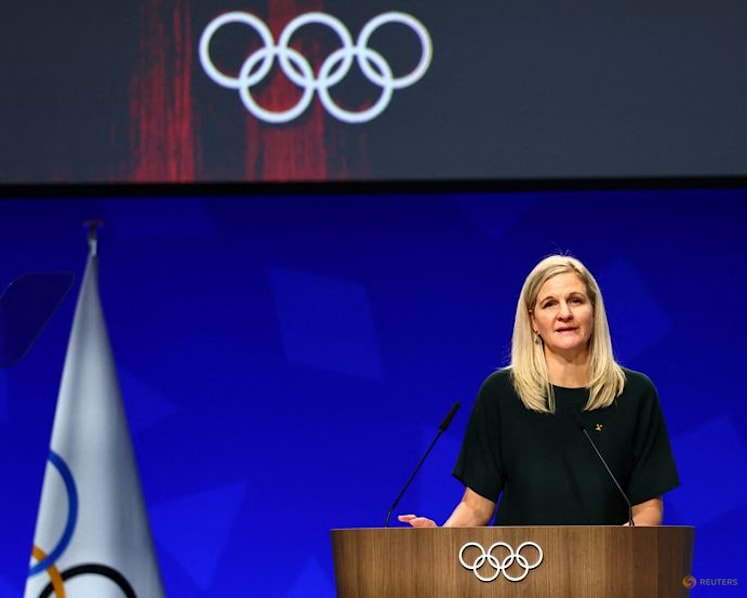
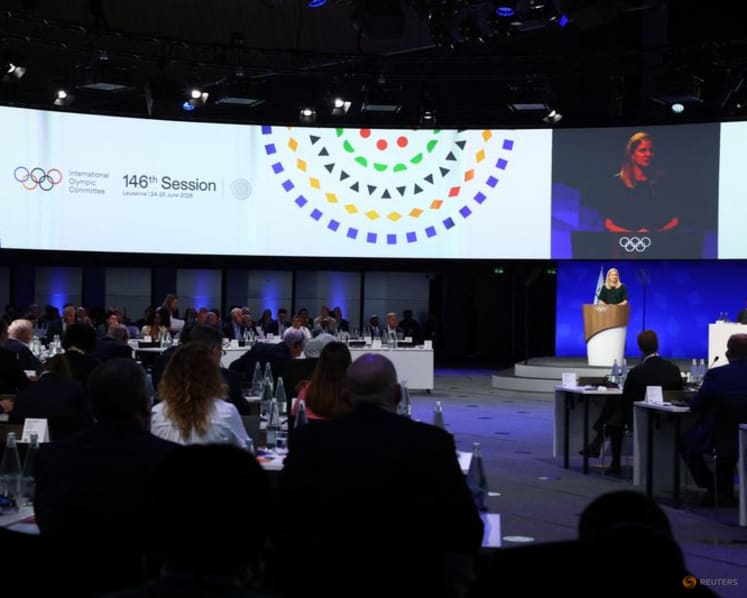
GENEVA, June 24 : The International Olympic Committee on Wednesday approved amendments to the Olympic Charter proposed by the executive board, with the aim of reinforcing sport's political neutrality.
The changes strengthen language emphasising that sport should be free from political interference. One stresses the IOC's role in ensuring neutrality "at all times, free from governmental, cultural, societal or economic pressure".
The committee also accepted changes concerning the Olympic sports programme which mean that individual disciplines, rather than entire sports, will be evaluated for selection to feature in the summer and winter Games, as of the 2032 Brisbane Games.
Decisions will be made in the next few months, or at the latest by the beginning of next year, on which sports will feature, according to the IOC.





The IOC says the neutrality reforms are designed to protect athletes and competitions from outside influence and prevent the Olympic Games from being used for political purposes.
"This commitment is about protecting what makes the Olympic Games unique, bringing the world together through sport and peaceful competition," said IOC President Kirsty Coventry.
Asked if the decision charted a path for the eventual full participation of Russian athletes, Coventry said the IOC needed time to understand how the change would be implemented in regard to athletes.
Critics said before the meeting that the change could weaken barriers to Russia's full return to international sport and risked undermining the Olympic movement.
Russian athletes have faced sanctions over a state-backed doping scandal linked to the 2014 Sochi Winter Games, while the IOC recommended in 2022 that Russian and Belarusian athletes be banned from competitions after the invasion of Ukraine.
The Russian Olympic Committee was suspended in October 2023 after recognising regional Olympic councils in Russian-occupied areas of Ukraine, which the IOC said violated the Olympic Charter and Ukraine's territorial integrity.
Last month, the IOC lifted all restrictions on Belarusian athletes, clearing the way for them to return to international events, including qualifiers for the 2028 Los Angeles Olympics.
There has been increased speculation that a similar decision could be made for Russia in coming months.
Sports minister and ROC Chairman Mikhail Degtyarev said in April that Russia was "doing everything possible" to ensure its athletes' full return to international competitions.
MONEY FOR ATHLETES
The IOC also announced a $10,000 grant for Olympians which every athlete who competes in an edition of the Games can apply for.
It came in response to feedback from athletes that they wanted more direct support throughout their Olympic journey, said Pau Gasol Saez, chair of the IOC athletes commission.
"This is a win for all of us," he told members.
The IOC also set a target election date of 2029 to decide which country will host the 2036 Olympic Games.
CHANGES TO SPORTS PROGRAMME
Evaluating inclusion in the programme by discipline rather than by sport would help to safeguard the quality and affordability of the Olympics, IOC member Tony Estanguet told members.
Under the changes, a discipline is defined as one or more events within a sport that require either a dedicated field of play or a significant modification of a shared field of play involving specialised equipment.
For example, while World Aquatics is the international federation overseeing aquatic sports, the Olympic programme comprises five related disciplines: swimming, diving, artistic swimming, water polo and open water swimming, IOC sports director Pierre Ducrey told Reuters.
Each discipline would be assessed individually, a move that could open the door to new ones being added.
"There's a lot of sports out there that are dreaming to be on the Olympic programme and never had an opportunity to do so," Ducrey said.
However, David Lappartient, president of the Union Cycliste Internationale, warned that the approach could put some sports at risk of losing their place.
"If you have to remove (a) sport in the Olympic programmes, it has a lot of consequences for the athletes themselves, for the NOCs (National Olympic Committees), for the international federations," he said, calling for data-driven not ad hoc decisions.
The president of the modern pentathlon governing body, Rob Stull, said the move was a "wake-up call" for sports like his to remain relevant and think about future-proofing new generations.
Any sports removed from the programme would receive financial assistance during a transition period, the IOC said.
The final decision will rest with the IOC session, based on recommendations from the IOC Executive Board.
Newly included disciplines will remain in the programme for a minimum of two Olympic cycles while their performance is assessed.