Loud banging, shouting and music: More Singaporeans find themselves trapped by noisy neighbours
From late-night banging to verbal abuse, residents say official channels offer little relief in neighbour disputes, leaving many sleep-deprived and facing mental health strains.

Home should be a refuge, but more and more residents across Singapore are dealing with disturbances from noisy neighbours, especially in public housing estates. (Illustration: CNA/Nurjannah Suhaimi)

This audio is generated by an AI tool.


For the last five years, Lyn (not her real name) and her family have endured deafening banging from her next-door neighbour in Hougang daily – so loud it's been recorded by neighbours across the block.
The bangs are only one item on a laundry list of issues with this neighbour dating back to when Lyn was just 16, including hurled vulgarities and attempts to spit at her.
Lyn, now 30, told CNA TODAY that the relentless sounds from this neighbour continue unabated, often stretching late into the night. Other residents have confronted them, all to no avail.
She has pursued every channel she can think of for resolution, including complaints to the Housing and Development Board (HDB), police reports and seeking mediation through the Community Mediation Centre (CMC).





In 2021 and 2022, she also made multiple attempts to reach out to her Member of Parliament (MP), Mr Darryl David, but there was little he could do.
Mr David told CNA TODAY on Friday (Oct 31) that he made his own attempts to meet with this neighbour in person, but they did not turn up to both meetings.
He added that current laws are "quite unclear or grey" on whose purview disputes like these fall under. Nevertheless, he emphasised the need for multi-agency involvement in dealing with such cases.
In the meantime, Lyn remains fatigued and frustrated by the persistent disturbances.
"We are falling through the cracks," she said. "My case is so obvious... Why do I still have to go through such time-consuming and tedious legal processes?"


At her wits' end, she has taken to documenting some of these incidents on social media over the last few years, with commiseration and consternation pouring in from netizens.
Some of her TikTok videos have even surpassed 1 million views, with other users commenting to share similar frustrations or experiences in their own neighbourhoods or simply expressing disbelief at how long the issue has dragged on.
Lyn's ordeal underscores a wider problem across Singapore, where noisy neighbours and tedious processes have left many helpless and sleep-deprived.
Over the past three years, public agencies have received more than 90,000 complaints about neighbour noise, or about 80 each day. This is a sharp increase from the pre-COVID figure of 4,800 noise complaints HDB received in 2019, or around 13 each day.
Most of these complaints come from HDB estates, where roughly 80 per cent of Singapore's 4.2 million residents live.
The combination of steady population growth with limited land space could mean that more and more of Singapore's population may have to prepare for a future where noise-related disruption from neighbours is no longer just images and videos on social media, but a lived reality.

HOME IS WHERE THE SOUND IS
For video editor Mr Arun Morais, 46, the problem was not just noise but also the hostility that came with every interaction from his next-door neighbour in Bishan.
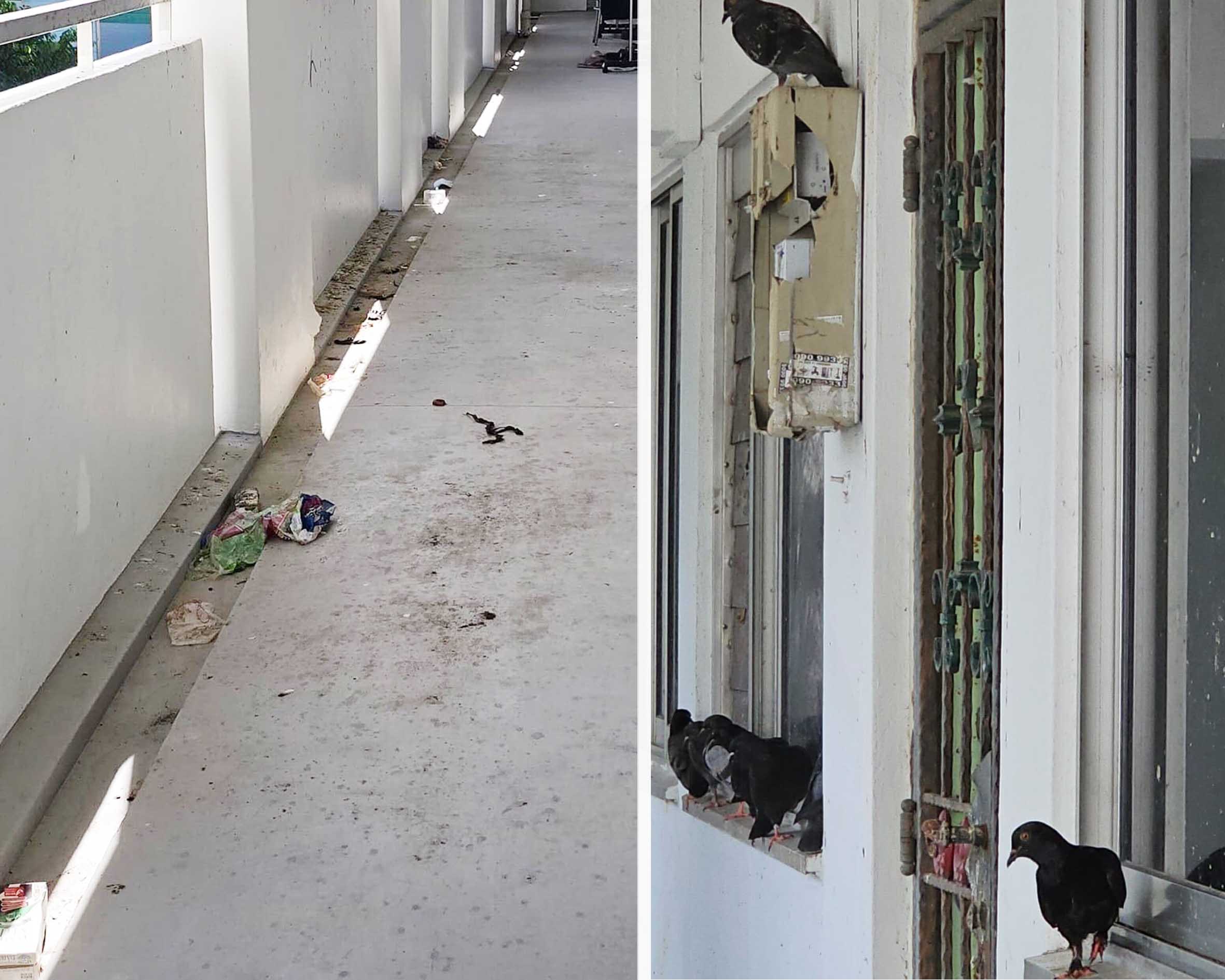
Around a year and a half ago, his neighbour began throwing rubbish in public spaces – including food waste that would attract flocks of birds – and unleashing frequent bouts of verbal abuse on passersby, leaving other residents feeling increasingly stressed and unsafe.
More and more residents became reluctant to walk past the neighbour's unit to access the lift, even if they had prams or mobility issues that made it difficult for them to take the stairs.
The noisy neighbour also developed a habit of slamming of doors loudly, which often startled Mr Morais' two-year-old son.
For Mr Morais, the concern now extends beyond his family's eardrums.
"I worry for my wife and kid when I'm not around," he said. "You never know if she might snap one day."
In recent months, the neighbour has become so aggressive that she has managed to scare off even delivery workers. Mr Morais' wife has also witnessed the neighbour berating estate cleaners trying to clean up her messes.
Town council staff began supervising these clean-ups – although soon after, Mr Morais and his wife were informed that such visitations would be halted due to the neighbour's continued verbal abuse towards cleaners and council staff.
He has made reports to police and the National Environment Agency, seen by CNA TODAY. Attempts by the CMC to intervene failed – staff later informed Mr Morais that they were unable to contact the neighbour in question and that follow-up efforts were unsuccessful.
Participation remains a perennial challenge for the CMC: On average, fewer than 30 per cent of cases registered with the centre proceed to mediation, often because one party refuses to take part in mediation proceedings.
In such situations, the Mediation Direction (MD) framework could offer a formal pathway.
Piloted alongside the Community Relations Unit (CRU) in Tampines this year, it empowers authorised officers to require neighbours to attend CMC mediation, with fines of up to S$1,500 for non-compliance.
On Oct 1, various MPs raised questions in parliament about the effectiveness of current frameworks for mediation between neighbours. On Oct 14, Senior Minister of State for Law Murali Pillai said that only one MD had been issued from April to mid-October 2025.
Responding to questions on the ongoing year-long pilot of the CRU, Minister for National Development Chee Hong Tat in October 2025 noted that while the unit's framework is useful, implementing it on a larger or nation-wide scale would require significant resources.
"FELT LIKE A HEART ATTACK"
In northern Singapore, Alice (not her real name) faced sleepless nights as her downstairs neighbour's teenage children started making a habit of gaming late into the night.
Her 80-year-old mother who lives with her was frequently startled by the loud noises from the game and accompanying shouts and yells from the boys, making it difficult for her to rest.
"Sometimes (my mother) would suddenly wake up, saying she felt like she was having a heart attack from the noise," Alice said.
Attempts to reach out directly only made matters worse. Alice found herself reported for harassment, and her elderly mother once returned home in tears after the neighbour shouted at her.
With no other option, Alice turned to the CMC, which arranged a virtual mediation session for herself and her neighbour.
An agreement was reached to limit the boys' playtime – but the limit was repeatedly exceeded. Alice reported this to the police and to CMC, but follow-up mediation failed due to her neighbours' refusal to attend.
Painstakingly gathered evidence in hand, Alice eventually escalated the case to the Community Disputes Resolution Tribunals (CDRT), where a judge advised her during the case conference that should she advance the dispute to a hearing, it would be difficult for her to win.
At the same time, the judge reminded the neighbours that the original CMC agreement remained binding.
Shortly after, the noise finally stopped – bringing an end to two years of disturbance, though she also had to fork out S$2,000 (US$1,537) on extra soundproofing for her own unit.
Some in Alice's shoes make similar efforts to retrofit their flats. Others, however, may decide they can't afford to wait for the system to catch up – including Mr Alex Tan, 32, who is planning to move out of his Jurong flat by this December.
For him, the disturbances began around April this year, when his neighbour started playing loud music late into the night.
The business development manager tried resolving the problem personally by approaching the resident directly, but was met with a lack of response at the door.
One night, after hours of noise from next door, he caved in at around 4.50am and called the police for help.
He has since made several more calls to the police when the noise recurs, and has also contacted Jurong-Clementi-Bukit Batok Town Council and HDB.
In responses seen by CNA TODAY, the town council referred him to HDB, while HDB told him they would coordinate with their partner agencies and more time was needed to resolve the matter.
He also reached out to his MP, but received no response.
A spokesperson for Jurong-Clementi-Bukit Batok Town Council told CNA TODAY that noise disturbances occurring within individual flats generally fall outside the council's purview, and residents are advised to approach HDB or seek mediation through the CMC.
HDB's website states that it plays an "advisory role" in neighbour relations, and offers guidance on how residents can approach disputes themselves.
CNA TODAY reached out to HDB seeking more information on its official procedure for handling noise complaints from residents. In response, the board referred to a parliamentary response from the Ministry of National Development in 2019.
The ministry's response stated that HDB assists in disputes involving breaches of housing board rules or residents posing a danger, coordinating with relevant agencies or Town Councils to address the issue.
"I feel helpless and frustrated. A lot of it centres around the lack of action," said Mr Tan.
"It's really a dead end."
"A LOT OF RED TAPE"
For others, low confidence in official channels has discouraged them from reporting or escalating disputes at all.
When retiree Michelle Tan moved into her Bedok flat in 2006, things were peaceful for the first few years. Then in 2017, thudding and dragging sounds began emanating from the unit above – often starting after midnight, loud enough to wake her up each time and typically lasting for around 15 minutes.
Hoping to resolve things amicably, she made several trips upstairs to speak with her neighbours. Each time, she was met only with dismissive denial and doors slammed in her face.
For Mdm Tan, who is in her 50s, the sleepless nights began taking a toll on her mental health, and eventually played a part in her decision to retire early to prioritise her well-being after four years of enduring the noise.
But even as the problem persisted, Mdm Tan was reluctant to pursue the matter further.
Contacting the police or her MP felt excessive, and she feared that further confrontation might worsen relations with her neighbour.
She is also hesitant about seeking help from authorities and public agencies.
"There's a lot of bureaucracy and red tape, and based on my past experience, I didn't think it would actually solve my problem," she said.
She found some comfort in commiserating with her next-door neighbour, who was also struggling with noise from another family in the same block.

THE HEALTH TOLL NEXT DOOR
For residents with noisy neighbours, what begins as a regular disturbance can gradually take a heavier toll on their health and well-being.
A 2022 study by the National University of Singapore (NUS) and the London School of Economics showed that chronic neighbour noise can trigger conditions such as cardiovascular and autoimmune diseases, even after accounting for lifestyle and socioeconomic factors.
Associate Professor Fan Yi from NUS and senior research assistant Wang Jiaxuan from the Singapore University of Technology and Design (SUTD) noted that in many Asian societies, where direct confrontation is discouraged, noise becomes an indirect outlet for frustration.
"Structurally, noise is convenient," they said in a joint response. "It is hard to trace and rarely leads to immediate sanctions."
Enforcement is challenging, they noted: What constitutes "too much noise" can be subjective, and the effectiveness of mediation efforts is limited when one party refuses to participate or fears stigma.
Mdm Tan in Bedok said that while some people might see the noise as trivial, its daily persistence had a serious impact on her mental health.
"Especially during the (COVID-19 pandemic) lockdown, I felt helpless and depressed," she said. "I was losing weight and sleep."
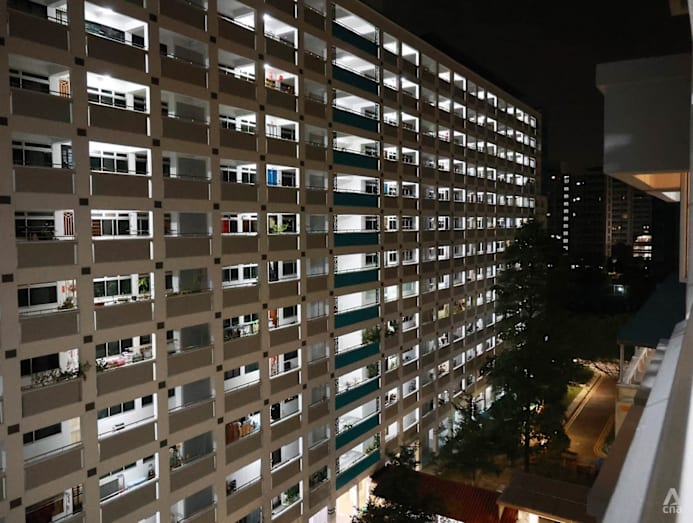
Similarly, Mr Tan in Jurong described a recurring tension arising within him whenever he returns home from work at the end of each day, even while just walking towards his block.
"When I look up and see (my neighbour's) lights on, I worry: is she going to play music tonight? Will I be able to rest?"
The unpredictability and disturbances have left him fatigued, affecting his performance at work.
Ms Stella Ong, a clinical counsellor at LightingWay Counselling & Therapy, said that constant noisiness from neighbours is not just about sounds – it mars the sense of safety and comfort we're meant to have in the refuge of our homes.
"Ongoing disturbances from chronic noise keeps our body’s stress response system continuously activated," she said.
This often leads to sleep disruption which in turn affects mood, concentration and coping ability, creating a cycle of anxiety that permeates other aspects of daily life.
Chronic noise also strains community relationships, said Ms Ong, causing neighbourly trust and cohesion to fray.
When residents are constantly sleep-deprived and stressed, everyday tensions escalate more easily. In an emotionally fraught environment such as this, minor disagreements can blow quickly out of proportion.
"Being able to maintain that sense of mutual respect and community is important for everyone’s mental well-being," she said.
FROM CONFLICT TO COMPROMISE
However, not all noise disputes stem from inconsiderate neighbours. Sometimes, they can begin with a simple misunderstanding.
Last year, Rachel (not her real name), in her 40s, was drawn into a dispute with the family living below her flat in the western part of Singapore, who complained about sounds that kept their young child awake at night.
Like Lyn and Alice, she declined to give her real name due to the sensitive nature of the dispute and fear of retaliation.
When confronted by their downstairs neighbours in February 2024, Rachel and her family immediately denied it. They were accused of making "knocking sounds", but as far as Rachel and her family were aware, there was no knocking going on under their roof, day or night.
"The noise they described didn't match anything we were doing," she said.
Still, their neighbours continued to make visits to their door, pleading and demanding for them to stop making the knocking sounds. Rachel and her family continued to deny the accusations.
Exchanges grew increasingly heated. When one of the visits almost turned into a physical altercation, Rachel felt it was in everyone’s best interests to de-escalate before things got worse.
Attempts to resolve the issue through the CMC were hampered at first – Rachel's elderly parents struggled with English and could not understand officers' calls.
They managed to arrange for mediation in mid-July, where a sound test – proposed by Rachel – revealed her rolling chair to be the source of the "knocking".
Standing in her neighbour's unit below hers, she remembered saying: "Oh wow, the sound is actually quite obvious."
"If I put myself in their position, I can understand why they got agitated," she told CNA TODAY on Oct 26. "But he was poor at describing the sound (to begin with), which made it hard to help."
Privately, Rachel felt the complaints were somewhat exaggerated. "We live near Tengah Air Base, with jets and roosters every morning," she said. Nevertheless, she was determined to reach a reasonable compromise.
She promptly purchased a carpet and a second chair to avoid rolling between desks. Soon after, the neighbours reported that the noise had significantly decreased.
Today, both families maintain cordial relations.
"Sometimes it just takes a bit more empathy," Rachel added. "If it turns out you're really making noise, own it."
"Sometimes it just takes a bit more empathy. If it turns out you're really making noise, own it."
Interpersonal exchanges aside, Associate Professor Fan Yi stressed the need for a multi-pronged approach in dealing with rising noise disputes across the country.
In particular, as per another study by Associate Professor Fan Yi published in the Journal of Environmental Planning and Management in 2018, she urged clearer guidance on the health impacts of neighbour noise and acceptable community behaviour.
While escalation may be the only way for some residents to find relief, it risks straining community ties even further. The balance between resolving persistent conflicts and maintaining harmony among neighbours is a delicate one – as noted in parliament by Senior Minister of State Sim Ann in November 2024.
Mr David, the MP, added: "If we are going to take a (firmer) position, we must also be prepared for the consequences of the action being taken on the alleged perpetrator of the noise."
Some affected residents have found ways to live with or resolve such tensions on their own. At the same time, others are hoping for more decisive action.
Alice is in favour of granting the police more authority to deal with noise-related disputes between neighbours.
"There should be more measures to ensure that people have the right to complain to a regulatory body that actually has the power to take action," she said.
Mr Morais in Bishan lamented the stress that the drawn-out uncertainty is still causing him and his family.
"It's been a year with investigations still ongoing. Everything is up in the air," he said.
"We just want a resolution to this."
Editor's note: An earlier version of this article stated that 80 per cent of Singapore's total population of 6.11 million, including non-residents, live in HDB estates. This is incorrect. It should be 80 per cent of Singapore's resident population of 4.2 million. We apologise for the error.