No time to teen: These youths juggle school and work part-time to support their families
Some social service agencies are seeing more young people juggling school and work to help out their families out financially, resulting in burnout at a young age and a longer route to higher education.

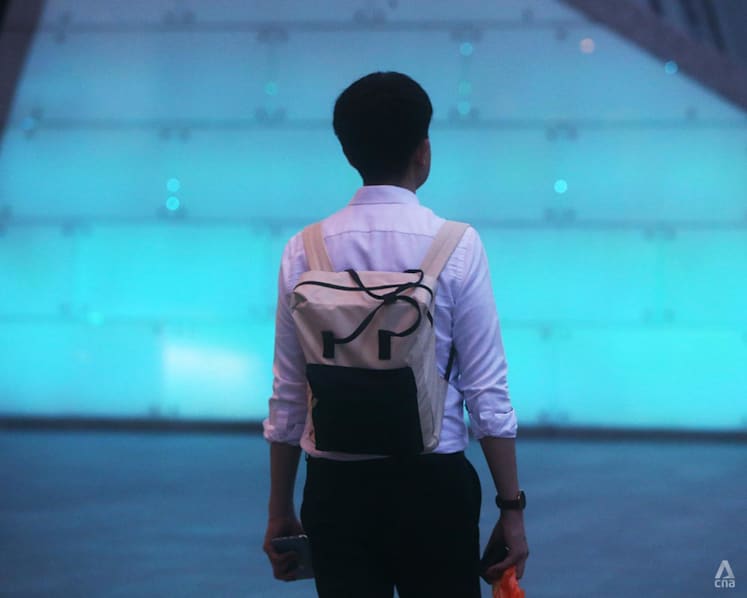
Mr Teo Zhi Xian (pictured), a 25-year-old student, has been working part-time since he was 15 years old. (Photo: CNA/Justin Tan)

This audio is generated by an AI tool.


When she was 15 years old, Sarah used to rush to a nearby fast-food restaurant the moment the school bell rang – not to hang out with friends, but to work.
Schoolmates whom she bumped into, as they ordered their burgers and fries, would tease her for working there.
"They were just having fun but it made me not want to work, a little bit," the now 18-year-old said.
It made her dread her after-school shifts at first, because that was when she would likely come across her schoolmates.





"Over time, I grew to realise, there's nothing to be embarrassed about. I'm doing nothing wrong. I'm just working," she said.
She has since learnt to push such feelings aside to get on with the task of working after school to support her younger sister and mother, a single parent who also works in the food-and-beverage (F&B) industry.
The money that the teenager earns goes primarily to help defray the cost of her monthly school fees at Millennia Institute, which comes up to about S$800 for a permanent resident. Whatever is left over serves as pocket money for her and her 13-year-old sister.
Sarah, who declined to give her full name because she does not want her friends to know about her family situation, said that helping her family comes with the downsides of sometimes falling behind in school work and having less time with her friends.
Despite her mother discouraging her from working and assuring her that they can get by with her single income, Sarah knows that this is not possible.
"If I don't help my mum, she has no one," Sarah said. "Me having the luxury to even be able to help my mum, it is fulfilling to me."
Though young workers such as Sarah do not make up a huge number, she is far from alone in her experience of having to study and work to support herself and her family.
About 0.2 per cent of the resident workforce here were between the ages of 15 and 17, Mr Masagos Zulkifli said. The Minister for Social and Family Development gave this figure in Parliament last November.
The latest figures showed that there were about 2.46 million resident workers here, of which roughly 4,900 were between 15 and 17.
Mr Masagos said that three-quarters of this young group were working while schooling, but this also included those on internship or those who take up jobs just during their holidays.
"Some may be working to build up skills in their area of interest or to explore opportunities before committing to long-term study. There may also be a subset who work to supplement their families' income."


Although national statistics did not capture the exact number of students struggling to balance school and part-time work, welfare and youth-based organisations that spoke to CNA TODAY have seen more teenagers take on work to help out their families given the rising cost of living.
Ms Natalie Lim, director for the family, community and specialist division at social service agency Allkin Singapore, said that among the families supported by the agency, this behaviour is "becoming more common".
The agency has also seen a rise in applications for its financial aid for youth education – a 30 per cent jump from 2024 to 2025.
Similarly, at Access Singapore, a charity focused on improving social mobility among the youth, its founder and executive director Clarence Ching said that young people juggling work and study is "no longer an exception but a growing norm".
"For many of those from lower-income or financially disadvantaged households, working is less a choice and more a practical reality," he added.
SINGLE-PARENT HOMES AND INCOMES
Official labour figures may also not even capture the full picture of youth at work, social workers said.
Mr Narasimman Tivasiha Mani, executive director at Impart, a youth-focused charity organisation, said that he has handled cases of very young teenagers working informal jobs or circumventing detection when they should not be working.
For example, underaged persons may use someone else's account to do food delivery, he explained.
The reasons pushing the young to work can be varied and layered, rather than the result of a single gap in the social support system, experts said.
Ms Lim from Allkin said: "With rising living costs and households facing challenges such as unstable employment, unemployment due to chronic physical health or mental health issues, or caregiving responsibilities, some youths step up once they reach employable age."

Of the five young people who spoke to CNA TODAY, four are from single-parent families and went out to work to lighten their parents' burdens, or to not add to them.
Such is the case for Ms Nur Aqeelah Haslin, 21, who has taken on various part-time jobs since her upper secondary school days, including working at a student care centre, as a wedding banquet server and a clinic assistant.
Her wages help to cover her own basic expenses for school and other ad-hoc purchases such as meeting her friends for a meal.
She also tries to set aside some savings and gives some money to her mother, as well as her grandparents who live in a different household, whenever she can.
Ms Nur Aqeelah recalled that during her first year in her diploma course in 2024, when she took up too many odd jobs on a gig work platform – in addition to her shifts at a student care centre – she eventually fell ill during her examinations.
"I really regretted it, because in my head, I was just thinking about my finances, but I didn't really bother to think about my studies," she said. "And it really affected my grade a bit."
Late last year, she finally graduated with a diploma in international business from a private tertiary institution that took one-and-a-half years to complete.
She is now looking forward to seeking full-time employment, so that she no longer has to juggle school and work commitments.
Although she knew that part-time work was essential to help her family, which comprised her mother and three other older siblings, she did feel sore about missing out on family time due to work.
"Many times, I didn't even manage to have dinner with them or have proper conversations with them before they fell asleep," she said, adding that there were days she would be crying over the mental and emotional stress.
Even for those who have grown accustomed to working while studying from a tender age, the balancing act does not necessarily get easier as they grow into young adulthood.
Mr Teo Zhi Xian, now 25, has been working part-time jobs in the F&B industry since secondary school.
Like Ms Nur Aqeelah, he also comes from a single-parent family, though he declined to give further details.
"Sometimes, when money is short, my close friend supports me (by lending me money). And when he's in need, I support him back (financially)," Mr Teo said.
He found it a little easier balancing work in his teenage years while studying at Assumption Pathway School because the academic load was lighter then.
Then, things got tougher during the days when he was getting the National Institute of Technical Education (ITE) Certificate, or NITEC, due to the longer and less regular curriculum hours.
"On the longest days, school can stretch between 8am and 6pm, and you still have group work to deal with."
Mr Teo continued working part-time in F&B establishments while studying.
He then worked full-time in a restaurant following National Service, but has since returned to ITE College West, where he is pursuing a technical diploma in culinary arts with restaurant management.
The greater academic rigour now makes it more challenging for him to put in sustained effort for part-time work at the same restaurant.
"The level of stress is totally different from the NITEC days. After I started on this technical diploma, I'd say I've worked fewer hours on my part-time job."
For Mr Muhammad Hanafi Hassim, 26, having to work and study at the same time was thrust upon him when he least expected it.
In May 2023, when he was just months away from graduating from his work-study programme at ITE, his mother died and his sister was imprisoned, leaving her two children under his care.
For reasons unknown to him, his father decided to stop working, leaving Mr Hanafi as the sole breadwinner overnight.
Though he had some income from his work-study programme, it was not enough for the four-person household, forcing him to work as a food delivery rider at night and on the weekends.
He still graduated from the programme, but did not do well enough to qualify for a Higher NITEC course, he said.
The biggest impact on him was that it almost derailed the progress he had made till then.
"Previously, I was a different person doing things that I shouldn't be doing. I did so much to turn my life around, but when all this happened so suddenly, I was demoralised."


It took further mentorship with Mr Narasimman from Impart, before he was convinced again to resume his studies.
Mr Hanafi now works with Impart while waiting for his work-study diploma programme to begin later this year.
THE YOUNG MAY END UP PRIORITISING SHORT-TERM GAINS
As students, the most immediate impact of working is how fatigue and lack of time for revision for their studies may prevent them from giving their all in school.
Sarah the Millennia Institute student said that those in similar circumstances as her find it even more difficult to catch up outside of school since they are not able to afford external help.
"One tuition session costs the equivalent of one day's work."
There are some affordable or free tuition schemes from charity organisations, but these may not cover all subjects or are available only at times that clash with their part-time work.
Experts also noted that some of the young people become overzealous about earning money, to the point of jeopardising their studies and starting to prioritise short-term gains when they receive their pay.
The choice to focus on short-term gains might end up reinforcing cycles of socioeconomic vulnerability, they said.

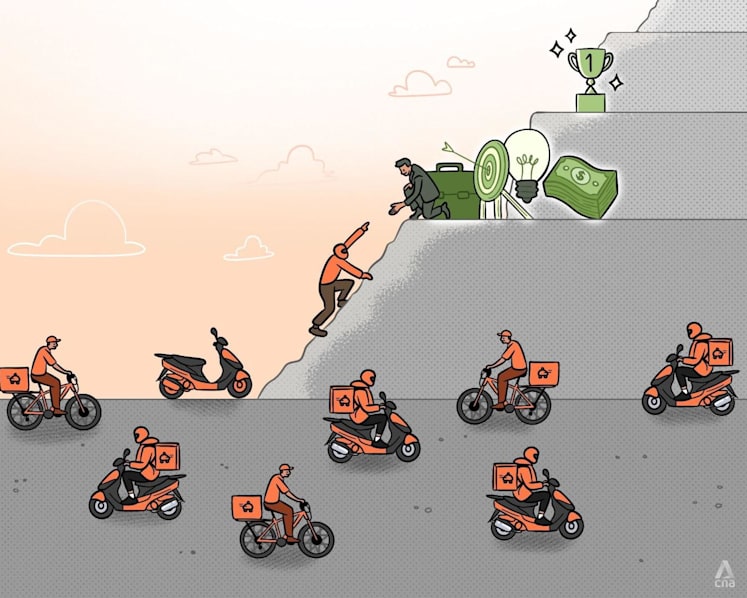
Mr Narasimman from Impart said that some of the young might also end up in "more desperate" situations given their desperation to earn money quickly.
"They meet people on the streets who offer them quick money, do crimes like SIM card scams, money laundering – anything that can earn them a quick buck."
Some teenagers pursue multiple internships in industries of their interest in order to give themselves an edge when seeking full-time employment.
However, those who work out of necessity tend to go for jobs that offer the most flexibility in terms of hours, even if it does not look as outstanding on their resume.
Ms Nur Aqeelah said: "Many of those (internship) opportunities assume you can afford to earn little or nothing for a period of time, but for me, working was more of a necessity than a choice."
The end result is that many teenagers forgo social networking, co-curricular activities and internships that could strengthen their future employability, Ms Lim of Allkin said.
"Some cut back on study time, leading to slower academic progress or taking longer pathways through education," she added.
Some of these young student workers still see a silver lining from having to work at a young age, though.
"I don’t see it as wasted time, because I still gained real-world skills like responsibility, communication and adaptability, just through a different route," Ms Nur Aqeelah said.
Similarly, Mr Teo keeps a positive attitude about having to work, though he admitted that he was more fortunate because the experience he has accumulated is directly related to the career he is pursuing in the F&B industry.

Mr Nicholas Gabriel Lim, who heads the youth work and professional life coaching programme at the Singapore University of Social Sciences (SUSS), said that some young student workers do develop remarkable resilience, empathy, competence and leadership as a result of working part-time, but these "strengths often come at a psychological cost if not supported".
And sometimes, the psychological impact extends well into adulthood.
"Prolonged exposure to responsibility without adequate recovery can dysregulate the stress system, increasing long-term risk for anxiety, depression and somatic complaints," Mr Lim cautioned. Somatic complaints such as bodily pains are often without a fully known medical cause.
"Many develop an excessive sense of duty, struggling later in life to rest, say 'no', or prioritise their own needs without guilt," Mr Lim added.
SHOWING THE YOUNG A BETTER REALITY
Experts said that one of the ways to give immediate respite to young people in such circumstances is to provide financial help, at least until they are able to complete their studies and find full-time employment.
Mr Teo, who is pursuing a culinary career, said that he is receiving financial support through the Mapletree Youth Resilience Programme.
The programme is a flagship corporate social responsibility initiative by real estate company Mapletree. It empowers young people from disadvantaged backgrounds with long-term financial support.
Since its inception, the programme has disbursed more than S$972,000 (about US$766,700) to help about 170 students, including those supported from their upper-secondary school days to completion of tertiary education.
"With the bursary, I can focus more on school and worry less about my finances," Mr Teo added.
However, experts cautioned that, ideally, such financial support should not come with too many strings attached.
"These schemes are most effective when they are administered with flexibility and trust, without requiring youths to provide extensive documentation or receipts," Ms Lim from Allkin said.
This is because an overly onerous application process might discourage some people from trying to seek aid.
Furthermore, many forms of financial assistance available out there are tied to academic performance, which may be difficult for some of these disadvantaged students to consistently fulfil, given their work and family responsibilities.
We need to ensure that short-term financial pressure does not force them to trade off education, skills development and access to networks – all of which are critical for social mobility.
For those who still need to work, a show of support from adults around them can help take some weight off their mental and emotional load, especially when expressed in tangible form.
"Practical flexibility from supportive employers and higher-learning institutions – in the form of flexible schedules, deferments or lighter course loads – can make the difference between a youth persevering in school or dropping out," Ms Lim suggested.
Mr Teo said that he has seen many of the educators in ITE who were empathetic and helpful towards students in need, often proactively reaching out and pointing them to avenues to get help, which the students may not be aware of before.
In the bigger scheme of things, it is important to support such young student workers beyond their immediate circumstances, but with the long-term goal in mind.
"We need to ensure that short-term financial pressure does not force them to trade off education, skills development and access to networks – all of which are critical for social mobility," Mr Ching from Access Singapore said.
"After all, career opportunities are often shaped not just by merit, but by access to networks, mentors and industry exposure.
"Youths who work out of necessity often have less time and space to participate in internships, enrichment programmes or professional activities where these relationships are typically built," Mr Ching added.
Through one of Access' programmes, Sarah the 18-year-old student managed to snag a brief internship at a legal firm during her school holidays last year.
"I was there as a human resource intern and it gave me a peek into the legal industry, which is one that I'd be interested to learn more about in the future," she said.
Yet, to effectively help such youths is not just a matter of identifying them and introducing such programmes to them.
Mr Narasimman from Impart said that many of the young who are forced to work, given their circumstances, are usually in "survival mode".
"They would not be easily convinced by adults who come in and tell them that there is more in their future for them than just work."
Some who do badly in school because they have to grapple with work, may have low self-esteem issues and end up with the misguided belief that the only way they can be useful is by working, he observed.
Therefore, mentorship and networking programmes would go a long way to open up possibilities in their mind of what the future can hold.
"Help them do a bit of social mixing, show them the world, people from university and different career pathways," Mr Narasimman proposed.
"Then the child will start to think and be more curious about those things, instead of just thinking about earning immediate income."