The Google exec who axed her fairytale Bali wedding and braved Tinder, therapy and heartbreak to find love again in Singapore
Mira Sumanti is a top Google executive by day but for many nights, she poured her heart into a tell-all book about navigating heartache, depression and many Tinder rebounds.

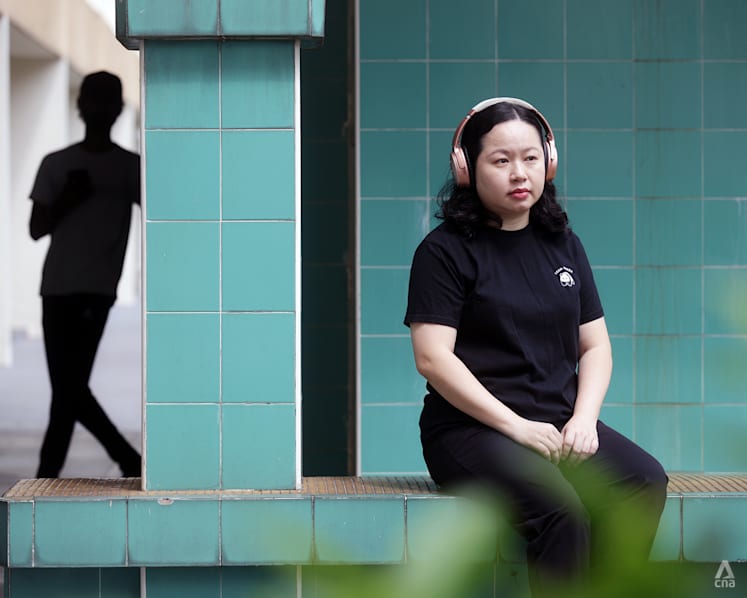
Ms Mira Sumanti, 38, wrote a book about the challenges of the dating world after her fiance left her just before their wedding. (Photo: CNA/Raj Nadarajan)

This audio is generated by an AI tool.


Many people dream of writing a book, often as an item to check off on a bucket list. But only a few would have the material that could make a tale as riveting as a tell-all involving international love, loss, sex and club parties.
Ms Mira Sumanti, 38, is the author of Swipe Therapy, a book which one of her endorsers calls: "Sex and the City written for the Tinder generation".
And because she is also Google's brand and creative lead in Singapore, her book reads like a cross between racy chick lit and a tech geek’s how-to guide on finding love.
It comes complete with graphs and tables on making decisions about where to meet someone for a first date or the potential returns on investment (ROI) from a wedding.
As we sat down over coffee in the dining area of Google's headquarters in Mapletree Business City, I wondered if she would be wary about talking within earshot of her colleagues. After all, her book details her love life – in ways that are NSFW (not safe for work).
For example, the book's prologue begins in a Japanese bondage bar where a random man is asking her to do unmentionable things to him, and this is just one of many such stories.
But Ms Sumanti did not seem self-conscious about recounting these experiences during our nearly two-hour chat.
"I never meant to write a book. I wrote about my experiences because I wanted to remember (all the things I went through)," said Ms Sumanti, an Indonesian who has been based in Singapore since 2018.
"When I look back I'm like, 'Wow, I did some crazy stuff back then', but they needed to happen to get to where I am now."
BEING LEFT (ALMOST) AT THE ALTAR
Ms Sumanti's family originates from Indonesia, but they have always been "global citizens". Because her father worked in the oil and gas industry, she, her two siblings and their parents always lived away from Jakarta, their hometown.
Her story begins in 2012, when at 24, Ms Sumanti was working in Amsterdam, the Netherlands, after finishing her degree in European studies there.






Introduced by friends to a Dutch man two years older than her, she began a relationship with him. They were like any young couple in love, and started making plans to build a life together in the Dutch capital.
But that dream was disrupted in 2014 when she received a job offer from Google, to be based in the Indonesian capital. And this was the first big test of their relationship.
"He had a good job, but I was young and this seemed like a great opportunity," she recalled. They decided that Ms Sumanti should give this a go.
On her first winter trip back to Amsterdam, he proposed. Nine months into her stint in Jakarta, he moved to join her in the Indonesian capital.
But their fairytale romance soon started unravelling.
Her fiance found it hard to adjust to smog-filled, traffic-clogged Jakarta, where he also had trouble finding employment.
Six months into her new job at Google, Ms Sumanti was struggling to cope too. The couple was arguing constantly. Her fiance found a job but lost it soon after.
Their relationship had become a "ticking time bomb", she said – one set off by his job loss that sent them into a vicious spiral of anger, resentment and disappointment.
"It was an unfortunate case of trying to do everything at once. At some point, it was like a switch (flipped), and he said: 'I need to get out of here'.''
And so, five weeks before their big day, he left her with bookings for a Bali wedding with no money-back clauses and guest invites already sent out to friends and family all over the world.
First, there was the administrative untangling of a cancelled ceremony, but more than that, her confidence was deeply displaced.
"For me, the toughest thing was that I lost trust in myself. Like, am I the fool here? Did I pick the wrong guy?" she said.
"It shattered my own belief in myself."

After much time (and therapy), she now believes that some relationships cannot withstand pressures. Outside of a comfortable bubble of being in the same place, having financial security and fulfilment at work, the cracks show up quickly, she said.
"The moment we were put into a tougher environment like Jakarta, which is not easy for anyone, we crumbled," she said thoughtfully.
This is why children always test a marriage to its limit, I told her. Laughing, she said having a baby in the mix would have certainly been the final nail in the coffin.
When Ms Sumanti details the aftermath of this tectonic break in her book, it is raw and painful. She recounted how she felt a physical pain, like a stab wound to her chest, when she realised her fiance was never coming back.
But that was just the beginning.
Slowly, the panic and depression started setting in. She began to feel a "crushing weight" against her chest – a pain she tried to numb by drinking heavily and partying with friends.
When these didn't work, she turned to therapy and medication, but these too proved to be only temporary fixes.
All this eventually led her to lurch desperately onto a roller coaster to find love again – as pop singer Rihanna says – in a hopeless place.


THE TITANIC-SIZED MESS OF TINDER DATING
In a recent survey by dating app Coffee Meets Bagel, 94 per cent of Singapore respondents said they wanted to be in a long-term relationship or in a marriage, yet 46 per cent said they were stuck in an endless matching game without meaningful connections.
It's a pattern Ms Sumanti got to know all too well – the yearning to find love only to be let down by "weirdos" who sent her pictures of their genitals as casually as one would send cat memes.
But she was determined to navigate online dating by putting on her analyst's hat.
For a start, she applied her professional skills to create the perfect dating app profile, which to her meant underpromising while overdelivering.
She posted pictures of herself that had not been overly touched up, so that when she met someone in person, they would be pleasantly surprised.
The next step was weeding out potential scammers or creeps. As a "Googler", she believes it is imperative to conduct a thorough online search on dating app matches before meeting them.
"Millennials say if you are not online, you do not exist," she said.
"I would just tell them upfront to give me their full name so I can Google them. If I cannot find them on Google, then I cannot trust them."
Here's how she helpfully organises this:
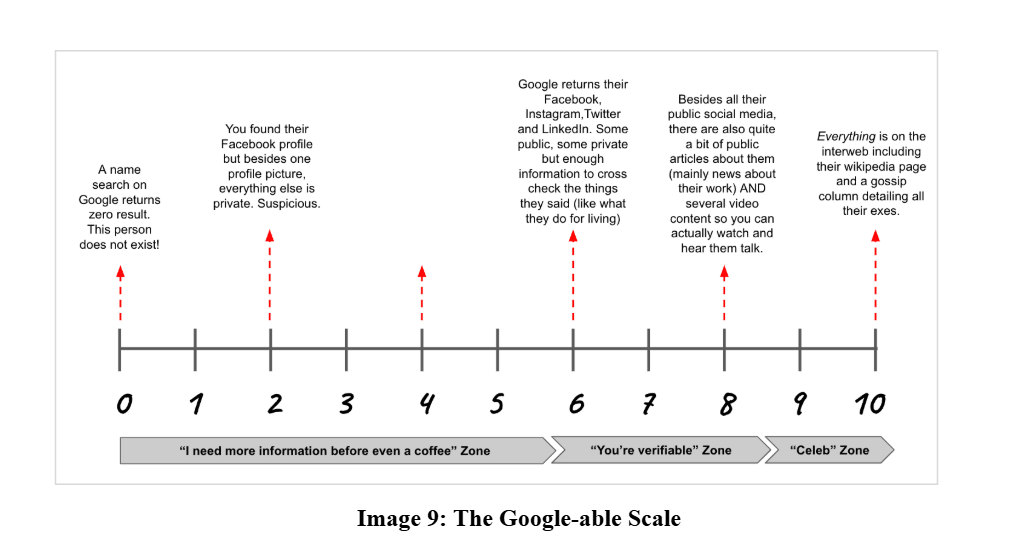
If I cannot find them on Google, then I cannot trust them.
STRATEGIES IN PLACE, SO GAME ON
In her book, Ms Sumanti gives monikers to each memorable Tinder match. There's the "Director" (artistic and sweet but bland), the "Banker" who lived in Sentosa (very rich but woefully wedded to his work) and the "Pornstar" (surprisingly kind and thoughtful, and indeed works in the adult film industry).
Naturally, in our conversation we gravitated towards that last and most exciting of the three.
Eight months post-break up, struggling to cope with her new work responsibilities and exhausted from trying to appear fine, she agreed to meet this match in Lombok, Indonesia, where they spent a week together.
"I was trying to make sense of what kind of match this is," she said. "But after the year I'd had, I thought, 'You know what? This is a summer romance'."
The chapter on him can only be described as a variation on the scene from the 2010 movie Eat Pray Love where a newly divorced Julia Roberts finds love in the arms of a handsome stranger – also in Bali.
Ms Sumanti agreed it was quite an unusual match – not someone she would normally date – but it happened at a perfect time in her life.
"We both knew this was not going to lead to anything. No one is introducing parents," she said. "It was liberating to be in the company of someone attentive and kind."

SETTLING FOR GOOD … OR LESS?
My favourite chapter in Ms Sumanti's book is titled "The One".
The romantic hero of this section, The Banker, seemed ideal in many ways for her: a wealthy finance professional, divorced with a young son.
They shared similar cultural backgrounds and were both looking for a partner to settle down with.
And then the red flags began to show up.
In one incident, she described how she had cooked dinner for him, which was meant to start at 8pm. The hours passed with no text or call. Finally, he returned home at 10pm, explaining that his board meeting had overrun and he was no longer hungry.
Similar incidents took place in the next few months but she hung on, hoping to make it work – until she decided the pattern was clear. The relationship was not going anywhere; she had to call it off.
"I really did want things to work out with him. But I think a lot of women would put up with someone like that because of financial security, and then they would get sad and lonely in the marriage," she mused.
"And if we had kids, I know I would be a single parent."
She recognises that for a lot of people, work is the single most important relationship they have.
The Banker, for instance, made it clear to her that 95 per cent of his life was for work and 5 per cent for his son.
But to her, this is a "poor diversification strategy".
"If your work is so much of your life, then when work sucks or something bad happens, then your entire life goes up in flames," she said.
Her book ends just before COVID-19 hits, at which point she had been unsuccessful in her quest for love but in a much better place than when she started.
However, the unwritten epilogue is that Ms Sumanti did indeed find love, right here in Singapore.


ENGAGED IN MAY, MARRIED IN NOVEMBER
Upon first meeting Ms Sumanti, I could tell right away she was a mother of a toddler.
There was an unmistakable mask of sleep deprivation and morning madness in her face. The biggest giveaway: she was in sensible shoes.
Yet, this life she has now is precious. After seeking love in so many places, she found it right where she worked.
Her husband, a 45-year-old Singaporean who works in tech sales, matched with her on Bumble in 2021. At the time, he was working at Google too.
"We started going on long walks because it was during the pandemic and you couldn't do much else," she said. "When the borders opened, we travelled to Germany and things developed after that."
She added: "Because we met late in life, we both came with baggage and history and we agreed to leave that in the past."
This shared clarity enabled them to move at a pace neither was used to: "I think we packed three years' worth of a relationship into one. COVID-19 sped things up."
By May 2022, they had become a couple. August saw them getting engaged; by November they were married.
This was not a case of Ms Sumanti simply switching off her analyst's brain, though.
"When he proposed, I ran the pros and cons in my head. In 15 minutes, I had my answer because I really didn't have a strong reason to say no."
His parents wanted him to marry someone from the same race and religion but as he got older, the requirements became looser, she joked.
Eventually, Ms Sumanti received their blessing as his parents could see that despite the couple's different cultural backgrounds, they were a good fit who made each other happy.
And unlike that massive destination wedding in Bali that turned out not to be, this one took place at home, before 22 family members and a Justice of the Peace.
"After trying to do a big wedding that got cancelled, I wanted something small and intimate," said Ms Sumanti.
"It was perfect, the exact kind of wedding I wanted. I loved it very much."
A year later, they welcomed their first child, a boy.

Ms Sumanti's days of whirlwind romances are clearly behind her. And the colourful dating life she once led seems to be more of a rarity among singles these days.
I told her that I have noticed that many young people don't even want to have partners and are quite happy with friends, work and travel.
While she understands that perspective, she doesn't feel that it's true for her personally.
"I feel there's a cap to how much fulfilment you get from your job or shopping or travel," she said.
"When I was doing well at work, I still felt empty because I had no one to share it with."
She said that while she has had "crazy" experiences, they have led her to where she is now. More importantly, she doesn't waste time regretting her choices – even though some may have seemed poor to her friends and family.
She also urged those looking for love to meet as many people as possible.
"There's a saying that the person you marry will be the most important career decision you will make," she said.
"Go out and date. A partner is not going to miraculously show up while you are busy at work!"