Retired judge Choo Han Teck on newfound love of pickleball, and the moral dilemmas behind court decisions
The veteran judge whose career spanned 30 years sat down with CNA TODAY for an exclusive interview on his illustrious career.
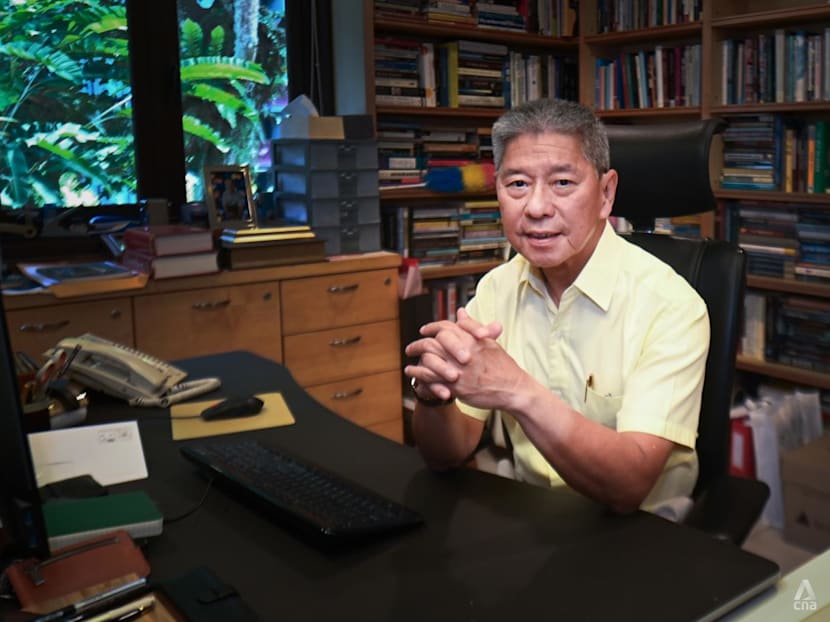
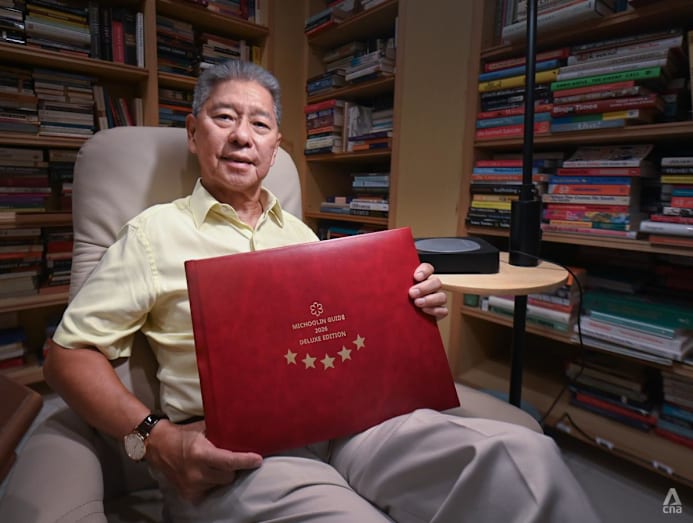
Former justice Choo Han Teck sitting at his desk on Mar 3, 2026, surrounded by books. (Photo: CNA/Syamil Sapari)

This audio is generated by an AI tool.


For many years, this was the question that my colleagues and I would eagerly ask whenever a particular High Court judge was presiding over a case: "Have you seen the latest Choo Han Teck judgment?"
Justice Choo had a longstanding reputation among court reporters like myself for delivering succinct and often tongue-in-cheek judgments.
One memorable example: In January 2026, the now-retired Mr Choo outlined, in one of his last judgments, why he rejected an appeal by a man against an interim divorce judgment.
He wryly noted that the man "may have a weak heart, but it stoutly persisted in perfectly timed failures – nine times – either on the eve of court proceedings or on the day of the proceedings itself".
The 72-year-old was just as sharp in wit and open in person when I interviewed him earlier this month in his split-level house, tucked away in a leafy suburb in western Singapore. At one point in our three-hour conversation, he candidly admitted to me that he was personally against the death penalty.
"Given a choice, I would not want to end anybody's life. But if the choice is taken out of my hands in that it is my duty as a judge to impose the death penalty, then I will do that," said Mr Choo, who in his 30-year career as a judge sentenced about 30 people to death.
Nevertheless, Mr Choo added that should a referendum to abolish the death penalty ever be held in Singapore, he would vote in favour of doing so.
Surveys suggest that his is a minority view.
In a public perception survey conducted in Singapore last year, nearly 87 per cent of respondents agreed or strongly agreed that the death penalty should be used for the most serious crimes, including drug trafficking. This number was up from about 77 per cent in 2023. It also showed that nearly 77 per cent of respondents agreed or strongly agreed that the mandatory death penalty is appropriate as punishment for trafficking a significant amount of drugs, an increase from 69 per cent in 2023.
Commenting on the survey results, Home Affairs Minister K Shanmugam reiterated that the Singaporean public "knows what is in their interest, what is in the interest of their children. They can see what is going around in other countries".
"Our approach is based on evidence, and the evidence shows that what we have done, a suite of laws and rehabilitation, all of which are effective in terms of the position of Singapore," he said. "If there is evidence to the contrary, we will change the position."
In our conversation, Mr Choo had offered his stance on the death penalty unprompted after I asked if he tended to be compassionate towards offenders by imposing life imprisonment instead of hanging.
Despite his plain way of speaking about it, it was clearly a complicated subject for him – one that he has spent years mulling – especially considering he was raised as a Christian.
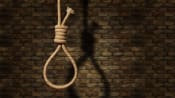
In fact, it was a matter he was forced to confront on his first day as a judicial commissioner in April 1995. He had been given a capital case to preside over, which made him wonder: "Had I been hasty in agreeing to the job?"
"As a defence lawyer, I (was) trying to get people off the death penalty," he recalled. "But now as a judge, I had to impose the death penalty."
Before becoming a judge, Mr Choo had spent several years as a defence lawyer and did a brief stint teaching law, before accepting then-chief justice Yong Pung How's invitation to the bench in 1995.
He started out as judicial commissioner and was appointed as a High Court Judge or justice in 2003. He rounded off his later years dealing with Family Court cases before retiring on Feb 20 this year – coincidentally, his birthday.
The philosophy of existentialism, centred on the belief that a life is one's own responsibility, helped him to resolve the conflict between respecting life and sentencing people to death in capital cases, he said.
"When a person commits a crime and the law says the crime is punishable with death, then that is his responsibility in leading himself to that position," said Mr Choo, who is now an atheist.
"This is mine as a judge: If the law requires me to pass the death penalty, then I will do it."
He recalled in particular the case against Malaysian Yong Vui Kong, whom he sentenced to death for trafficking drugs in 2007. It was a sad situation, he said, as Yong was only 18 years old when he committed the offence.
"In the course of the trial, I could see that this young chap had had a hard domestic life. He had poor parents. But he was a very intelligent, hardworking person, and I was looking at him and telling myself: 'This young man, if rehabilitated, can become a good … useful citizen'," he said.
Years later, the law was amended and Yong, who had been on death row, was found to be a courier. His sentence was commuted to life imprisonment.
"I was happy for him," said Mr Choo.
Seven years ago or so, as the official retirement age of 65 drew near, he was asked by Chief Justice Sundaresh Menon to continue for a couple of years and he agreed.
He stepped aside from criminal work for new judges to come in and took up Family Court cases – which most judges do not like to do, he said, as they tend to be emotionally taxing.
But Justice Choo had no problems presiding over Family Court cases, attributing it to his rational nature.
"I know that if I allow emotions to get in the way, I cannot get my job done. To do the job, you have to be rational, but at the same time, you need to keep certain emotions ... especially compassion," he said.
"In fact, compassion is the most important attribute of a criminal judge ... (dare) I say, the most important attribute of every judge."
AN ILLUSTRIOUS BUT ACCIDENTAL LEGAL CAREER
Despite a three-decade career that Chief Justice Menon described as an "illustrious tenure", law was never Mr Choo's first love.
After getting a tour of his library, filled with wooden shelves flanked by stepladders and holding 5,000 books arranged by topic, it was easy to guess that he has always been enamoured with philosophy, history and literature.
The titles on the spines formed a picture of the man who'd collected them – Portuguese history book A History Of Water, seminal philosophical work Divine Hiddenness And Human Reason, and Sartre's What Is Literature, along with tomes and tomes of classic poets such as W B Yeats, William Wordsworth and the like.
Wanting to become a teacher, he placed arts and social science as his first choice in his application to the University of Singapore (now the National University of Singapore), followed by law and then business management and accountancy.
Compassion is, dare I say, the most important attribute of every judge.
A cousin who was visiting offered to hand in the application for him as she happened to be heading to the university herself.
When he later received a letter saying he had secured a place to study law, he was "completely perplexed", he said.
As his parents, a ship chandler and housewife, could not afford to send him overseas to pursue his true passions, Mr Choo settled for the law.
A few years into Mr Choo's employment at his first law firm, his cousin returned to Singapore for another visit and asked him how he was finding law.
"I said: 'Well, funny you should ask, because I don't know why it was so difficult to get into arts that year,'" recounted Mr Choo.
To which his cousin replied: "Oh I saw your grades, and I thought you'd be wasting your life in arts."
She then revealed that she had swapped his course choices before submitting his university application.
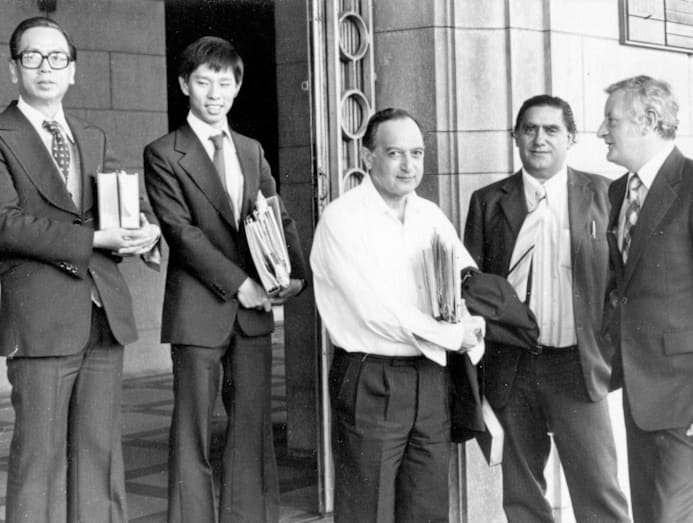
In 1978, a year before he was to graduate, Mr Choo was helping his favourite lecturer Albert Myint Soe pack his belongings as the latter was leaving to join the small law firm Murphy & Dunbar.
The lecturer asked him if he had written for a place in pupillage and asked him to join him at Murphy & Dunbar. Accepting this meant Mr Choo could not take up a later nomination from his classmate Ms Kwa Kim Li – the late Mr Lee Kuan Yew's lawyer – to do his pupillage at Lee & Lee.
But the time he spent at Murphy & Dunbar were five of the best years of his career, said Mr Choo, recalling fondly how he was brought in for practically every big case taken on by senior partner Howard Cashin.
"(The) job satisfaction couldn't have been better," he said.
"I worked without taking a single day's leave. In the five years I took only one day's MC."
THE CASES OF RICHARD TARLING, ADRIAN LIM
The first case he covered with the late Cashin as a criminal defence lawyer was the case of Richard Tarling, a British businessman accused of violating company laws.
The case was a high-profile one, as it was probably the first commercial crime in Singapore to be prosecuted in the High Court.
The case shot Cashin to prominence, and other major cases started coming to him.
One of them was the infamous case of Adrian Lim, a self-styled medium who carried out ritual murders of two children and had "holy wives" who assisted him in his crimes.
"I did a lot of work on that case because Cashin didn't go to the prison to interview him. Every time it was me who went to the prison, and I went many, many times and I spent long hours talking to him," said Mr Choo.
He said it was very clear to him that Lim was not of sound mind.
He described how Lim would take 10 to 20 women to doctors to have their blood drawn, which he would then place in his fridge to drink.
"You ask yourself, which sound person would do something like that? And on top of that, which normal person would kill a young child?" said Mr Choo.
Midway through his five years at Murphy & Dunbar he wanted to try his hand at becoming a corporate lawyer as syndicated loan banking was in vogue at the time and called to his "sense of adventure".
But his plans were thwarted by Cashin, who found out about his intentions and was lying in wait for him when he returned to the office after a job interview at corporate law firm Freshfields.
"He said to me: 'You are not going to Freshfields. Now get back to your room'," recalled Mr Choo.
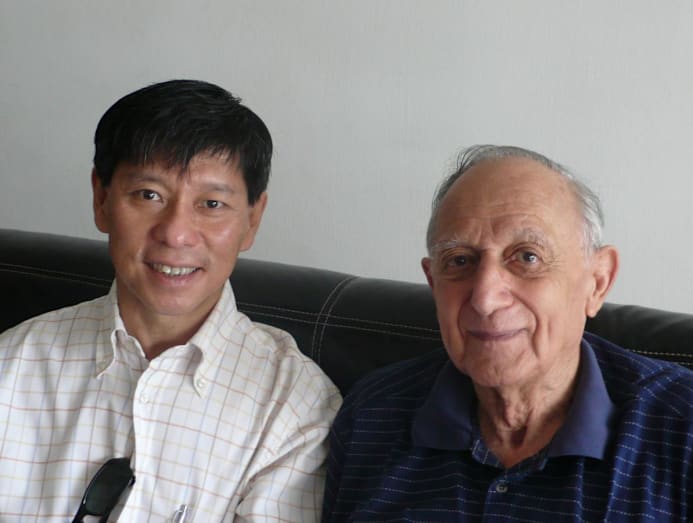
When asked about his most memorable cases as a judge, Mr Choo found it difficult to highlight any on the spot. By his own estimate, he had written over 1,200 judgments.
In the days after our interview, however, Mr Choo sent me emails containing carefully compiled lists of what he felt were his most memorable cases.
These included the 1992 case of drug trafficker Lee Ngin Kiat. Mr Choo argued that the presumption of trafficking had been rebutted because trafficking was defined as "buying, selling, importing or transporting" drugs, but Lee had been handcuffed and surrounded by Central Narcotics Bureau officers at the time, so he could not have trafficked the drugs as defined in the law.
The Court of Appeal acknowledged Mr Choo's "formidable argument" but dismissed the appeal.
The law was later amended to address his argument, Mr Choo noted: It was changed to say that the accused is presumed to have had the drug in his possession for the purpose of trafficking unless it is proved that the possession of the drug was not for that purpose.
Meanwhile, the 2010 case of Daniel Vijay Katherasan versus Public Prosecutor may be one of his best contributions as a judge, Mr Choo said.
He was one of three appellate judges in the Court of Appeal in the case. Daniel was one of three men who had robbed a fourth. The victim died when one of the trio fatally assaulted him, and all three were convicted of murder and sentenced to hang.
When Daniel, who was not the attacker, appealed, Mr Choo said he helped persuade the other judges that a precedent case known as Mimi Wong should not be followed.
The Mimi Wong case had been used as an authority for the proposition that where two or more people set out to commit a crime, and one of them commits a different crime, all are equally liable for the two different offences.
Daniel's conviction for murder was overturned on appeal and he was convicted of robbery with hurt, for which he received 15 years' jail and 15 strokes of the cane.


DANGEROUS DAYS
On at least one occasion, Mr Choo's job encroached into his personal life and safety.
In 2006 or 2007, after he had sentenced a drug trafficker to death, the convict stood up and shouted in Mandarin.
The court interpreter misheard the offender and said that Justice Choo had sentenced the convict's brother to death 10 years before, and that he was "not afraid". The convict had in fact said "sister" instead of "brother".
At that moment, Mr Choo said he could not recall a case involving the man's brother but recalled sentencing the woman to death. She was a sex worker who had killed a colleague who had stolen her customers and boyfriend.
"It looked like the (convict's) whole family was in the underworld – his three sons, who were in court every day of the trial, were all members of secret societies," said Mr Choo.
On the day he sentenced that man to death, he said, the court security team told him that prison intelligence had learnt that the three sons were all gangsters who might cause trouble.
But Justice Choo refused the court security team's suggestion to stay indoors for lunch, saying he did not want to stay in the court building all day. Security replied that if he insisted on going out, he had "better bring protection".
Thinking this was "a bit crazy", the judge asked three of his female clerks to go to lunch with him, even though, as he quipped to me, "they did not have black belts in karate but Gucci belts".
While he was having a convivial lunch with his clerks, the prosecutor and the investigating officer of the same case went separately to the old Funan building across the road from the High Court and were attacked on the steps by the convict's three sons.
After the incident, an armed security detail of two to three men was sent to guard Justice Choo round the clock for two months.
ON WHAT MAKES A GOOD JUDGE
Asked if he had any advice for judges still on the bench, Mr Choo batted the question away, saying he did not like to give advice.
However, he offered his thoughts on what makes a good judge: honesty and compassion.
"If you are honest and compassionate, you will end up being a good listener. You (will) want to know the case properly … you will want to hear all sides without bringing your own personal views and likes into the equation," he said.
He said litigants might forgive a judge if they think he is stupid, but they would never forgive a judge whom they perceive as biased.
The most difficult thing about being a judge, continued Mr Choo, was to be as certain as he could that the right decision was being made.
"Unfortunately, very often, we can never be sure that you are actually making the right decision," he said.
He pointed to the example of making an order for the care and custody of a child to be given to one parent over the other.
"No judge would be able to know the true state of the family relations," he said. "Of course, we do our best looking at the affidavits and looking at the evidence that is presented to us, and we should be able to come to what we think is a sound judgment, but we can never be sure."
His guiding principle for himself as a judge was to put himself in the shoes of everyone involved in the case – the complainant or the victim, and the accuser and the accused.
Asked about the controversial late lawyer M Ravi, Mr Choo said he quite liked the human rights lawyer, who never gave him any trouble.
"He had a pretty nice sense of humour. He gave me a book that he had written called Hung At Dawn," he recalled.
"One day I told him: 'Ravi, you know, your title should have been Hanged At Dawn. We are brought up to use 'hanged' for humans and 'hung' for pictures. And he said: 'Yeah, but in Singapore we hang people like we hang pictures'."
"Quite a witty person. I never got to see the terrible side of him, which I can imagine he has if he was not on his medication. I never saw that side of him personally."
Still thinking about M Ravi, Mr Choo then quipped: "That's the thing I learned about judging, and that is not to judge."
After presiding over hundreds of cases, Mr Choo has reached a personal conclusion: People are neither fundamentally good nor evil.
"We are all, in a sense, what we become," he said. "We have a big say in what we become, like ... 'I want to study this, or study that', and that may lead us to one path. Or I may say: 'I'm not going to study. I'm interested in gambling'."
At the same time, he said, we have no say in some of our circumstances, such as where we are born.
"It's never straightforward to say we are fundamentally good or bad. We have a choice. At the same time, we also have no choice."
At this point in our conversation, he leaned forward as if he were about to reveal a carefully kept secret to me.
"How (did) we end up here that you are interviewing me? Is this something we chose freely?" he said, with a glint in his eye.
This paradox of choice is clearly illustrated in how Mr Choo clearly chose to give his all to law school – a path not originally his first choice – and crafted a formidable career out of it.
It struck me that this man is exactly who he seems to be in his judgments – thoughtful and serious, but with a good sense of humour.
It's never straightforward to say we are fundamentally good or bad. We have a choice. At the same time, we also have no choice.
READING, PHOTOGRAPHY AND PICKLEBALL
In our earlier discussion on the death penalty, he had mused that life is so transient that there is a limit to how much he can revere it.
"Life is valuable, but most of all, it is valuable to the person himself," he said.
"That is why, in my own way, I am not afraid of death, because I know it will come any minute now," he said.
Right, but what will he do until that moment comes?
For the time being, he said, he is relishing the sudden lack of responsibility and is simply enjoying time at home with his wife, an occupational health specialist whom he proposed to 12 days after meeting her.
They have two children, a son who is an assistant curator at the National Orchid Gardens and a daughter who works at Google.
His calendar remains full with activities: gatherings to attend, delving into books from his extensive library, taking up street photography again.
Formerly an avid tennis player, Mr Choo retired from the sport after a shoulder injury. In recent years, he's picked up pickleball as an alternative.
Despite not enjoying travelling, he ventured overseas in 2024 to obtain international certification as a pickleball coach from the Professional Pickleball Registry, one of the two top certification authorities in the United States, and has even coached Singapore table tennis star Feng Tianwei at pickleball.
He lent his name to pickleball court Picklechoo Arena when a friend asked him to suggest a name, playing on his surname and the iconic Pokemon character, Pikachu.
The same friend asked him to name another pickleball centre that is slated to open at the Apex building on Henderson Road later this month.
Mr Choo laughed and said: "Oh my goodness, the answer was so obvious. You just call it the Apex Court, and when I retire, I'm going (to play) there."
Indeed, his suggestion has been accepted. The logo of the upcoming Picklechoo Apex Court? A depiction of Mr Choo himself, in a judge's wig – ready to serve on the court.