Does using ChatGPT for homework make kids lazy? Here’s my rule at home
When artificial intelligence tools can draft essays and solve problems in seconds, it can be hard to resist the temptation to take shortcuts.
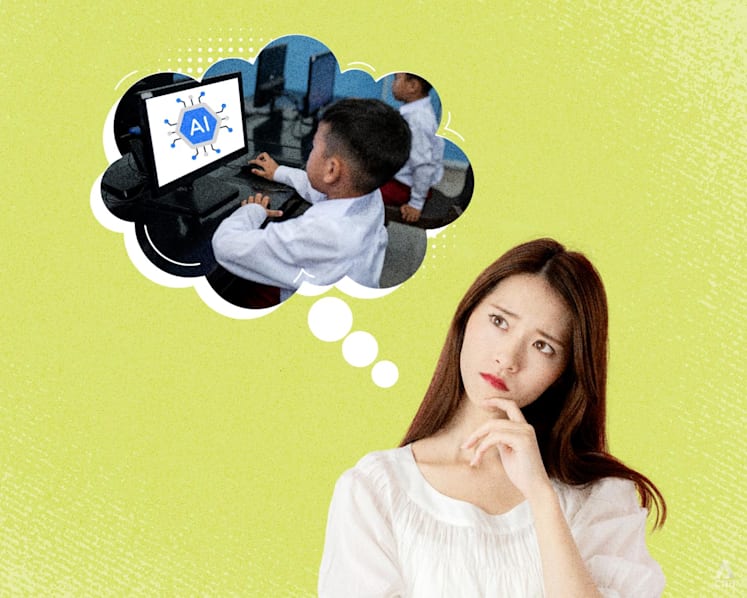
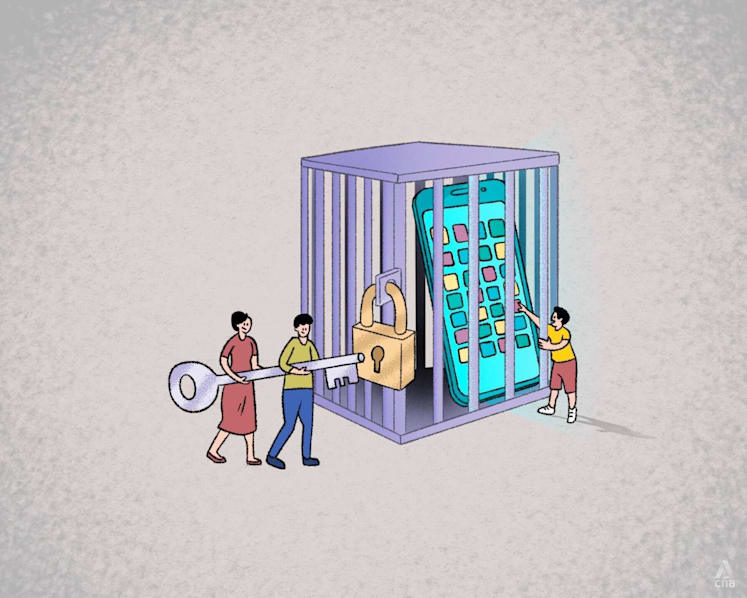
When used right, artificial intelligence behaves less like an answer sheet for mere copying and more like a tutor, a mother of five children said. (Illustration: CNA/Rafa Estrada)

This audio is generated by an AI tool.


The robots haven't taken over yet, but they're already managing my diet with more precision than I ever could.
Most afternoons, I photograph my lunch and upload it to ChatGPT. Within seconds, it tells me where I stand nutritionally and suggests what I should eat for dinner, giving me a detailed breakdown.
The advice is often not what I had assumed it would be. I am told to consume more carbohydrates, not less; take a long walk instead of a 5 km run to lower cortisol, the "stress" hormone.
Six weeks into a programme that it had customised for me, I've lowered my body fat without having to resort to crash dieting or punishing cardio exercise sessions. I feel stronger than I did in my 20s, all thanks to the precision and support of artificial intelligence (AI).
I tell you this because it shapes how I approach the topic of my kids using AI.
I've seen what these tools can do and I am persuaded by how much they have improved my quality of life.





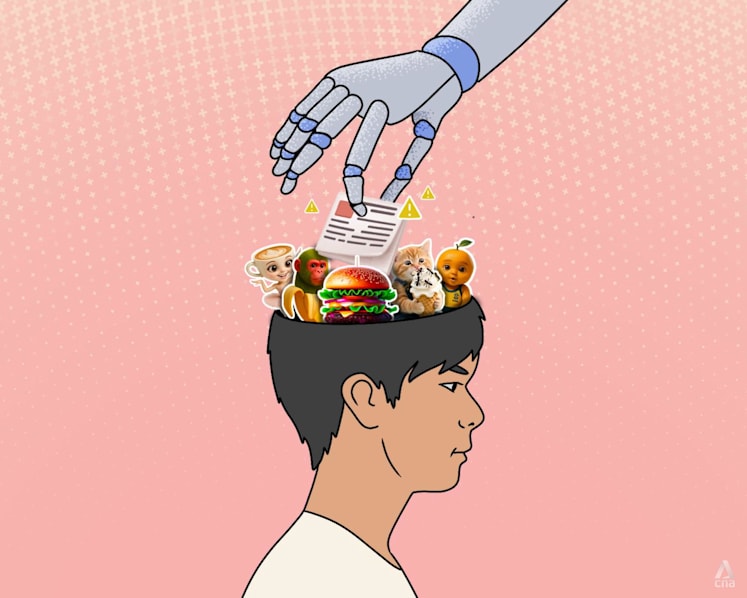

A recent study found that 84 per cent of secondary school respondents use AI for homework at least once a week.
The question is no longer whether our children will use it. They already do. The more important question is what kind of thinkers it's turning them into.
My two older children – Truett, 18, and Kirsten, 17 – have been using AI regularly.
Truett uses it to generate ideas for assignments and explains that his school, Temasek Polytechnic, provides guidelines for using AI tools responsibly. But what excites him most is how efficiently it solves technical problems.
When he was setting up a personal server for an account on the gaming platform Roblox, he turned to ChatGPT to troubleshoot coding issues.
"If I get stuck trying to code, I just describe my problem and it tells me exactly what to do, step by step," he said. "And it works. It saves me so much time trying to find the solution on Reddit or Google."
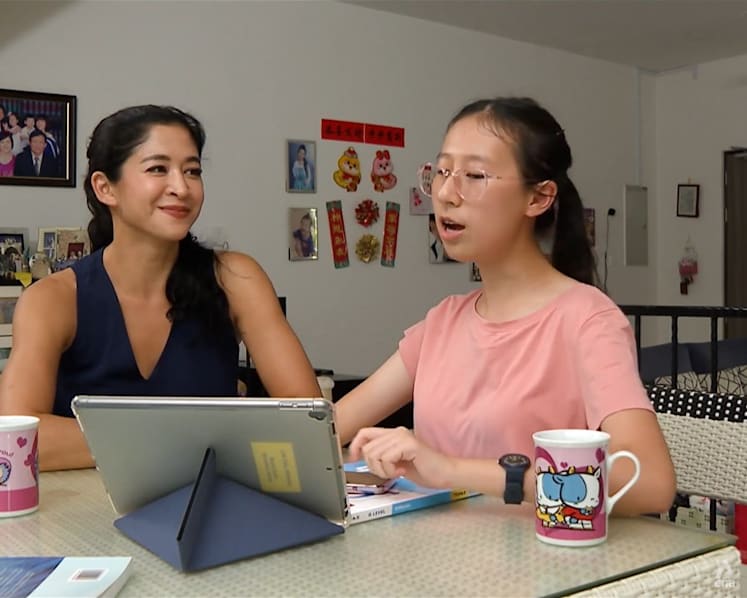
Kirsten used it while preparing for her O-Levels. She would upload essays and ask for critique. "It gives me perspectives I hadn't thought about," she told me.
The process was less about copying answers than about debate. She would accept some suggestions, reject others and refine her argument. She used it to interrogate her own thinking rather than copy blindly.

Used this way, AI behaves less like an answer sheet to copy from and more like a tutor.
It proposes alternative interpretations. It identifies weak logic. It exposes blind spots.
She still has to do the intellectual work, but she can do it faster and against better resistance.
SMARTER ANSWERS, WEAKER MINDS?
The worry I hear most often from parents is laziness. It's not an unreasonable one.
If an essay can be drafted in 30 seconds and passed off as their own, what incentive is there for a child to sit with a blank page and think?
And, as teachers will tell you, struggle is where learning happens.
Children naturally gravitate towards the path of least resistance. Most of us do.
But friction, while uncomfortable, is necessary for learning. Without it, they risk becoming intellectually lazy.
The issue, then, is not whether children should use AI, but how to use it in a way that strengthens their thinking rather than replaces it.
In our home, the rule is simple: If you cannot explain the concept clearly without AI, you do not understand it.
If an essay can be drafted in 30 seconds and passed off as their own, what incentive is there for a child to sit with a blank page and think?
I've always told my kids that their human brains are the real asset, which means they have to learn to think with AI instead of letting AI think for them.
If they submit work they have not wrestled with, their grades may improve, but their brains do not.
And when they walk into the exam hall, the only thing they can rely on is what they have understood.
CHALLENGES TO CONSIDER
There are challenges beyond academics. AI systems can fabricate sources and produce polished answers that sound authoritative and credible but are simply wrong.
For adults who already have a mental model or knowledge of a subject, a plausible-sounding error may trigger a flag, but even then, we are unlikely to catch every mistake.
For a child who doesn't yet have that mental model or knowledge, there is no warning signal. The answer from ChatGPT simply becomes their understanding of the topic.
This is why children must learn to verify claims, cross-check references and understand that fluency is not the same as truth.
Then there is the social dimension. Teenagers now use ChatGPT to draft replies to friends, find recommendations for cafes, and even vent when they feel frustrated.
AI performs these tasks remarkably well. It rarely contradicts and it can be calibrated to affirm.
For adolescents still forming their identities, a tool that consistently tells you what you want to hear presents its own risks.
Emotional growth requires disagreement, complexity and the occasional discomfort of human relationships. A chatbot that provides only validation can sometimes do more harm than good.
WHY STRUGGLE STILL MATTERS
With my younger children, I'm not rushing anything, even though they have friends who are already using ChatGPT to help with homework.
At the primary school level, the cognitive struggle of doing work the hard way is the whole point.
They need to tackle difficult math problems on their own through practice and repetition.
And the experience of sitting with a blank page and not knowing what to write for an essay, then slowly working their way towards a sentence that feels like their own – that discomfort is how writers are made.
Sometimes when they rush through assignments just to hand something in, I remind them that homework exists to build a better brain, not to produce a completed page.
I make them watch the scene in The Matrix movie where Keanu Reeves opens his eyes after a training module and says: "I know kung fu."
That's what I want. When the homework is done, they should be able to close the book, take a breath and say: "I know simultaneous equations."
The goal was never the grade. It was to build a brain that knows how to think, with or without the aid of AI.
And when they get older, they can use AI to improve themselves like their older siblings, rather than relying solely on it.
Daphne Ling is a mother of five. She is also the co-owner of an advertising agency.
If you have an experience to share or know someone who wishes to contribute to this series, write to voices [at] mediacorp.com.sg (voices[at]mediacorp[dot]com[dot]sg) with your full name, address and phone number.