My 13-year-old son uses a Nokia. Here's why I support the school phone ban
This mum of five is fully on board with the enhanced phone restrictions in secondary schools and has her own set of firm screen rules at home.
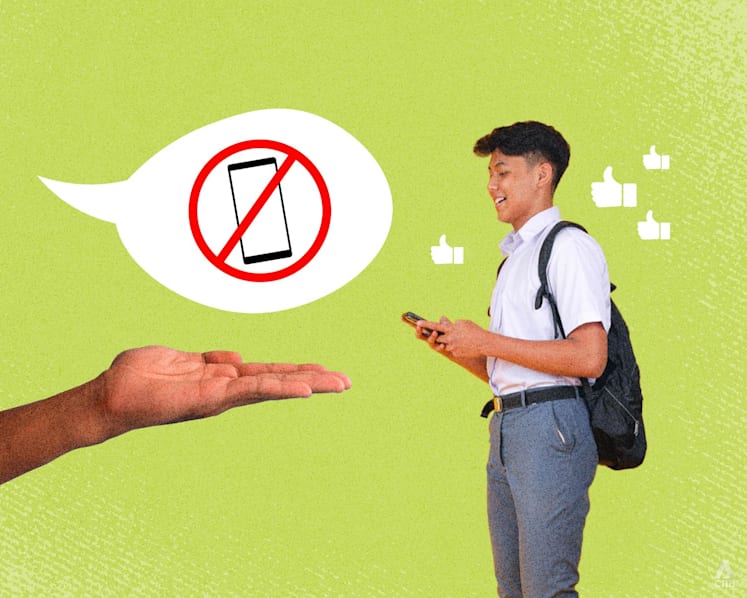
Ms Kelly Ang, a mother of five children, supports the move to impose stricter rules on the use of smartphones at secondary schools. (Illustration: CNA/Nurjannah Suhaimi)

This audio is generated by an AI tool.


The recent tightening of the mobile phone policy in schools has been a hot topic in the parent circles I'm part of. In my WhatsApp chats and conversations at the school gate, reactions are mixed.
Under the previous guidelines, secondary school students were not allowed to use smartphones or smartwatches during lesson time. From January, this was extended to cover non-lesson hours as well, including recess and co-curricular activities (CCA).
Parents either love it or hate it. Some see it as a great way to limit their teens' screen time, while others feel it'll make daily logistics harder, especially when it comes to reaching their children to arrange pick-ups or drop-offs.
From what I've heard, students seem far less enthusiastic. They can no longer play games with each other during recess or before CCA, or secretly check their phones during lessons.





For my eldest son, who entered Secondary 1 this year, the policy doesn't really affect him because he has never owned a smartphone.
I've held fast to my rather public promise that my children wouldn't get smartphones even as they enter secondary school. Unlike many of his peers, my eldest doesn't know what it feels like to have the unbounded freedom to play games on it or scroll social media feeds after school.
However, he is now the proud owner of a sturdy Nokia phone with all the cutting-edge features of a radio, an MP3 player and the good old game of Snake.
He can finally receive calls and has also discovered this ancient service called SMS.
He doesn't have unfettered use of his "dumb" phone either. The same rules still apply: No devices in the rooms and no unrestricted access to games (yes, even Snake).
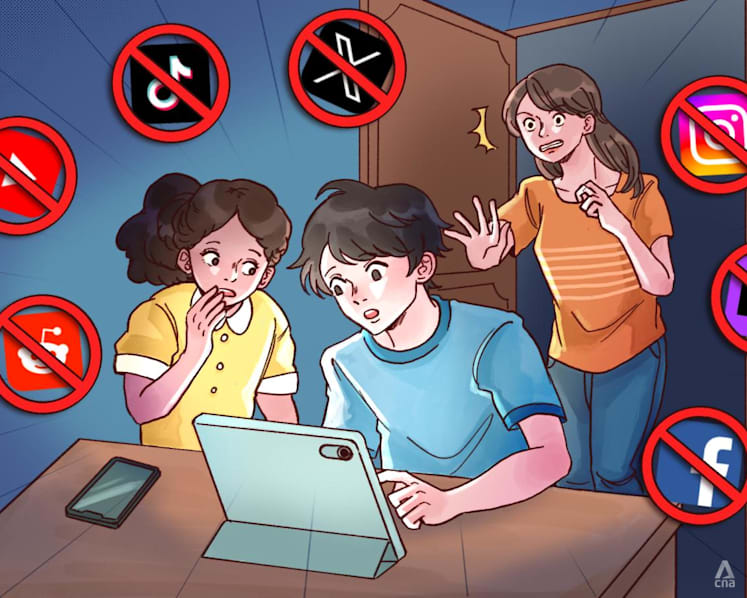
His phone's internet access has been shut off as well, so he can't access social media or YouTube, even on the phone's laggy browser.
NOTHING HAS CHANGED FOR MY SON
Even though his phone is not a regular smartphone, my son is still required to hand it over every morning, depositing it in a box with his classmates' phones, and only getting it back after school.
Before we got him the Nokia phone, he was using a very basic smartwatch, which allowed only calls and voice messages via the phone's app.
Every school day, he used to spend the free time between the end of lessons and the start of CCA sessions hanging out with his friends, eating lunch and playing football.
Now that he officially has his own phone, I asked him what had changed.
"Nothing, actually," he said earnestly.
Sure, some of his friends pause to show each other YouTube videos and social media reels, but they still head to the field to play football – the grass stains on his shirt and scuffed shoes he comes home with every day are proof of that.
But, I asked, as a newly minted phone owner, did he find the new ban inconvenient?
Not really, he said. "Everyone wasn't allowed to use phones during school hours in primary school anyway and had to keep their phones out of sight until out of school, so this really isn't much different to me."
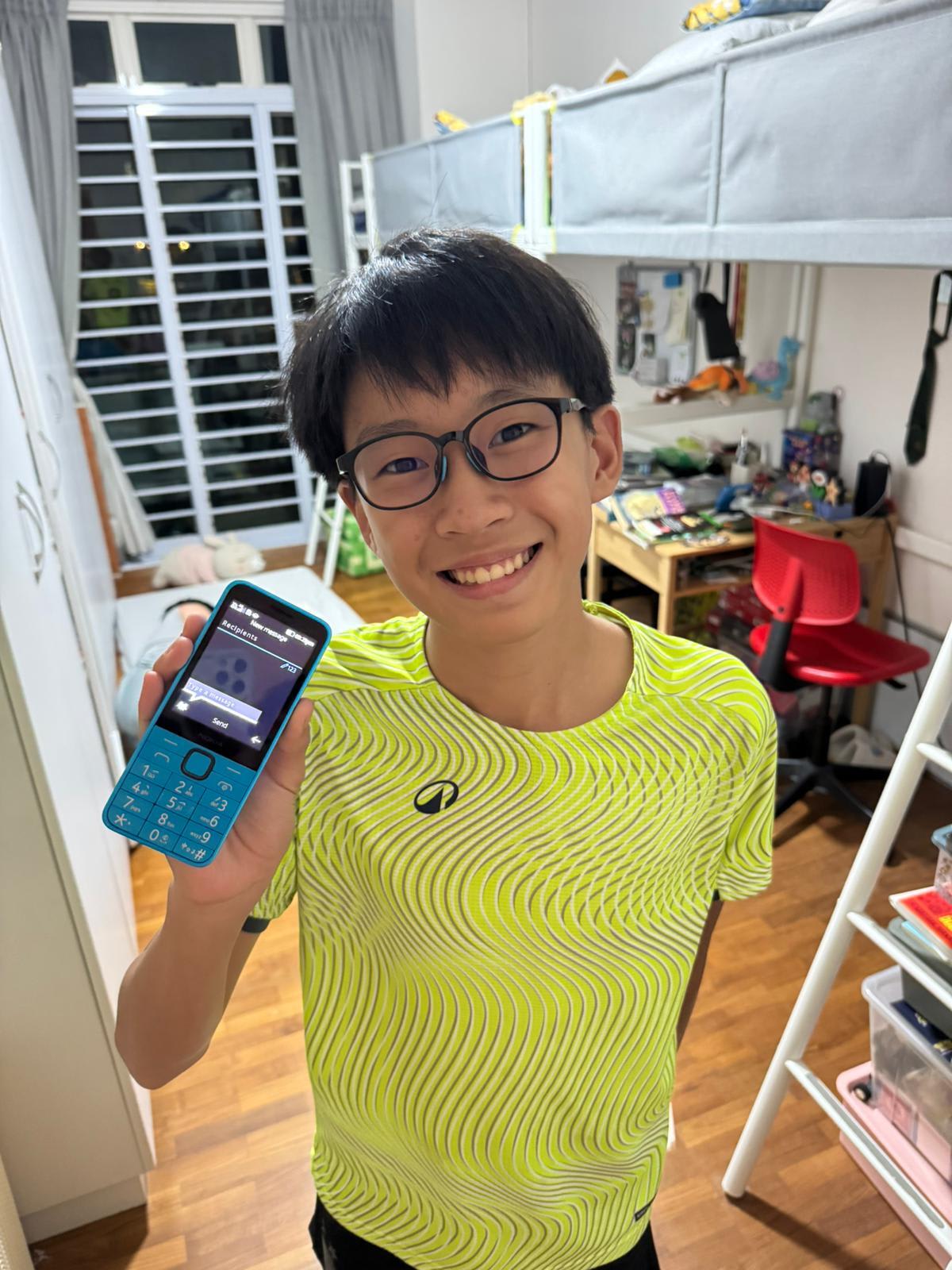
He is so used to not having a handheld device on him that he has left his phone at home on more than one occasion, especially on days when he does not have CCA sessions scheduled and I am picking him up after classes let out.
And that's perfectly fine with me.
WHY I SUPPORT THE BAN
I'll admit that when I first heard of the tightened smartphone measures back in November 2025, my first thought was: "This is awesome."
However, I did wonder whether some other students and parents would struggle with this, since many of them are so used to the reality of the kids having their phones with them 24/7.
And I think I'm not wrong. Just a quick scroll through Reddit and Facebook earlier this year showed me that quite a few concerns were being raised daily by both parents and students.
Parents complained about the inconvenience of not being able to reach their children easily for after-school plans or in emergencies.
Students described the rules as unreasonable, restrictive and even counterproductive. They said bullying might go unreported and that communication could become inefficient since teachers would no longer be able to update students on any last-minute changes to the school day's schedule.
But hearing my son's unbothered perspective made me think that this might be a good starting point for his batch of Secondary 1 students coming in fresh from primary school, where phones weren't allowed during recess anyway.
My reasons for supporting this policy are also widely shared: better mental health, more social interactions and enhanced learning at school.
But to me, the bigger point is this: If we believe screen addiction among our youths is a problem, then the limits should not stop at the school gate.
We should be prepared to take the same stand at home.
DRAW THE LINE AT HOME, TOO
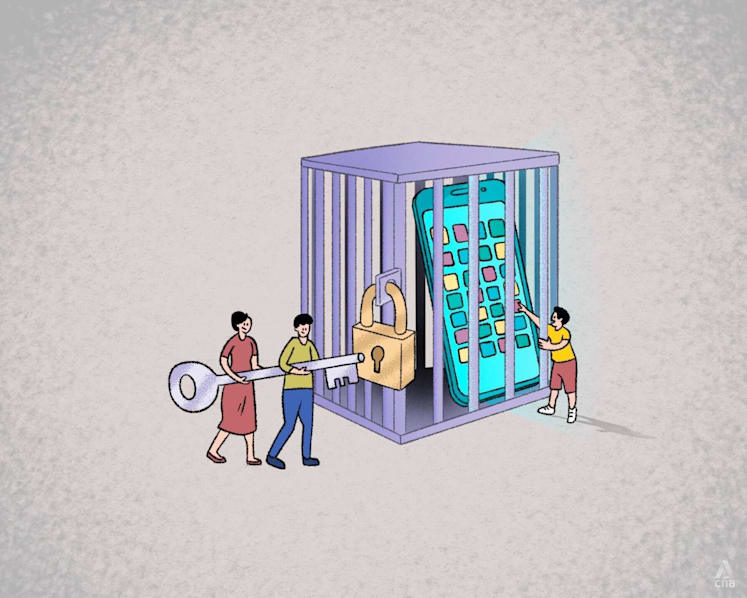
Of course, I'm not advocating that parents lock up their kids' phones the moment they get home.
But I do think more of us can take a tougher stand on how our children use their devices and for how long.
I have shared our house rules before: All devices are to be used only in the living room or at the dining table; no screens in the bedrooms.
The kids get to do their school work on the home personal computer (PC) and the shared iPad when required.
Games are played on the PC, on the gaming console connected to the television, or on my old and laggy smartphone that stays in the living room. No YouTube or social media scrolling is allowed.
Screen use is capped at 30 to 45 minutes at a time, followed by a break. No games on school days, but from Fridays to Sundays, they get up to an hour of gaming a day.
They can also reply to WhatsApp chats after dinner on the home PC.
These rules may feel excessively stifling to some, but they work for us. They help us keep device use in check before it becomes more widespread, as it inevitably will.
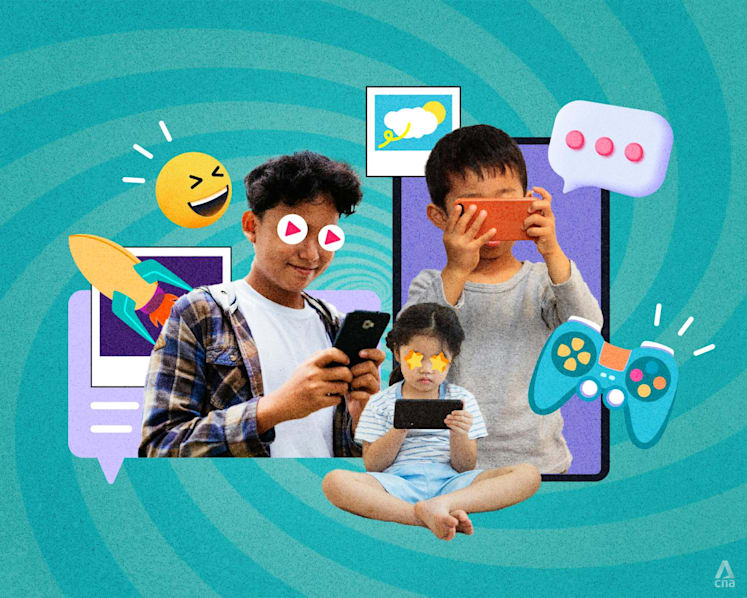
I'm also hyper-aware of how much bullying actually happens on social media and in WhatsApp groups, how addictive mobile games can be and how easy it is nowadays to stumble across inappropriate content, even in the most innocuous of places like game ads.
Every family's guidelines will look different.
But whatever form they take, enforcing them consistently is, to me, a practical way to help our children develop a healthier relationship with their devices. And maybe, we adults can learn from this and form healthier relationships with ours, too.