I was laid off right after I became a new mum – and it was a huge blow to my self-esteem
After being made redundant shortly after welcoming her first child, Ms Catherine Yang spent 10 months searching for work and rebuilding her self-worth and confidence, all while questioning why motherhood was a liability.
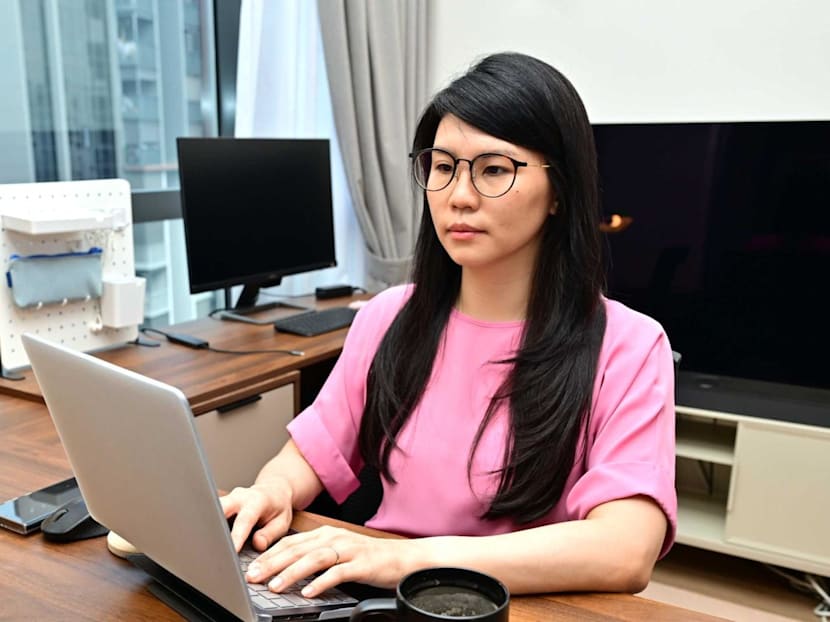
After almost a year, Ms Catherine Yang found a job that gave her the flexibility she needed as a working mother. (Photo: CNA/Raydza Rahman)

This audio is generated by an AI tool.
In April 2024, the morning of the day I returned to work from maternity leave, I woke up to an early calendar invite to a meeting with my manager, followed by another with human resources (HR). With a sinking feeling, I knew what it meant.
My manager informed me that my team had been made redundant, and HR later walked me through my severance package. I spent only 10 months at this company, but it was all over within 30 minutes.
When both calls ended, I sat with two feelings at once: relief and worry.
Relief, because I wouldn't have to leave my newborn just yet. Worry, because we had just hired a domestic worker in preparation for my return to the workplace and now, our household income had dropped right as our expenses had grown.





On Apr 29, when Ms Indranee Rajah, Minister in the Prime Minister's Office, spoke about the "maternity penalty" faced by women returning to the workforce, it brought me right back to this day – a day I will never forget.
What happened after that tumultuous morning was a period that remains hard to describe.
I spent it running on three-hour sleep cycles to feed my newborn, my body still healing and changing, navigating my baby's milestones every few weeks.
Somewhere in that relentless rhythm, my sense of who I was outside of motherhood began to fade.
AN EMOTIONAL TUG-OF-WAR
The financial weight sat in the background of everything.
There were days I scrolled through social media and saw other mums seemingly doing it all, clocking in and out of their corporate gigs or running their own businesses, and I felt the inadequacy creep in.
Negative thoughts kept surfacing in my mind, more than I'd like to admit. Sometimes, I would catch myself thinking: Even my helper was earning and I wasn't.
Still, I was grateful. I knew I was in a privileged position. Not every mother gets 1.5 years to spend at home with her child, with no other responsibilities or distractions.
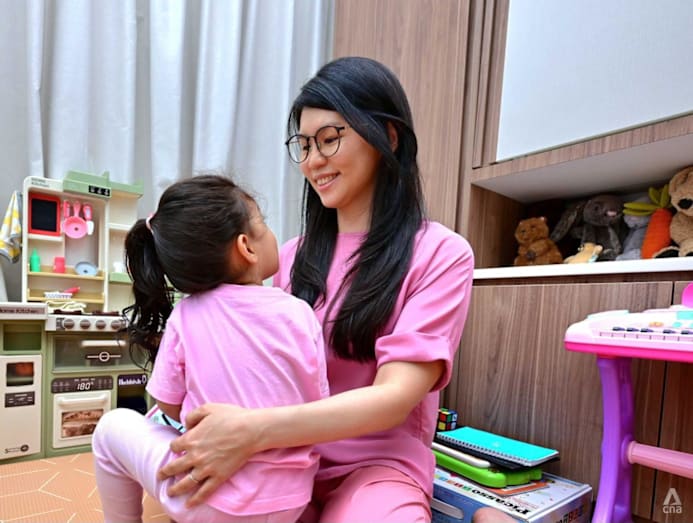
We even spent a month in Spain as a family due to my husband's work, where we watched our daughter take her first steps – a memory I will cherish forever.
However, the gratitude and self-doubt went hand in hand, and I spent the entire time in an emotional tug-of-war.
At my lowest, a particularly difficult thought began sounding in my head: that life would have been simpler if I weren't a woman.
Not because I didn't want to be one, but because of what it seemed to require – the career uncertainty, the physical toll, the invisible load.
I still had faith that God had placed me in this situation for a reason, and I would eventually see a light at the end of the tunnel.
But at the same time, I couldn't help but feel like I was being penalised for wanting both a career and a family.
I AM NOT A LIABILITY
When I started job searching, I thought the hardest part was behind me.
It wasn't.
Early on, I was open about my situation.
As a new mum returning to the workforce at 36, I needed some flexibility to be present for my newborn – and I made that known to prospective employers.


For 10 months, I got no callbacks. In a rough job market, it felt like my honesty was working against me.
So I decided to compromise. After all, any job is better than none, right?
At one point, I even agreed to a role requiring "30 per cent travel", though I knew it wasn't right for my current circumstances. My child was still so young – how could I afford to spend a third of my time away from her?
I caught myself secretly hoping they wouldn't call back.
Steeping in that dread for some weeks flipped a switch in me. I realised that something had to change in what I was looking for and in what I was saying "yes" to.
I started by engaging a career coach. Her advice was simple: stop casting wide, start casting right and go after the right fit.
More than the strategy, what changed was how I saw myself.
With my coach's help, I began to understand that I wasn't a liability.
Regardless of whatever society had told me or taught me about taking an extended break from work, I hadn't become a less competent or less valuable worker.
In that time at home, I had been managing a household, tracking a newborn's schedule by the hour and onboarding a domestic worker from scratch, all while making decisions under pressure with no margin for error.
I was focused, disciplined and clearer than ever about what I was good at, what I needed support in and what I could offer.
Parenthood hadn't made me weaker. It had helped me grow into a better version of myself.
Almost a year into my job search, I came across a communications role at PropertyGuru.
At the bottom of the listing, where most job posts tuck away generic perks, a clear commitment was laid out to candidates: hybrid and flexible working, holistic rewards and support for work-life balance.
So I reached out to the recruiter directly.
I was asked to take part in three interviews. These were focused on my strengths and what I could contribute to the team. There were no questions about my commitment at home or as a mother, no assumptions to quell or refute.
I got the role, and going back to work gave me a renewed appreciation for it.
After months of feeding schedules and nap times, using a different part of my brain felt like getting a piece of myself back.
I was contributing again and more productive than I had ever been in my career.
Parenthood hadn't made me weaker. It had helped me grow into a better version of myself.
I also quickly found out that what I had read on that job posting had not been empty promises.
I could work from home on days when my in-laws or parents weren't available as caregivers.
I could adjust my working hours to settle my toddler in the morning, or leave the office earlier when needed.
For a mother who wasn't ready to place her child in an infant-care centre, that flexibility allowed me to show up fully both at work and at home.
MOTHERHOOD AS STRENGTH, NOT WEAKNESS
Singapore is having the right conversations about supporting mothers in the workforce. But real change begins with how we choose to see them.
A mother returning to the workforce has not been "away". She has been doing some of the hardest work of her life, and is still showing up.
Employers who recognise that will find some of their most committed people.

What made the difference for me was a company that looked at what I could bring to the workplace, rather than focusing on my circumstances outside of it.
I'm grateful I found that. But it was a struggle to get there – and so many more women like me are still struggling to find the same.
The mothers that the new Marriage and Parenthood Reset Workgroup is trying to support are not just Singaporean citizens deserving of care and consideration. They are also raising the next generation of Singaporeans.
As the country's birth rate hits a record low, encouraging young people to have kids is only part of the equation.
We need employers who are willing and able to see women who choose to have kids not merely as "mothers who work", but as capable professionals in their own right.
They say it takes a village to raise a child. In Singapore today, that village must include the companies willing to hire and support mothers returning to the workforce.
That has made all the difference for me, and I hope more mothers get to find it.
Catherine Yang is a mother of one and the head of communications for Singapore at PropertyGuru.