My family and I spent 2 years travelling the world. Here's how we're dealing with the return to normal life in Singapore
Mr Rakcent Wong and his wife Carol took their young son on a two-year trip to explore the world. Now back in Singapore, he reflects on the surprises, struggles and strangeness of resuming regular life.

Mr Rakcent Wong carrying his son Atlas on his shoulders, with his wife Carol, in a photo taken at the Zion National Park, the United States, in June 2025. (Photo: Rakcent Wong)

This audio is generated by an AI tool.
In January 2024, my wife, son and I embarked on a two-year trip to explore the world. Before we departed Singapore, many people – some out of concern, some out of disapproval – told us that two years was a long time.
I thought so, too. Long enough to step away from the never-ending rush of fast-paced Singapore. Long enough to reset after years spent hustling and grinding at work.
Yet when we finally returned in December 2025, it did not feel long at all.
The longer we were away from home, the more apparent it became how little we knew – not just about places but about ourselves, our family, other people and the systems we take for granted.





The world was so much larger than we thought we knew, with space for many different ways of living, thinking and being.
Coming home felt good – familiar and grounding. But it was also overwhelming.
Routines resumed quickly. To-do lists reappeared. Calendars are filled up with appointments.
Before long, it started to feel like packing up and moving between Airbnb homes every few weeks had been a lot easier than staying still.
Even navigating rusty, crowded buses in a foreign language felt less stressful than taking an air-conditioned, spacious train in Singapore.
On the road overseas, there was never anything urgent waiting for our attention. No emails. No deadlines.
No invisible, constant pressure to be productive.
WHEN YOU CAN'T OUTSOURCE PARENTING
Returning home shone a new spotlight on something I had not fully realised while travelling: how much modern parenting is quietly supported and structured by the systems already in place around us.
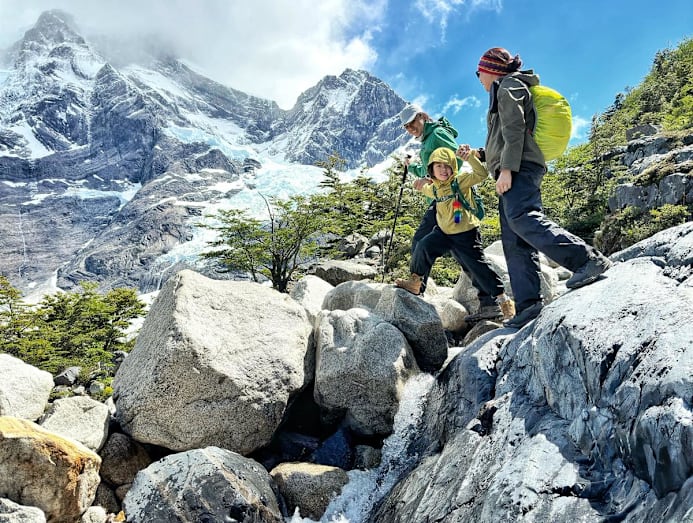
On the road, parenting was unavoidable. Everything our son Atlas needed from age four to six was entirely on me and my wife Carol.
At home, many parenting responsibilities are almost automatically distributed to schools, schedules, daycare centres, routines and systems. There is a quiet relief in how easily our presence as parents can be replaced by structure – but a quiet discomfort, too.
Instead of planning something every day for us to do with Atlas as we did during our travels, we now had to limit ourselves to weekends. Instead of being together all day, we now had only a few hours with him in the mornings and evenings.
With that came a new sense of guilt.
We reminded ourselves that we had spent a great deal of time with Atlas over the last two years. Still, logical understanding of an adjustment does not always make it easier to deal with the emotional upheaval.
The day after we returned to Singapore, Carol and I decided to have one last date night before 2025 ended.
To our surprise, this upset Atlas.
For two whole years, our family of three had rarely been apart. To Atlas, it was unusual that we were leaving the house without him.
He got even more upset when I did not answer his phone call while Carol and I were having dinner.
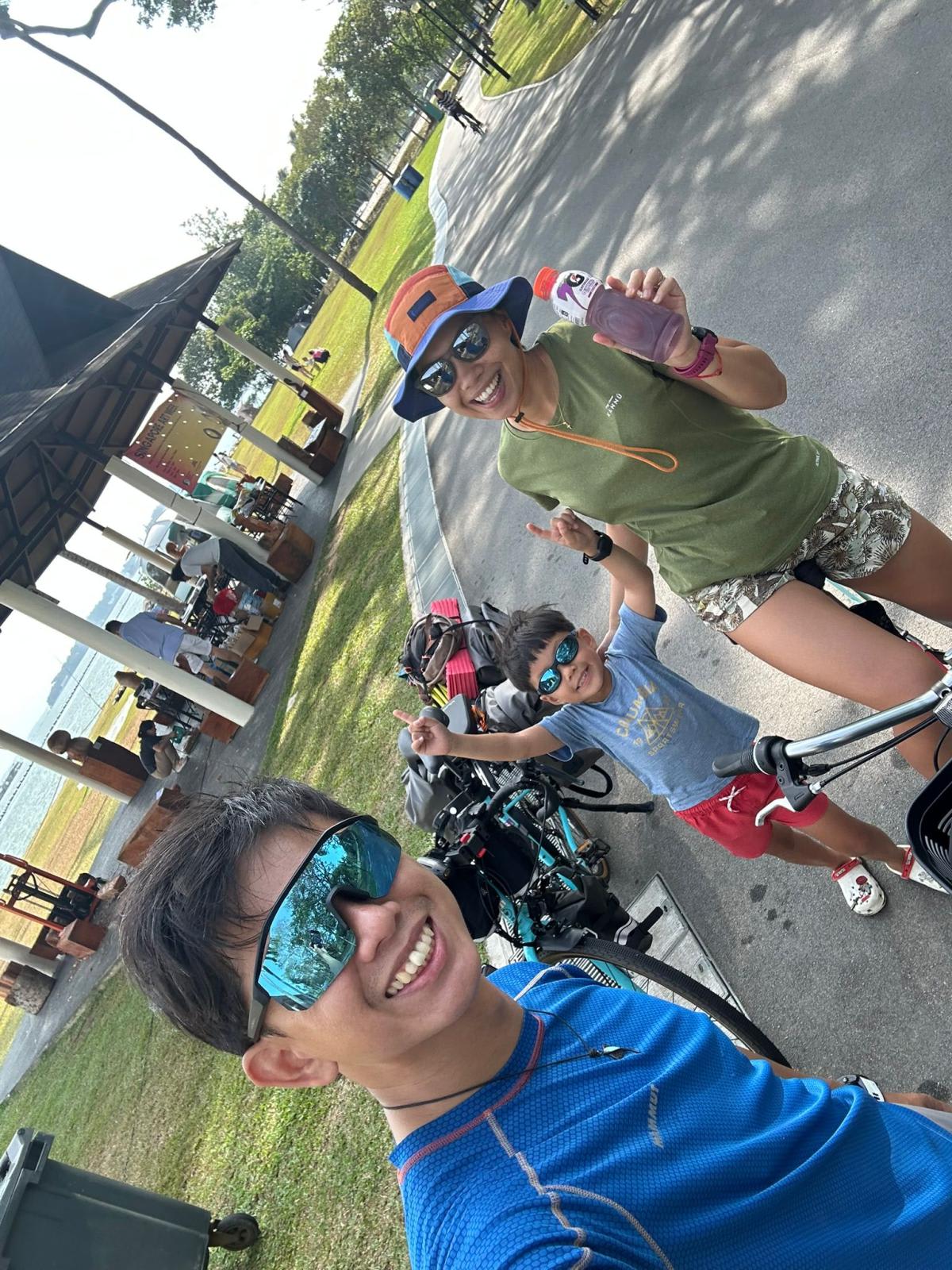
After a heart-to-heart talk with him, he accepted that Mum and Dad could not be with him 24/7 anymore. We needed to work, attend to other responsibilities and, occasionally, have our own time away.
After that, he started requesting fun things to do together. For instance, in January, we spent two weekends camping outdoors at Pasir Ris Beach as a family.
It felt like his way of negotiating closeness and protecting our tight family bonds.
TIME, PROGRESS AND PERSPECTIVE
Time felt distorted when we returned. Everything in Singapore life that felt "recent" was much further away than we'd thought.
Children had grown. Peers were promoted at work. Bosses had changed. Institutions had evolved in ways we hadn't kept up with on the road.
At times, I felt like I had been standing still. And yet, in another sense, I was also aware that I had been moving.
Even now, it's not always easy to convince myself that what I gained matters, especially in a society that values progress that can be quantified and measured in specific ways.
While we had been away, our peers' career paths had advanced in a straight line.
By contrast, our movement did not show up neatly on a CV, and that made it harder to validate.
Still, it was movement of another kind – slower and less obvious, but no less meaningful.
I had no impressive credentials to account for my time away. No formal programmes completed or certificates earned.
Even now, it's not always easy to convince myself that what I gained matters, especially in a society that values progress that can be quantified and measured in specific ways.
Yet each day, I notice changes in myself that are evident.
I am calmer. More comfortable with discomfort. More emotionally aware of myself and my family.
I tolerate uncertainty better. I make decisions with limited information more confidently.
I find it much easier to accept different views and perspectives.
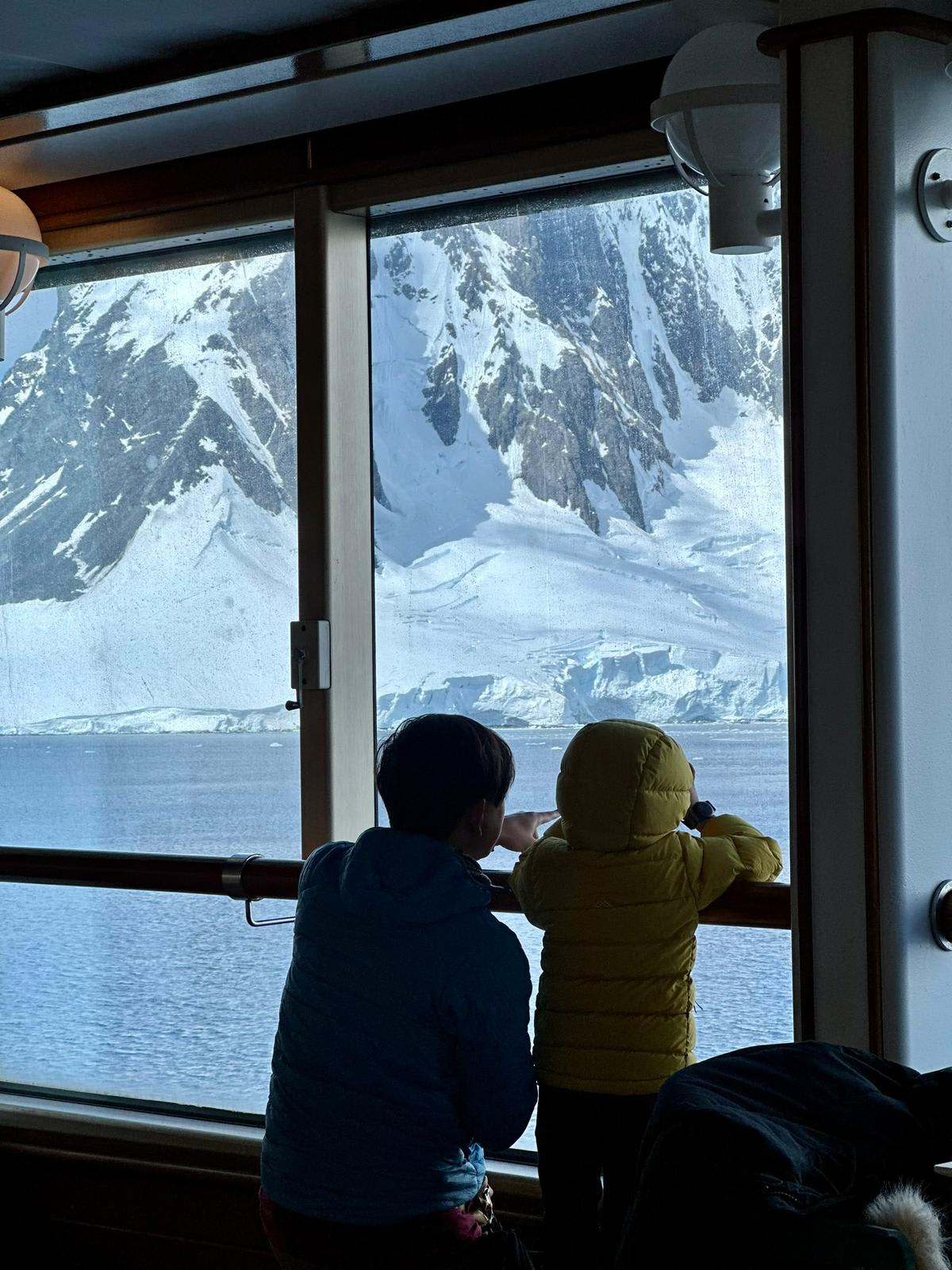
We talk about diversity a lot, but for me, travel made it a tangible way of life rather than a workplace buzzword.
It's not just about nationality or ethnicity. It's in how different people think, prioritise and solve problems.
Coming home, I see that same diversity in Singapore and even within the office. Different working styles, different values, different ways of reaching the same goal.
I am slower now to judge and quicker to look for merit. There are often many workable approaches, not just one efficient one.
The same applies to our child.
LEARNING NOT TO RUSH NORMALCY
Now six years old, the traits Atlas developed in our years on the road are not easily measured by grades or test scores.
Our biggest worry was school. There was an instinct to return quickly to a familiar pace, to move as efficiently as everyone else seemed to be moving.
Our worries quickly turned out to be nothing at all.
He connects easily with others, enjoys their company and lets go without distress. It's not a lack of care, but an ability to hold relationships without fear of losing them.
Compared to some of his peers, he also seems more comfortable with change.
He's curious about the world, but logical. When we told him about the tooth fairy collecting teeth from under the pillow, he considered the idea briefly, struck it off and threw his tooth into the fish tank instead.

We prepared ourselves for struggle or resistance – but Atlas took everything well in his tiny but assured stride. He adjusted faster than we expected, catching up easily on the curriculum.
He even gave his form teacher a nickname in the first week. Mrs Ng became "Mrs Earth" after he misheard her name, and both of them agreed that Mrs Earth sounded cooler.
Most of all, we were proud of how sociable he had become.
He made friends easily, but with none of the clinginess some kids can feel at that age.
His two years on the road had taught him a vital lesson of life: People come and go.
Some might say this reflects a loss of childhood innocence. I see it as time spent engaging directly with the real world.
He's maybe a little less childish than before, but still entirely childlike.
FINDING WONDER IN THE SMALLER THINGS
On the road, there is always something new to see. At home, familiarity often takes over.
Instead of grand sights, we find interest in smaller details. Wonder feels quieter.
Curiosity becomes less about exploring novel, beautiful places and more about meaningful moments with people we care about.
On the road, simplicity worked. Fewer possessions, less complicated plans.
Now, back home, we try to keep the same mindset – not out of laziness, but for sustainability. Simple routines tend to last longer.

People often ask if we find life overseas more appealing.
Truthfully, we once thought seriously about leaving our country. However, travelling has shown us how fortunate we already are.
Singapore may lack dramatic landscapes and cool weather, but it offers safety, infrastructure and stability. To us, it's also one of the best places to raise children and build financial stability.
Enjoying our work helps. Ultimately, it comes down to choosing what matters most, rather than trying to optimise everything.
We're not done with travelling. But no matter where we go, Singapore remains home.
HOLDING LIFE MORE LIGHTLY
Two years ago, we set out to see what we wanted and ended up learning from what we did not expect.
I see things as more transient now. Work, schedules, achievements and even relationships feel less fixed. I approach them with curiosity rather than ownership.

At some point during our travels, my wife and I realised we were both carrying fewer regrets than we did before we left.
Instead of postponing life until retirement, we also began to explore what it might mean to live more fully in the present, rather than saving everything for a future version of ourselves that may never quite arrive.
When people ask what my favourite place was that we visited, I have no one answer.
Everywhere I went in those two years was a place where the people I love most in this world were happy.
We were deeply thankful for the opportunity to have these special adventures with our child during his important formative years.
In the end, it was never about where we went. It wasn't even about travelling.
It was about who we were sharing those experiences with, and who we were becoming along the way.
One could say that what our family had was the journey of a lifetime.
Coming home is not the end of that. It's simply a new phase in the journey of our life together.
Rakcent Wong is a husband and father of one. He also works in public service.
If you have an experience to share or know someone who wishes to contribute to this series, write to voices [at] mediacorp.com.sg (voices[at]mediacorp[dot]com[dot]sg) with your full name, address and phone number.