







'Hectic' bushfires threaten rural towns in Australian heatwave
Millions of people across Australia's two most populous states - Victoria and New South Wales - have been warned to remain on high alert, including in major cities Sydney and Melbourne.
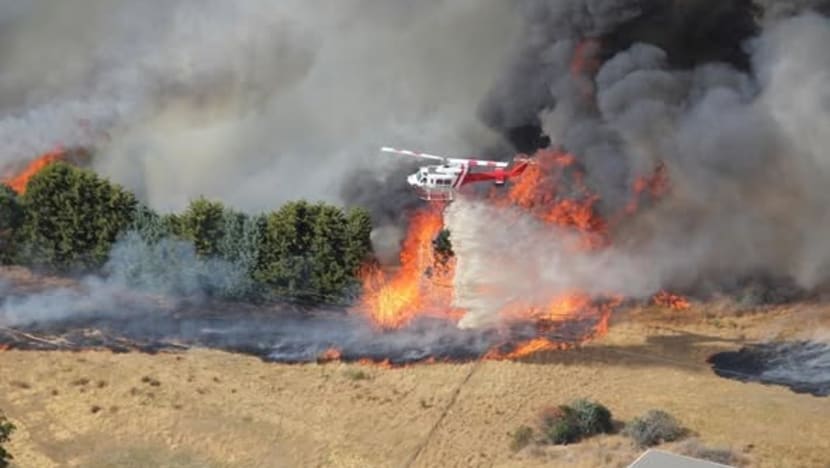
A photo of a bushfire near the town of Longwood, Australia, posted on Jan 8, 2026, by Victoria Premier Jacinta Allan. (Photo: Facebook/Jacinta Allan)
SYDNEY: Bushfires threatened dozens of rural towns in southeast Australia on Friday (Jan 9), firefighters said, as hot winds fanned "hectic" conditions in the tinder-dry countryside.
Temperatures are forecast to soar past 40°C in parts of the region, creating some of the most dangerous bushfire weather since the "Black Summer" blazes of 2019 to 2020.
Dozens of rural hamlets in the state of Victoria were urged to evacuate while they still could.
"If you don't leave now, it could result in your life being lost," Emergency Management Commissioner Tim Wiebusch told reporters.
Powerful wind gusts of over 100kmh would temporarily ground firefighting aircraft trying to contain some 30 different blazes, Wiebusch said.
Country Fire Authority boss Jason Heffernan said the fire danger was "catastrophic" - the most severe rating possible.
"Victorians should brace themselves for more property loss or worse.
"Today is going to be quite a hectic and volatile day for firefighters, fire authorities and communities."
Police said three people including a child were missing inside one of the state's worst fire grounds.
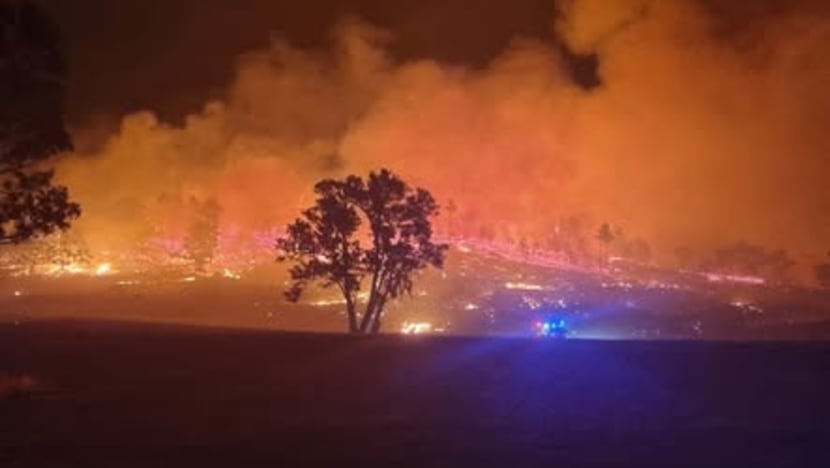
One of the most destructive bushfires has already razed some 28,000ha near the town of Longwood, about 150km north of Victoria's capital Melbourne.
"Some properties have lost everything," said local fire captain George Noye.
"They've lost their livelihoods, they've lost their shearing sheds, livestock, just absolutely devastating," he told national broadcaster ABC.
"But thankfully, at the moment, no lives have been lost."
The worst bushfires have so far hit sparsely populated rural areas where towns might number a few hundred people at the most.
"BLACK SUMMER"
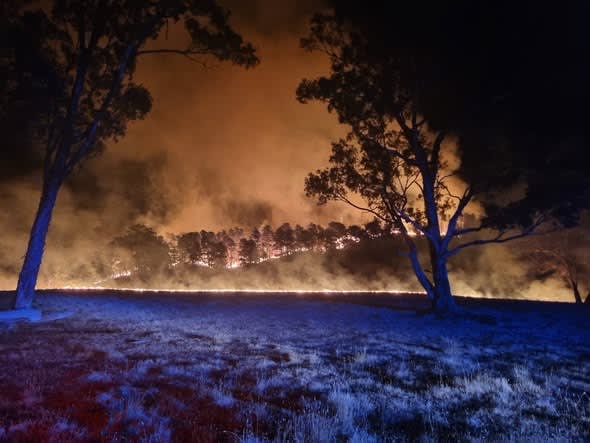
Photos taken earlier this week showed the night sky glowing orange as the fire ripped through bushland.
"There were embers falling everywhere. It was terrifying," cattle farmer Scott Purcell told the ABC.
Another bushfire near the small town of Walwa crackled with lightning as it radiated enough heat to form a localised thunderstorm, fire authorities said.
"Today represents one of the most dangerous fire days that this state has experienced in years," said state premier Jacinta Allan.
Allan urged people to flee rather than stay put and try to save their homes.
"You will simply not win against the fires of these magnitudes that are created on days like today."
Millions of people across Australia's two most populous states - Victoria and New South Wales - have been warned to remain on high alert, including in major cities Sydney and Melbourne.
Hundreds of baby bats died earlier this week as stifling temperatures hit the state of South Australia, a local wildlife group said.
The "Black Summer" bushfires raged across Australia's eastern seaboard from late 2019 to early 2020, razing millions of hectares, destroying thousands of homes and blanketing cities in noxious smoke.
Australia's climate has warmed by an average of 1.51°C since 1910, researchers have found, fuelling increasingly frequent extreme weather patterns over both land and sea.
Australia remains one of the world's largest producers and exporters of gas and coal, two key fossil fuels blamed for global heating.




