Teen entrepreneurs and creators in limbo over Australia’s social media ban
The ban drew criticism from major tech firms and free speech advocates but was praised by parents and child safety groups.
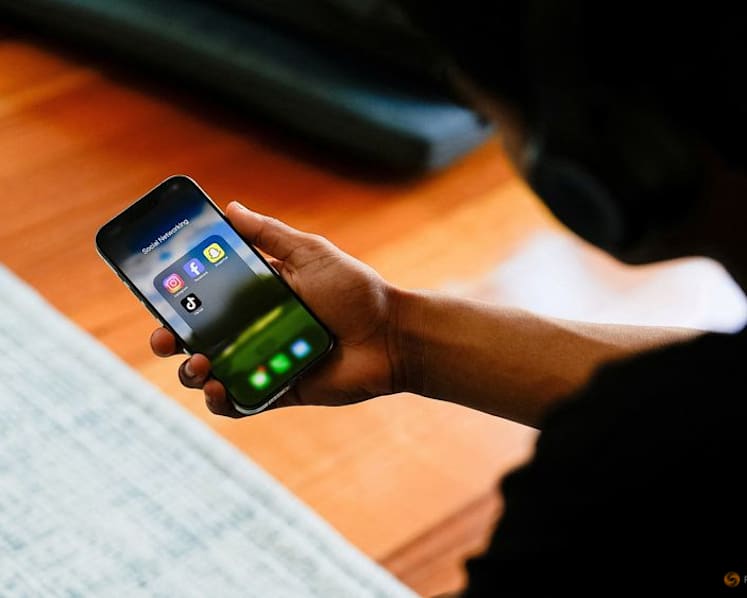
A high school student poses with his mobile phone showing his social media applications in Melbourne, Australia, Nov 28, 2024. (Photo: REUTERS/Asanka Brendon Ratnayake)

This audio is generated by an AI tool.




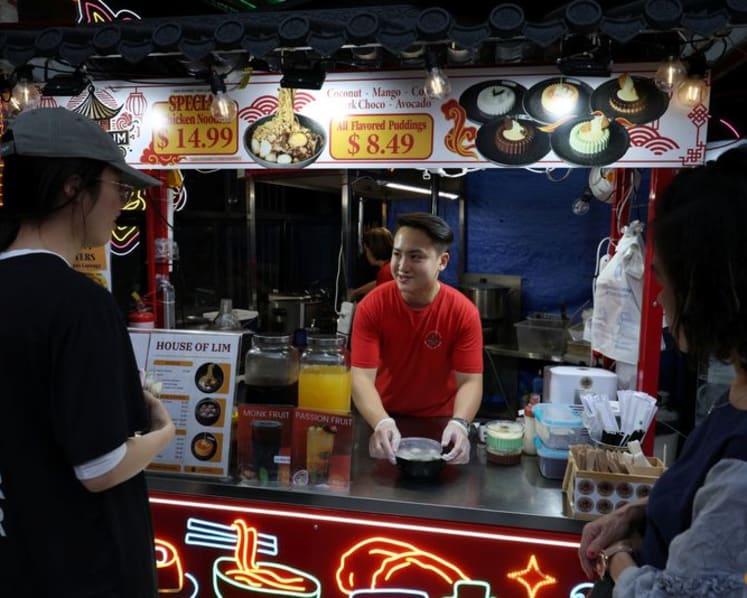
SYDNEY: At just 15 years old, Dimi Heryxlim runs his own food stand after school, serving up Indonesian-style chicken noodles and flavoured puddings.
To draw customers to his House of Lim stall at Burwood Chinatown in Sydney, he posts fun and engaging vlogs on social media.
Word spreads fast online, he said, offering small businesses a quick and cost-effective way to reach large audiences.
But on Wednesday (Dec 10), he became one of millions of children and teenagers locked out of major social media platforms as Australia activated its world-first ban on users under 16.





“We use social media these days … so many people use their phones every day for hours and hours,” Heryxlim told CNA. “So, (this ban) can impact (our) business a lot."
Fellow young creators and small business owners share his frustration, saying the measure could stifle creativity and cut off an accessible and affordable marketing lifeline.
Beyond individual users, industry players are watching closely to see how the sweeping restrictions will reshape Australia’s broader social media landscape – from its multi-million-dollar influencer economy to the advertising sector that fuels it.
A BLOW TO BUDDING CREATORS
While the ban is unprecedented in scale, market leaders expect its immediate commercial impact to be limited.
“Most advertisers are not trying to reach the under-16s, so for a lot of them nothing's really going to change,” said Alex Reid, co-founder of talent management agency Amplify.
However, he warned that shutting under-16s out of social platforms removes a critical developmental stage for Australia’s next generation of digital talent.
“Globally, a lot of people want to see Australian (content). Taking this opportunity away from kids to be creators in 2025 seems like the wrong move,” he told CNA.
“We want to empower kids to create content because they can then go on and create huge businesses.”
Social media has also long served as a space for young Australians to engage with causes, communities and creative expression.
Olympic diver Sam Fricker, for instance, supports charities and champions environmental efforts on social media – a platform he believes is effective at reaching younger audiences.
At 23, he is not affected by the ban but worries it could remove spaces where teens can encounter impactful causes.
“They say the law protects young people, but I think it strips away an opportunity for young people to learn and grow,” he said.
THE YAYS AND NAYS
At midnight, millions of accounts belonging to users under 16 years old were deactivated across 10 major platforms including YouTube, TikTok, Instagram, Facebook and Snapchat.
Prime Minister Anthony Albanese hailed it as a “proud day” for Australia, saying families are “taking back power” from big tech companies.
Under the legislation, social media companies must enforce stringent age verification such as identity checks or facial scanning, or risk fines of up to A$49.5 million (US$33 million).
The ban drew criticism from major tech firms and free speech advocates but was praised by parents and child-safety groups.
University of Sydney Business School media specialist Ellese Ferdinands sees it as an important public health intervention.
“Overall, I think it is a good idea because it shows we are prioritising the mental health of young Australians,” she said. “There are definitely some flaws in (the law), but it’s a great start."
Others argue that banning access outright fails to address the realities of a digital-first generation.
“The playground is now online, and education needs to keep up,” said Amplify’s Reid.
“We can't just remove (social media access) and expect that as soon as they turn 16, they will understand how to conduct themselves online. Kids learn through experience and education.”
Related:
UNCERTAINTY IF THE BAN WOULD WORK
Compliance remains a major question mark. Neither children nor parents will be penalised for circumventing the ban, and early indications suggest many intend to do so.
One local survey found that 75 per cent of youths do not intend to stop using social media.
Two 15-year-olds, backed by a digital rights group, are challenging the ban in the High Court, arguing it violates their freedom of communication. The case could be heard as early as February.
Noah Jones, one of the plaintiffs, said the law misunderstands how young people behave online.
“Even if all these kids got banned from these platforms … they're just going to move to a different platform,” he said.
Experts have warned that turning to unregulated, under-the-radar networks could expose youths to greater risks.
DIGITAL LITERACY, NOT DIGITAL EXCLUSION
Curtin University professor Tama Leaver said the tools underpinning the ban – particularly age-verification technology – are still far from reliable. More importantly, the policy risks sidelining young people rather than equipping them.
“There are definitely some harms and risks that need to be reduced so teens don't experience the worst bits of the internet. But at the same time, we're also disenfranchising a whole group of young people,” he told CNA’s Asia First programme.
Leaver emphasised that education – not isolation – is the missing piece.
“If we don't do something meaningful to help young people skill up, (for instance) digital literacy … so that at 16 (they) enter the digital world more fully, then this will be an abject failure,” he noted.
He added that social media provides often-overlooked benefits, such as connection for teens with disabilities, community for those in remote areas and economic opportunities for entrepreneurial youths like Heryxlim.
“(We should) get a sense of (young people’s) experiences, the risks (and) challenges that they have online and help them navigate,” he said.
“The biggest thing that we didn't do as a country is … listen closely to young people.”